Frequency of Porphyromonas gingivalis fimA in smokers and nonsmokers after periodontal therapy
- PMID: 30994772
- PMCID: PMC6459229
- DOI: 10.1590/1678-7757-2018-0205
Frequency of Porphyromonas gingivalis fimA in smokers and nonsmokers after periodontal therapy
Abstract
Porphyromonas gingivalis is one of the most important Gram-negative anaerobe bacteria involved in the pathogenesis of periodontitis. P. gingivalis has an arsenal of specialized virulence factors that contribute to its pathogenicity. Among them, fimbriae play a role in the initial attachment and organization of biofilms. Different genotypes of fimA have been related to length of fimbriae and pathogenicity of the bacterium.
Objectives: The aim of this study was to identify 5 types of fimA genotype strains in smokers and nonsmokers with periodontitis, before and after periodontal therapy.
Material and methods: Thirty-one patients with periodontitis harboring P. gingivalis were selected: 16 nonsmokers (NS) and 15 smokers (SM). Clinical and microbiological parameters were evaluated at baseline and 3 months after periodontal treatment, namely: plaque index, bleeding on probe, probing depth, gingival recession and clinical attachment level. The frequency of P. gingivalis and fimA genotype strains were determined by polymerase chain reaction.
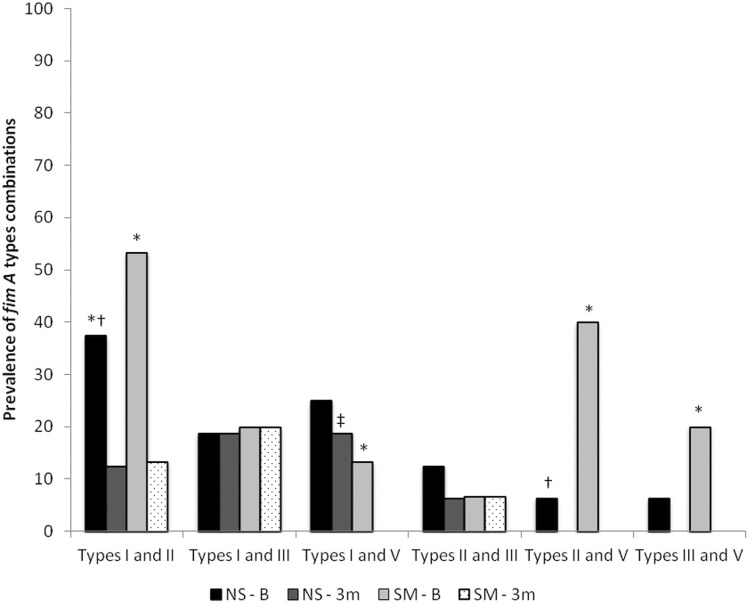
Results: Type I fimA was detected in the majority of SM and NS at baseline, and the frequency did not diminish after 3 months of treatment. The frequency of type II genotype was higher in SM than NS at baseline. After 3 months, statistical reduction was observed only for types II and V fimA genotypes in SM. The highest association was found between types I and II at baseline for NS (37.5%) and SM (53.3%).
Conclusion: The most prevalent P. gingivalis fimA genotypes detected in periodontal and smoker patients were genotypes I and II. However, the presence of fimA genotype II was higher in SM. Periodontal treatment was effective in controlling periodontal disease and reducing type II and V P. gingivalis fimA.
Figures
References
MeSH terms
Substances
LinkOut - more resources
Full Text Sources
Miscellaneous