


Fabella prevalence rate increases over 150 years, and rates of other sesamoid bones remain constant: a systematic review
- PMID: 30994938
- PMCID: PMC6579948
- DOI: 10.1111/joa.12994
Fabella prevalence rate increases over 150 years, and rates of other sesamoid bones remain constant: a systematic review
Abstract
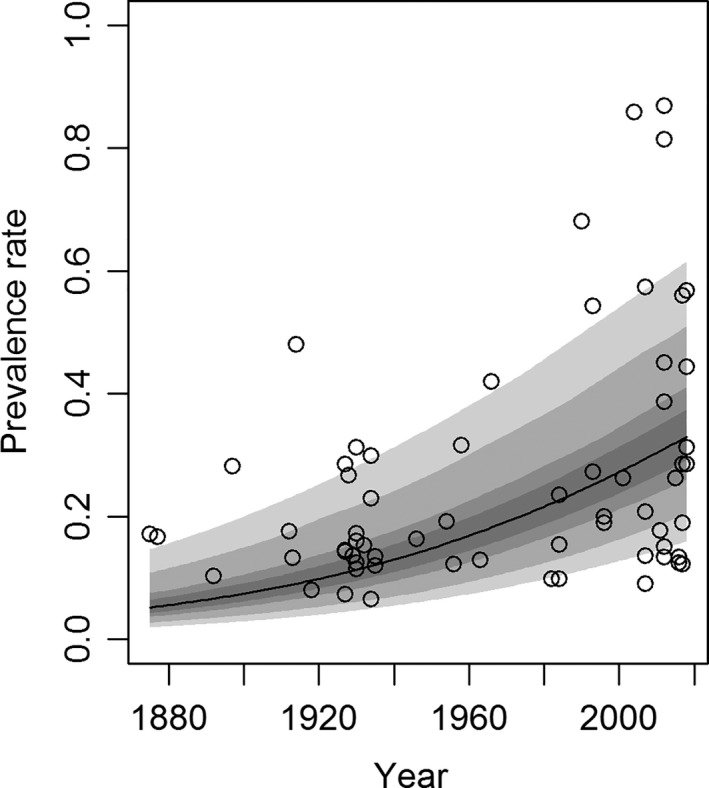
The fabella is a sesamoid bone located behind the lateral femoral condyle. It is common in non-human mammals, but the prevalence rates in humans vary from 3 to 87%. Here, we calculate the prevalence of the fabella in a Korean population and investigate possible temporal shifts in prevalence rate. A total of 52.83% of our individuals and 44.34% of our knees had fabellae detectable by computed tomography scanning. Men and women were equally likely to have a fabella, and bilateral cases (67.86%) were more common than unilateral ones (32.14%). Fabella presence was not correlated with height or age, although our sample did not include skeletally immature individuals. Our systematic review yielded 58 studies on fabella prevalence rate from 1875-2018 which met our inclusion criteria, one of which was an outlier. Intriguingly, a Bayesian mixed effects generalized linear model revealed a temporal shift in prevalence rates, with the median prevalence rate in 2000 (31.00%) being ~ 3.5 times higher than that in 1900 (7.64%). In all four countries with studies before and after 1960, higher rates were always found after 1960. Using data from two other systematic reviews, we found no increase in prevalence rates of 10 other sesamoid bones in the human body, indicating that the increase in fabella prevalence rate is unique. Fabella presence/absence is due to a combination of genetic and environmental factors: as the prevalence rates of other sesamoid bones have not changed in the last 100 years, we postulate the increase in fabella prevalence rate is due to an environmental factor. Namely, the global increase in human height and weight (due to improved nutrition) may have increased human tibial length and muscle mass. Increases in tibial length could lead to a larger moment arm acting on the knee and on the tendons crossing it. Coupled with the increased force from a larger gastrocnemius, this could produce the mechanical stimuli necessary to initiate fabella formation and/or ossification.
Keywords: Korea; fabella; prevalence rate; sesamoid bone.
© 2019 Anatomical Society.
Figures
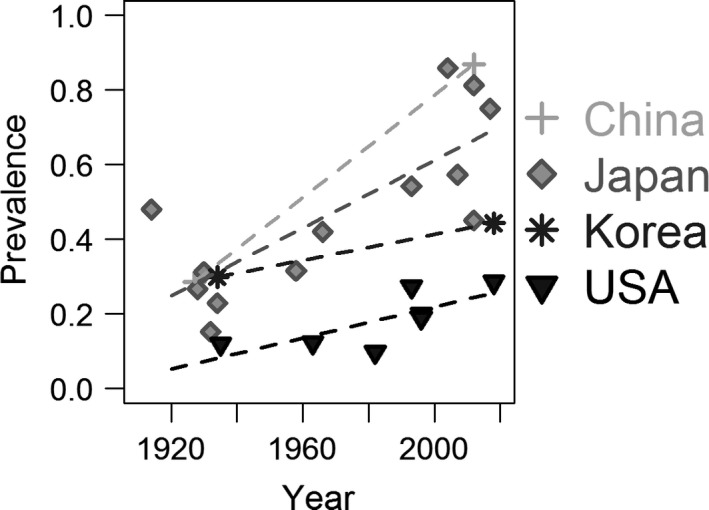

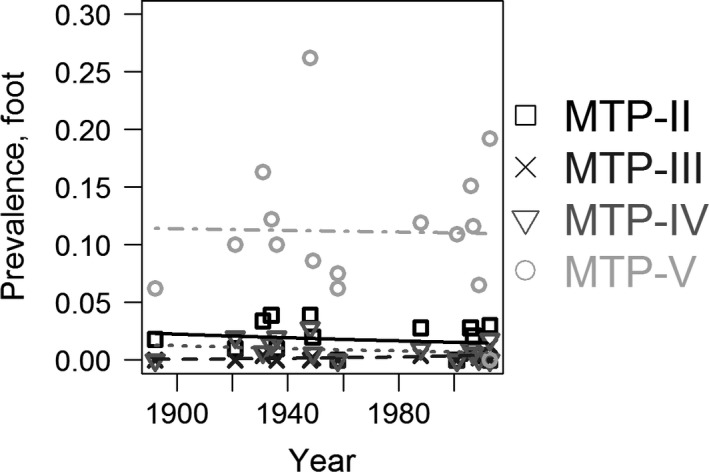
References
-
- Ando Y, Miyamoto Y, Tokimura F, et al. (2017) A case report on a very rare variant of popliteal artery entrapment syndrome due to an enlarged fabella associated with severe knee osteoarthritis. J Orthop Sci 22, 164–168. - PubMed
-
- Bircher E, Oberholzer J (1934) Die Kniegelenkkapsel im Pneumoradiographie‐Bilde. Acta Radiol 15, 452–466.
-
- Bogin B (2006) Patterns of Human Growth. 2nd edn Cambridge, UK: Cambridge University Press.
Publication types
MeSH terms
Grants and funding
LinkOut - more resources
Full Text Sources
Miscellaneous
