


mTORC1 is required for expression of LRPPRC and cytochrome- c oxidase but not HIF-1α in Leigh syndrome French Canadian type patient fibroblasts
- PMID: 30995105
- PMCID: PMC6689754
- DOI: 10.1152/ajpcell.00160.2017
mTORC1 is required for expression of LRPPRC and cytochrome- c oxidase but not HIF-1α in Leigh syndrome French Canadian type patient fibroblasts
Abstract
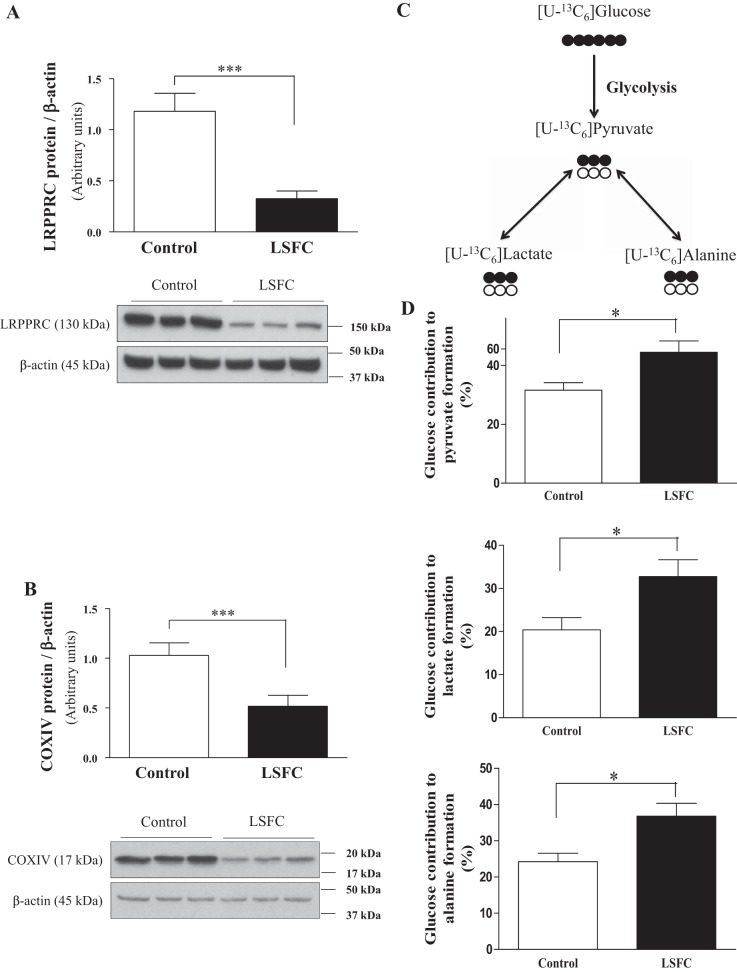
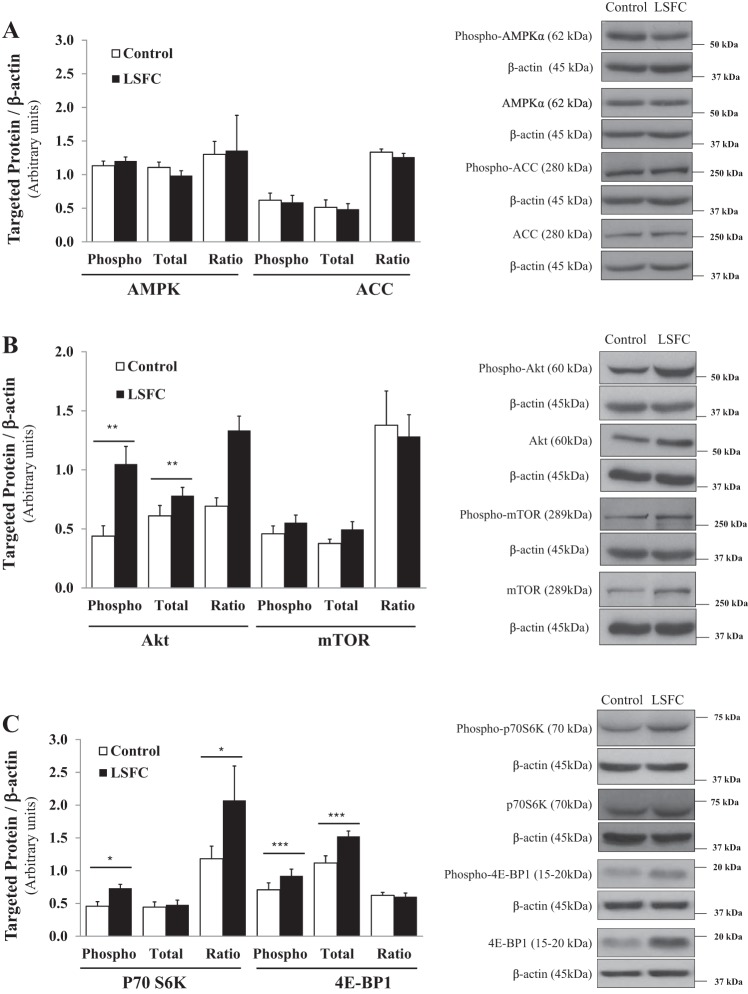
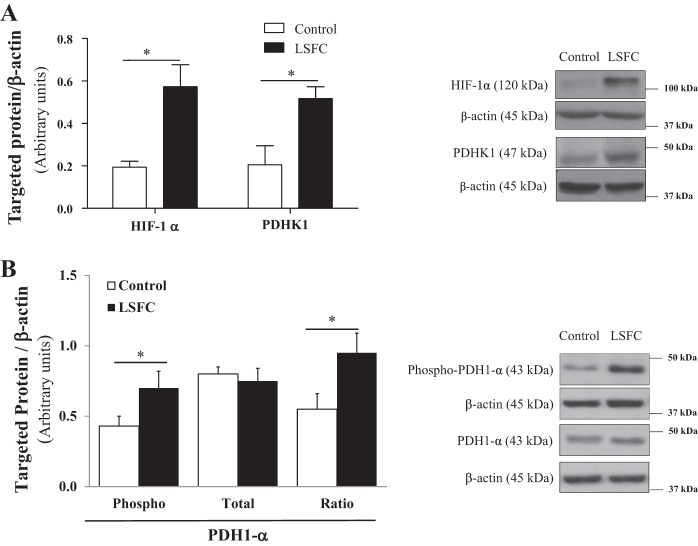
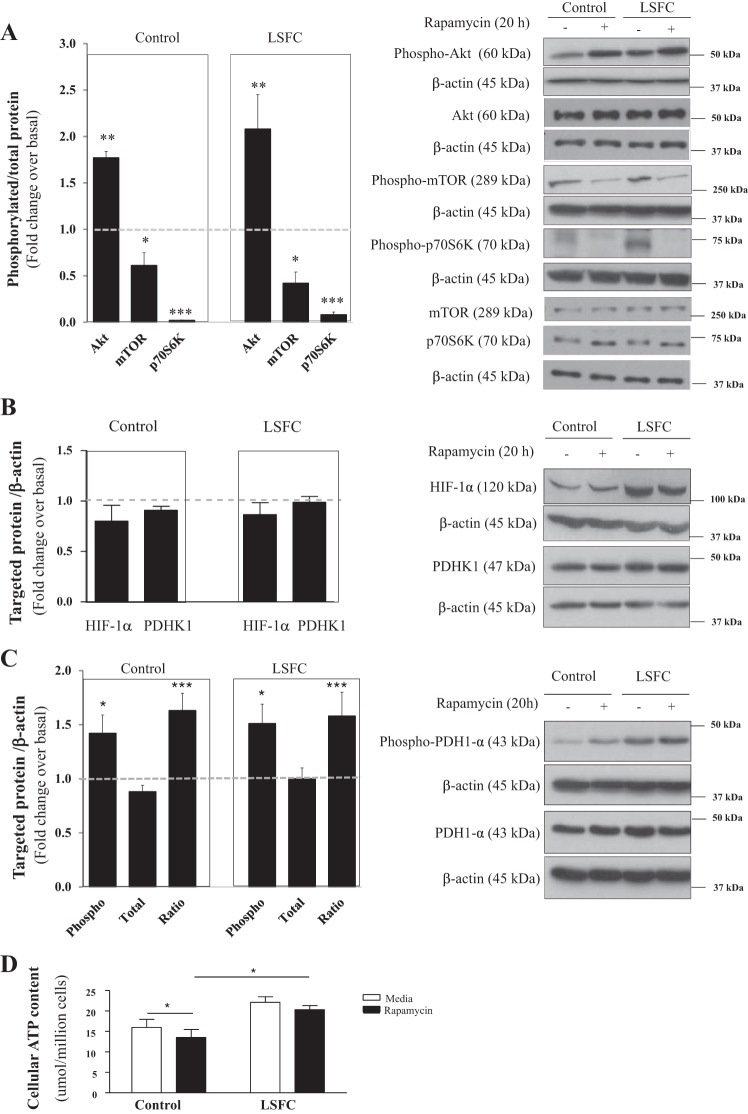
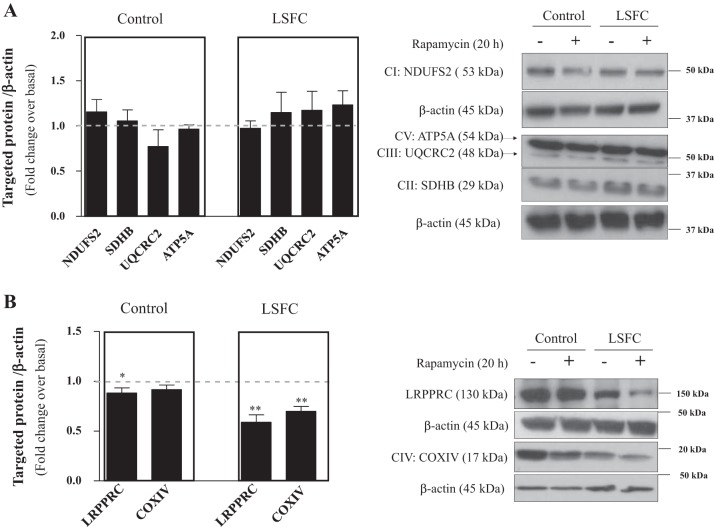
Leigh syndrome French Canadian type (LSFC) is a mitochondrial disease caused by mutations in the leucine-rich pentatricopeptide repeat-containing (LRPPRC) gene leading to a reduction of cytochrome-c oxidase (COX) expression reaching 50% in skin fibroblasts. We have shown that under basal conditions, LSFC and control cells display similar ATP levels. We hypothesized that this occurs through upregulation of mechanistic target of rapamycin (mTOR)-mediated metabolic reprogramming. Our results showed that compared with controls, LSFC cells exhibited an upregulation of the mTOR complex 1 (mTORC1)/p70 ribosomal S6 kinase pathway and higher levels of hypoxia-inducible factor 1α (HIF-1α) and its downstream target pyruvate dehydrogenase kinase 1 (PDHK1), a regulator of mitochondrial pyruvate dehydrogenase 1 (PDH1). Consistent with these signaling alterations, LSFC cells displayed a 40-61% increase in [U-13C6]glucose contribution to pyruvate, lactate, and alanine formation, as well as higher levels of the phosphorylated and inactive form of PDH1-α. Interestingly, inhibition of mTOR with rapamycin did not alter HIF-1α or PDHK1 protein levels in LSFC fibroblasts. However, this treatment increased PDH1-α phosphorylation in control and LSFC cells and reduced ATP levels in control cells. Rapamycin also decreased LRPPRC expression by 41 and 11% in LSFC and control cells, respectively, and selectively reduced COX subunit IV expression in LSFC fibroblasts. Taken together, our data demonstrate the importance of mTORC1, independent of the HIF-1α/PDHK1 axis, in maintaining LRPPRC and COX expression in LSFC cells.
Keywords: COX; LRPPRC; LSFC; mTORC1; mitochondrial diseases; rapamycin.
Conflict of interest statement
No conflicts of interest, financial or otherwise, are declared by the authors.
Figures
References
-
- Burelle Y, Bemeur C, Rivard ME, Thompson Legault J, Boucher G, Morin C, Coderre L, Des Rosiers C; LSFC Consortium . Mitochondrial vulnerability and increased susceptibility to nutrient-induced cytotoxicity in fibroblasts from Leigh syndrome French Canadian patients. PLoS One 10: e0120767, 2015. doi: 10.1371/journal.pone.0120767. - DOI - PMC - PubMed
-
- Cerniglia GJ, Dey S, Gallagher-Colombo SM, Daurio NA, Tuttle S, Busch TM, Lin A, Sun R, Esipova TV, Vinogradov SA, Denko N, Koumenis C, Maity A. The PI3K/Akt pathway regulates oxygen metabolism via pyruvate dehydrogenase (PDH)-E1α phosphorylation. Mol Cancer Ther 14: 1928–1938, 2015. doi: 10.1158/1535-7163.MCT-14-0888. - DOI - PMC - PubMed
-
- Cheng SC, Quintin J, Cramer RA, Shepardson KM, Saeed S, Kumar V, Giamarellos-Bourboulis EJ, Martens JH, Rao NA, Aghajanirefah A, Manjeri GR, Li Y, Ifrim DC, Arts RJ, van der Veer BM, Deen PM, Logie C, O’Neill LA, Willems P, van de Veerdonk FL, van der Meer JW, Ng A, Joosten LA, Wijmenga C, Stunnenberg HG, Xavier RJ, Netea MG. mTOR- and HIF-1α-mediated aerobic glycolysis as metabolic basis for trained immunity. Science 345: 1250684, 2014. [Erratum in Science 346: aaa1503, 2014.] doi: 10.1126/science.1250684. - DOI - PMC - PubMed
Publication types
MeSH terms
Substances
Supplementary concepts
Grants and funding
LinkOut - more resources
Full Text Sources
Miscellaneous
