. 2019 Jun 1;316(6):F1236-F1243.
doi: 10.1152/ajprenal.00387.2018. Epub 2019 Apr 17.

Quantitative proteomic analysis of a genetically induced prostate inflammation mouse model via custom 4-plex DiLeu isobaric labeling

Affiliations

Quantitative proteomic analysis of a genetically induced prostate inflammation mouse model via custom 4-plex DiLeu isobaric labeling

Ling Hao et al. Am J Physiol Renal Physiol. .

Abstract

Inflammation is involved in many prostate pathologies including infection, benign prostatic hyperplasia, and prostate cancer. Preclinical models are critical to our understanding of disease mechanisms, yet few models are genetically tractable. Here, we present a comparative quantitative proteomic analysis of urine from mice with and without prostate-specific inflammation induced by conditional prostate epithelial IL-1β expression. Relative quantification and sample multiplexing was achieved using custom 4-plex N,N-dimethyl leucine (DiLeu) isobaric tags and nanoflow ultrahigh-performance liquid chromatography coupled to high-resolution tandem mass spectrometry. Each set of 4-plex DiLeu reagents allows four urine samples to be analyzed simultaneously, providing high-throughput and accurate quantification of urinary proteins. Proteins involved in the acute phase response, including haptoglobin, inter-α-trypsin inhibitor, and α1-antitrypsin 1-1, were differentially represented in the urine of mice with prostate inflammation. Mass spectrometry-based quantitative urinary proteomics represents a promising bioanalytical strategy for biomarker discovery and the elucidation of molecular mechanisms in urological research.

Keywords: benign prostatic hyperplasia; inflammation; interleukin-1β; lower urinary tract symptoms, mass spectrometry; urine proteomics.


Conflict of interest statement

No conflicts of interest, financial or otherwise, are declared by the author(s).

Figures
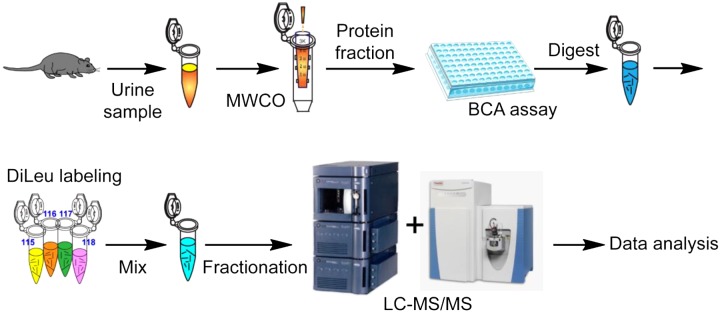
Fig. 1.
Fig. 1.
Overall workflow of quantitative urinary proteomics analysis using 4-plex N,N-dimethyl leucine (DiLeu) labeling. Data analysis was conducted using Proteome Discoverer software followed by offline analysis. MWCO, molecular weight cutoff; LC-MS/MS, liquid chromotography tandem mass spectroscopy.
Fig. 2.
Fig. 2.
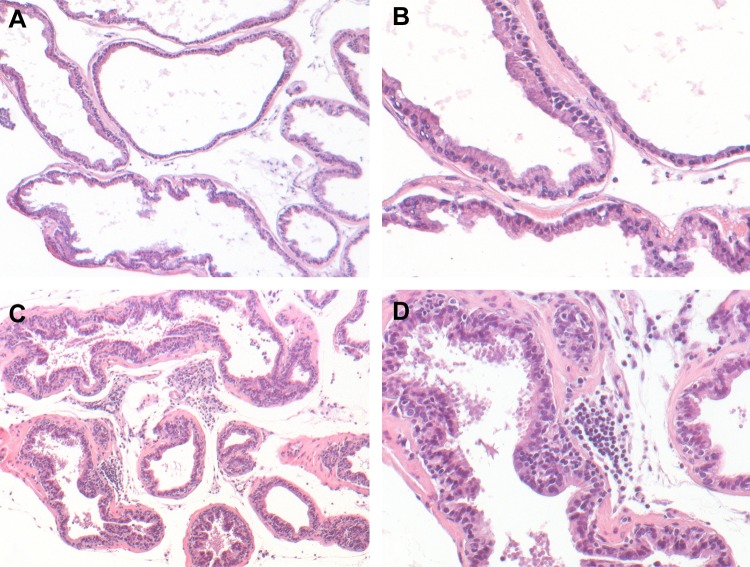
Histological analysis of IL-1β-mediated inflammation in induced mouse prostate inflammation-IL-1-driven (IMPI-1) prostate lobes at 6.5 wk after doxycycline administration. A and B: ventral IMPI-1 prostate from an animal maintained on normal drinking water. C and D: ventral IMPI-1 prostate from an animal maintained continuously on doxycycline-supplemented drinking water (2 mg/ml). Note the presence of pockets of inflammatory cells in the stroma and epithelium. Original magnifications: ×10 for A and C and ×25 for B and D.
Fig. 3.
Fig. 3.
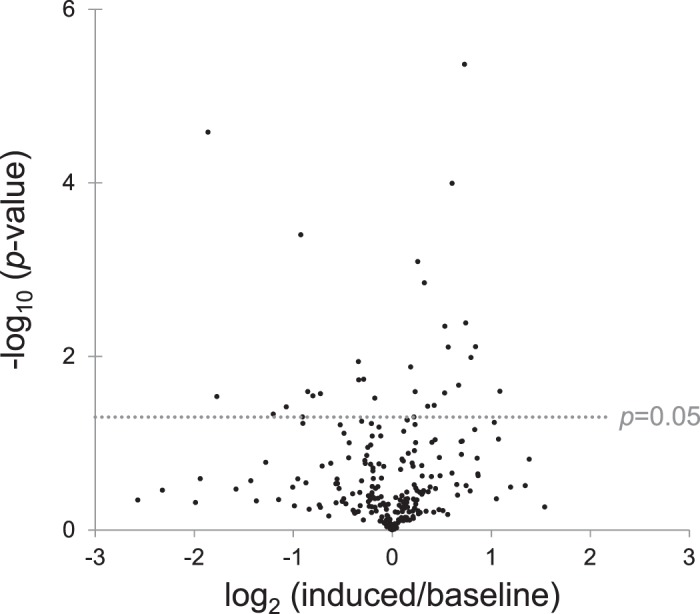
Volcano plot of mouse urine proteins; -log10 P value (paired Student's t-test) versus log2 of the prostatic IL-1β induced-to-baseline ratio.
Fig. 4.
Fig. 4.
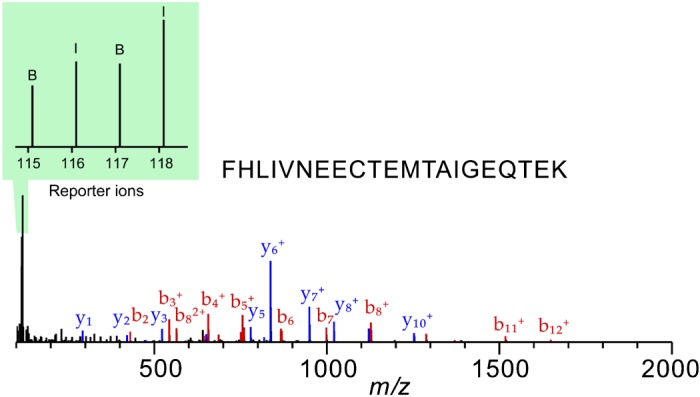
Example MS/MS fragmentation of N,N-dimethyl leucine (DiLeu) labeled urinary peptide representing major urinary protein 3. The b- and y-product ions represent the backbone fragmentation of the peptide for identification. The intensities of reporter ions are used for relative quantification.
Fig. 5.
Fig. 5.
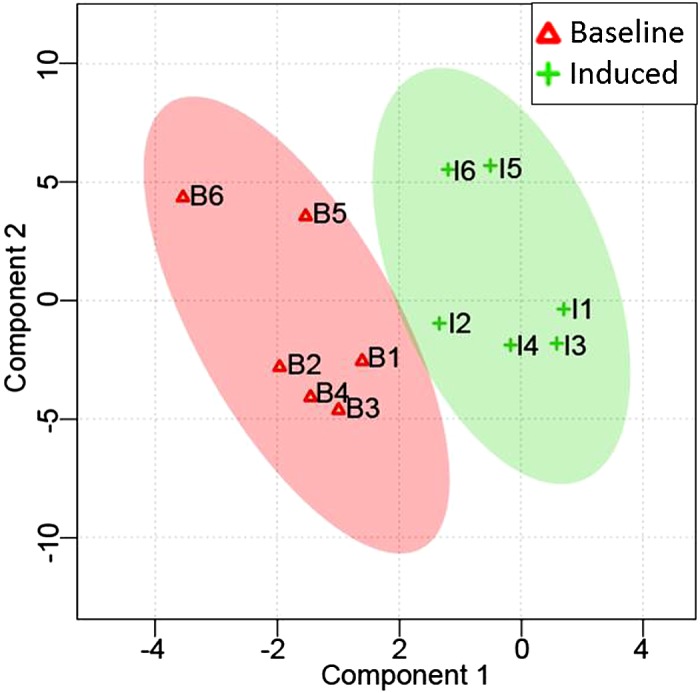
Partial least-squares discriminant analysis score plot of all identified and quantified mouse prostate inflammation urinary proteins. Each data point represents a biological replicate at baseline or induced, averaged across technical replicates.
Fig. 6.
Fig. 6.
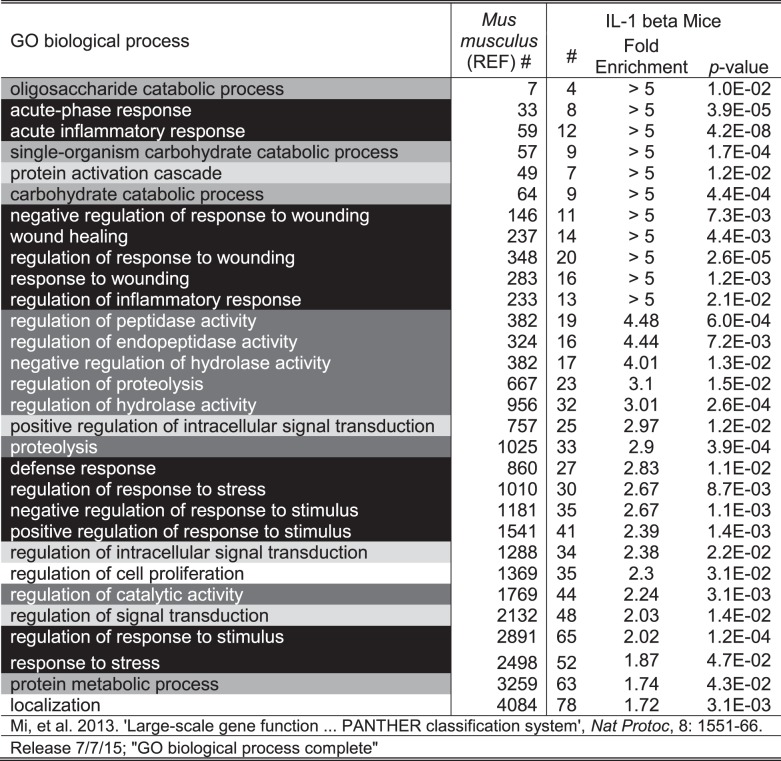
PANTHER overrepresentation test: 261 total mouse prostate inflammation urinary proteins; binomial test with Bonferroni correction, α = 0.05 for induced to baseline versus the program-generated reference mouse proteome. Gray shading corresponds to Fig. 7. GO, Gene Ontology.
Fig. 7.
Fig. 7.
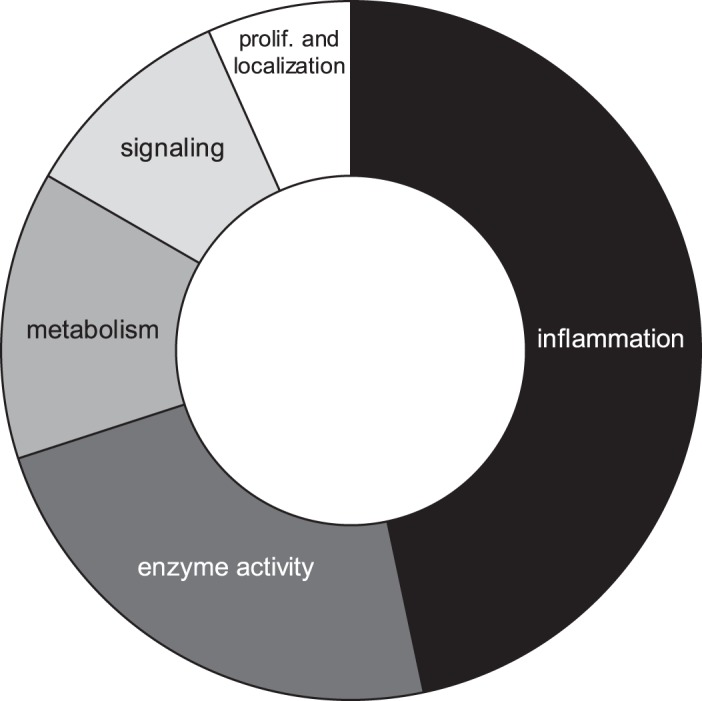
PANTHER overrepresentation test: 261 total mouse prostate inflammation urinary proteins; binomial test with Bonferroni correction, α = 0.05 for induced to baseline versus the program-generated reference mouse proteome. Categories were manually assigned from Fig. 6.

References

    1. Adamson AS, Francis JL, Witherow RO, Snell ME. Procoagulant properties of benign and malignant prostatic tissue. Br J Urol 74: 204–209, 1994. doi: 10.1111/j.1464-410X.1994.tb16587.x. - DOI - PubMed
    1. Adeola HA, Soares NC, Paccez JD, Kaestner L, Blackburn JM, Zerbini LF. Discovery of novel candidate urinary protein biomarkers for prostate cancer in a multiethnic cohort of South African patients via label-free mass spectrometry. Proteomics Clin Appl 9: 597–609, 2015. doi: 10.1002/prca.201400197. - DOI - PubMed
    1. Anderson NL, Anderson NG. The human plasma proteome: history, character, and diagnostic prospects. Mol Cell Proteomics 1: 845–867, 2002. doi: 10.1074/mcp.R200007-MCP200. - DOI - PubMed
    1. Ashok A, Keener R, Rubenstein M, Stookey S, Bajpai S, Hicks J, Alme AK, Drake CG, Zheng Q, Trabzonlu L, Yegnasubramanian S, De Marzo AM, Bieberich CJ. Consequences of interleukin 1β-triggered chronic inflammation in the mouse prostate gland: altered architecture associated with prolonged CD4+ infiltration mimics human proliferative inflammatory atrophy. Prostate 79: 732–745, 2019. doi: 10.1002/pros.23784. - DOI - PubMed
    1. Decramer S, Gonzalez de Peredo A, Breuil B, Mischak H, Monsarrat B, Bascands JL, Schanstra JP. Urine in clinical proteomics. Mol Cell Proteomics 7: 1850–1862, 2008. doi: 10.1074/mcp.R800001-MCP200. - DOI - PubMed

Publication types

MeSH terms

LinkOut - more resources