


On-farm broiler chicken welfare assessment using transect sampling reflects environmental inputs and production outcomes
- PMID: 30995219
- PMCID: PMC6469842
- DOI: 10.1371/journal.pone.0214070
On-farm broiler chicken welfare assessment using transect sampling reflects environmental inputs and production outcomes
Abstract
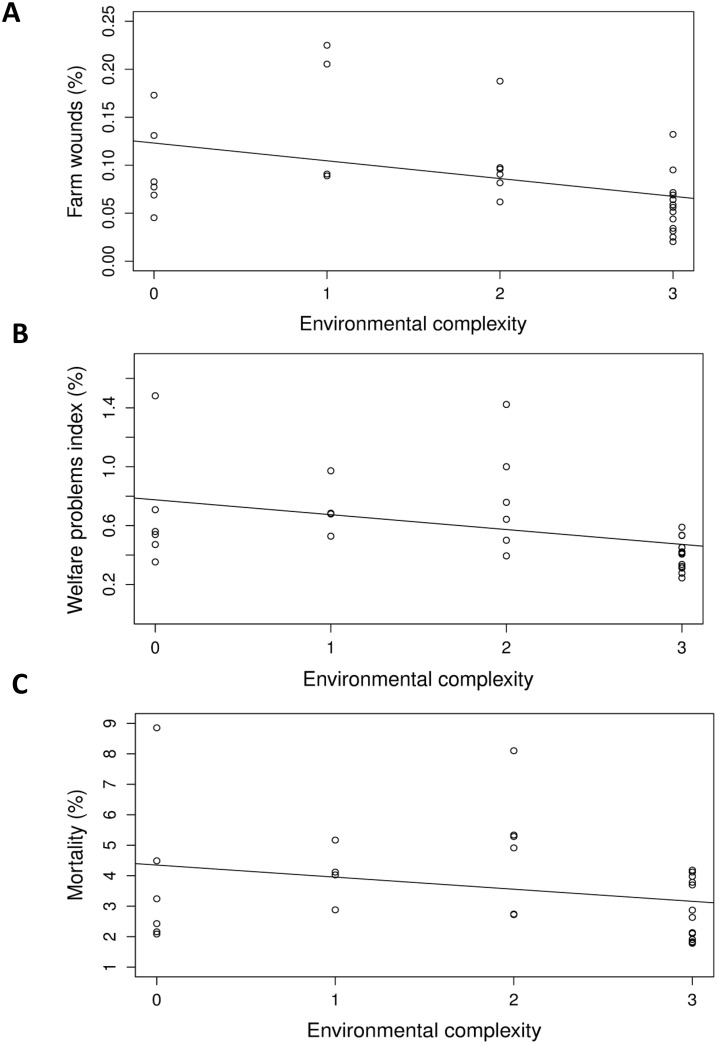
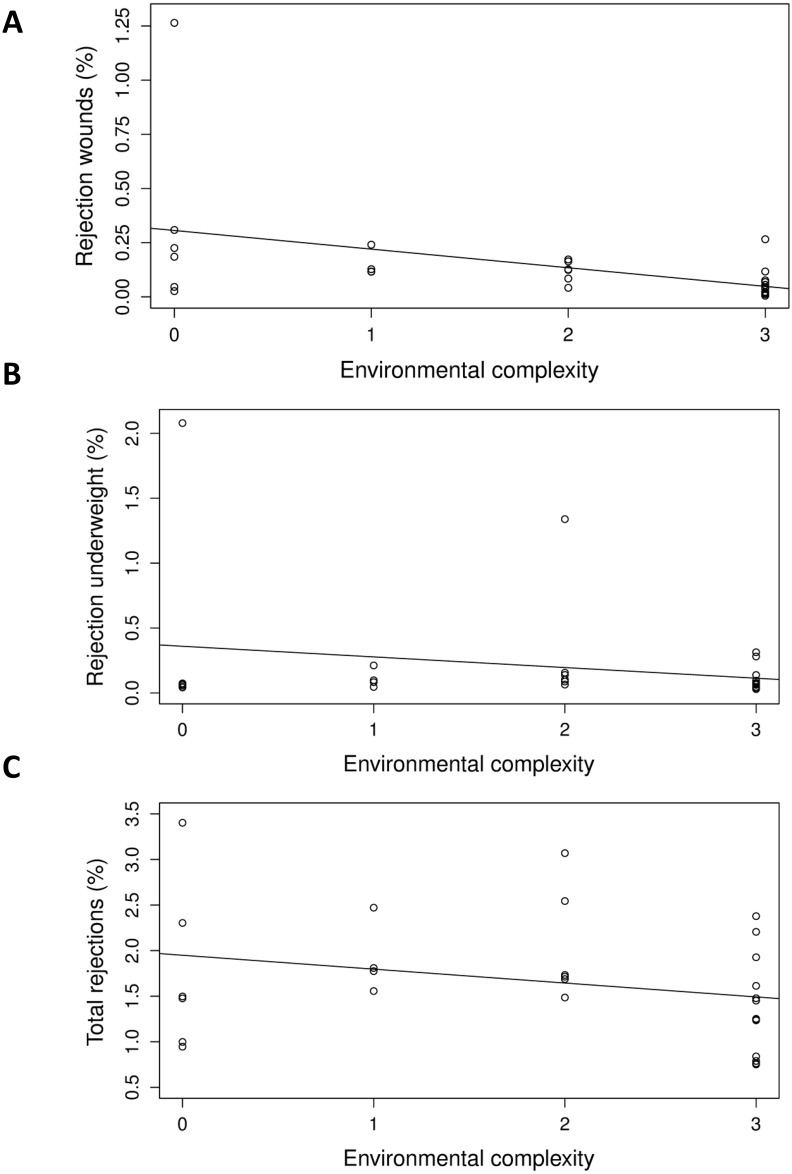
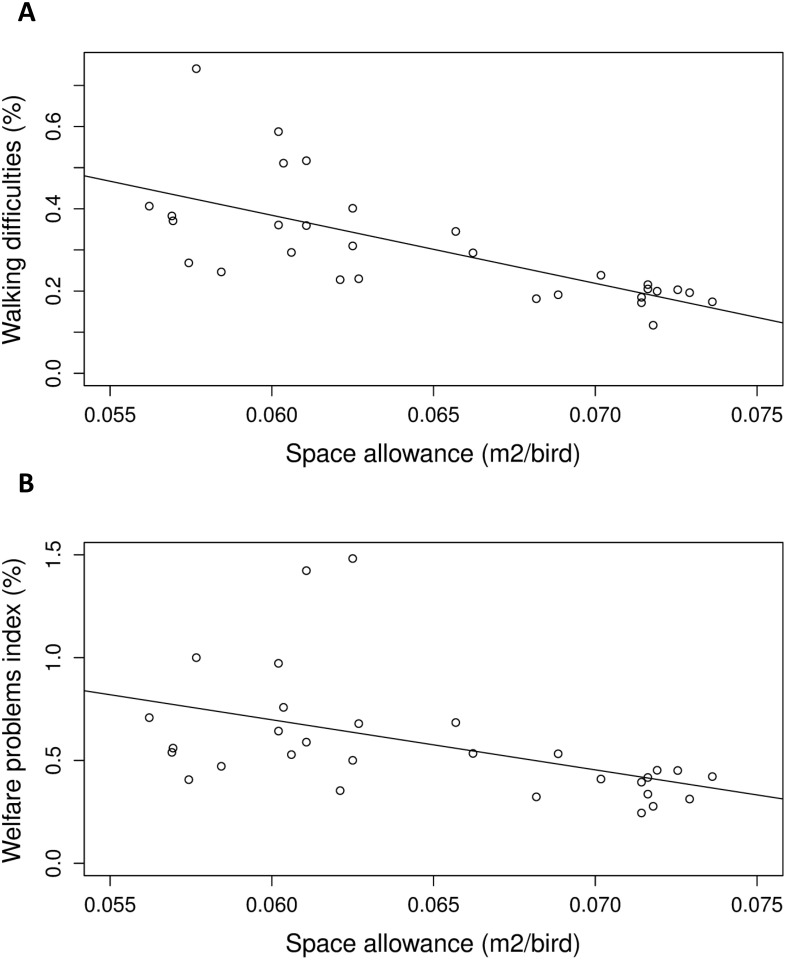
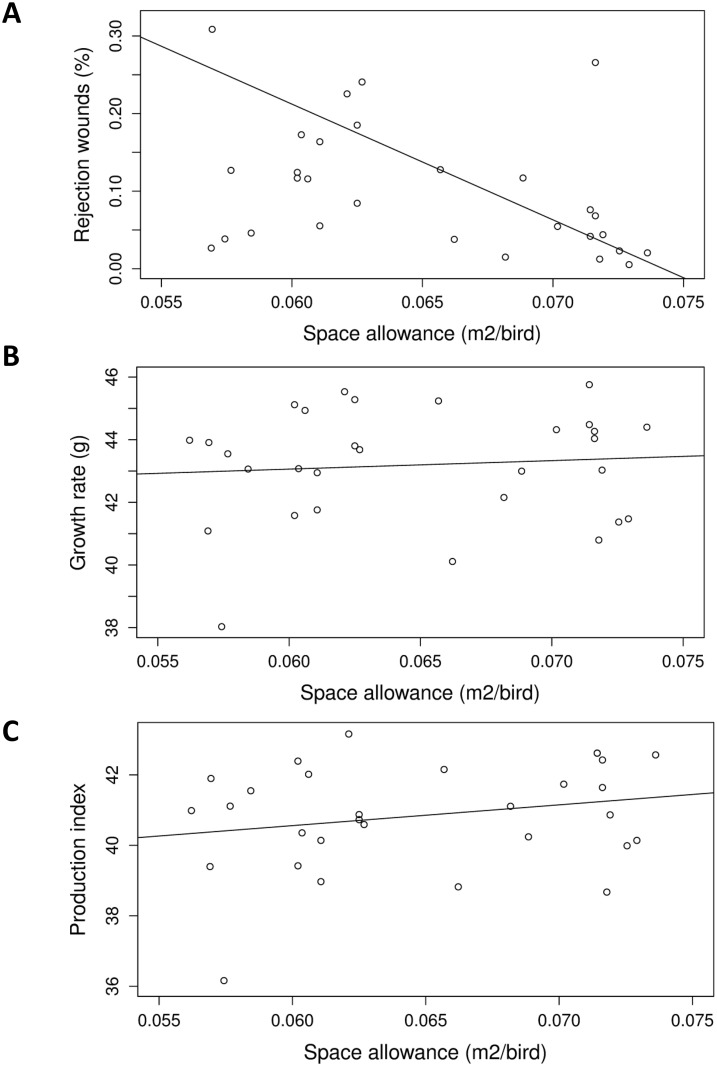
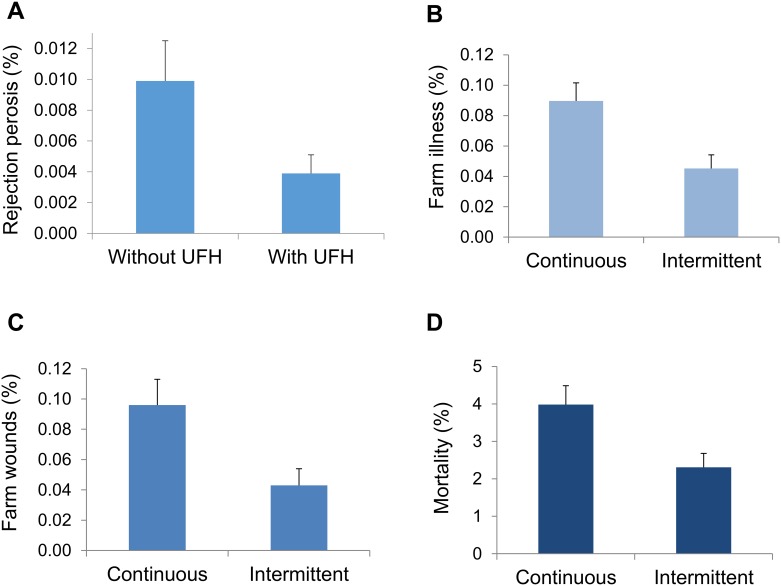
To evaluate the utility of transect sampling for assessing animal welfare in large chicken flocks, we quantified relationships between environmental inputs, welfare problems detected using transect sampling, and production outcomes. We hypothesised that environmental inputs including environmental complexity (i.e. number of environmental enrichment types provided), space allowance, underfloor heating (presence or absence), and photoperiod regimen (18 h continuous vs 16 h intermittent) would correspond to variations in welfare assessment findings, which would predict production outcomes. We conducted on-farm welfare assessment of Norwegian broiler flocks at approximately 28 days of age. We sampled four transects (rows between feeder and drinker lines) per flock to determine litter quality and the proportions of chickens with compromised welfare as indicated by visual signs of walking difficulties, illness, skin wounds and small bird size. Production outcome measures included mortality, reasons for carcass rejection at slaughter, footpad dermatitis, growth rate, feed conversion and an integrated production index. Greater environmental complexity was associated with a reduction in skin wounds and total welfare problems on the farm, lower mortality, fewer rejections due to wounds and underweight birds, and fewer rejections overall. Higher space allowances within levels of environmental complexity were associated with fewer walking difficulties and welfare problems overall, a reduction in rejections due to wounds, and a higher growth rate and production index. Underfloor heating was associated with a reduction in rejections due to leg deformity, and intermittent light was associated with lower illness and skin wound rates on the farm, and lower mortality. Furthermore, fewer welfare problems and better litter quality on the farm were associated with fewer carcass rejections at slaughter. Thus, data from transect sampling varied with environmental inputs and production outcomes, supporting the validity of transect sampling for practical, animal-based on-farm welfare assessment.
Conflict of interest statement
The authors have declared that no competing interests exist.
Figures
References
-
- Main DCJ, Whay HR, Leeb C, Webster AJF. Formal animal-based welfare assessment in UK certification schemes. Anim Welf. 2007; 16: 233–236.
-
- Knierim U, Winckler C. On-farm welfare assessment in cattle: validity, reliability and feasibility issues and future perspectives with special regard to the Welfare Quality approach. Anim Welf. 2009; 18: 451–458.
-
- Welfare Quality. Welfare Quality assessment protocol for poultry, (broilers and laying hens). Welfare Quality Consortium; 2009, Lelystad, NL.
-
- de Jong IC, Hindle VA, Butterworth A, Engel B, Ferrari P, Gunnink H, et al. Simplifying the Welfare Quality assessment protocol for broiler chicken welfare. Animal. 2015; 10: 117–127. - PubMed
Publication types
MeSH terms
LinkOut - more resources
Full Text Sources
Medical
