


Evolutionary history of burrowing asps (Lamprophiidae: Atractaspidinae) with emphasis on fang evolution and prey selection
- PMID: 30995262
- PMCID: PMC6469773
- DOI: 10.1371/journal.pone.0214889
Evolutionary history of burrowing asps (Lamprophiidae: Atractaspidinae) with emphasis on fang evolution and prey selection
Erratum in
-
Correction: Evolutionary history of burrowing asps (Lamprophiidae: Atractaspidinae) with emphasis on fang evolution and prey selection.PLoS One. 2019 May 13;14(5):e0217035. doi: 10.1371/journal.pone.0217035. eCollection 2019. PLoS One. 2019. PMID: 31083679 Free PMC article.
Abstract
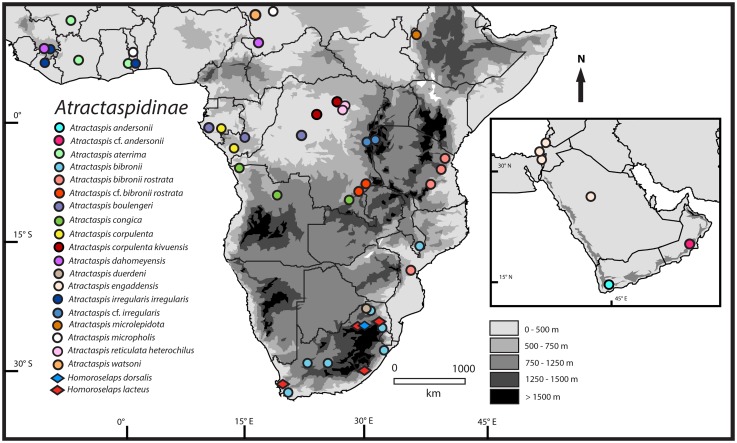
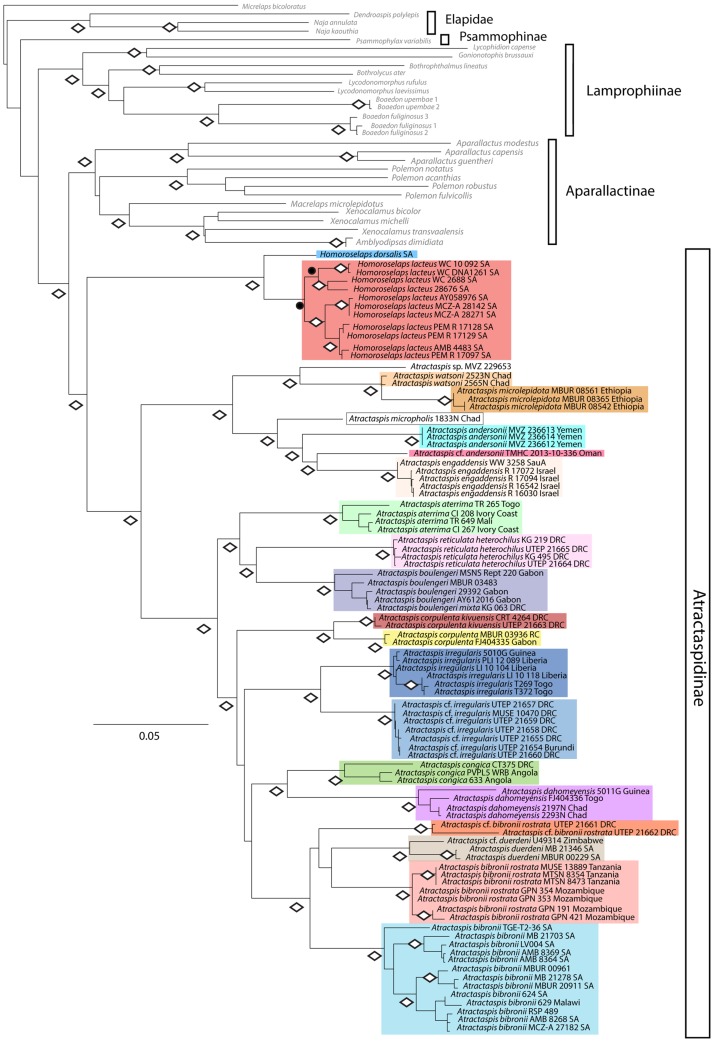
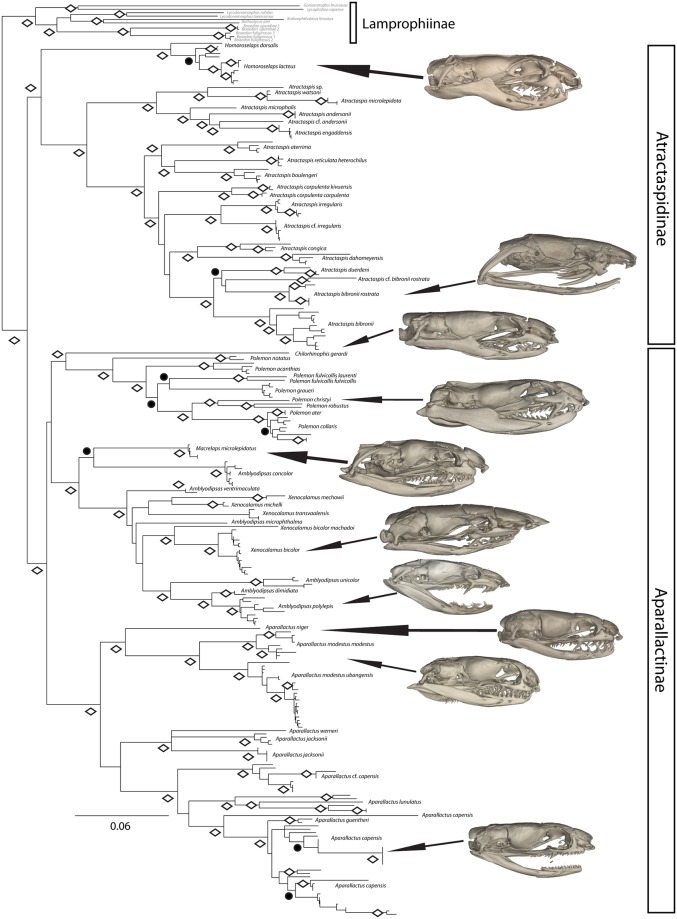
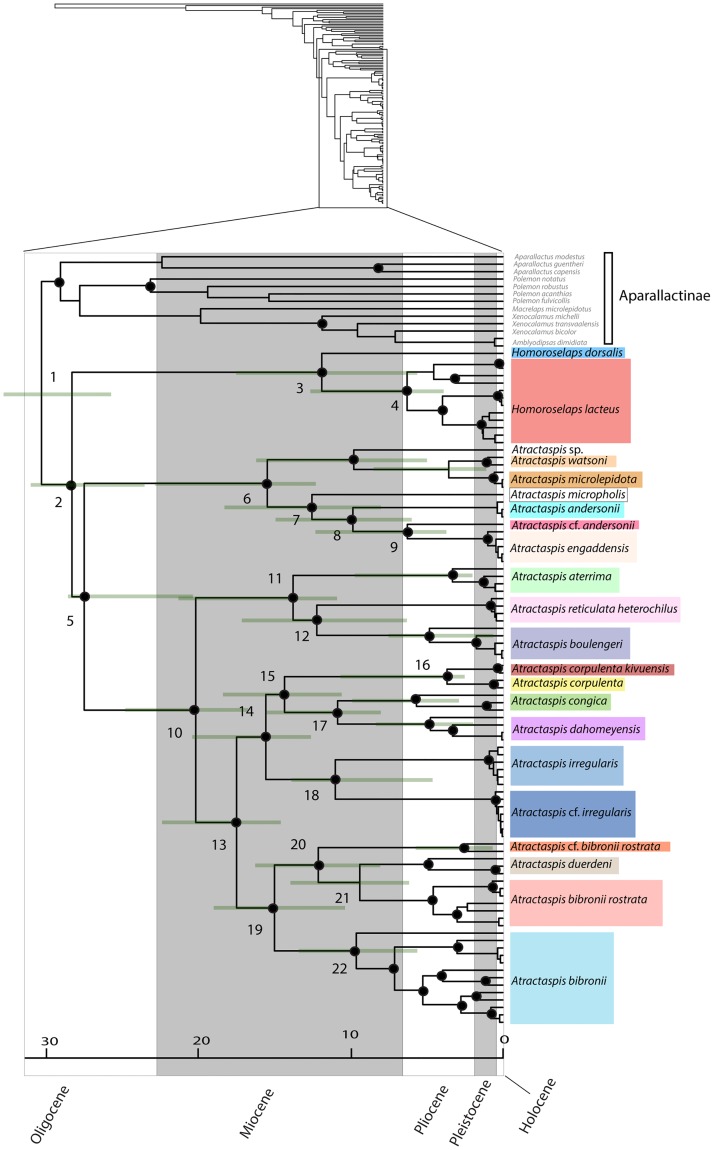
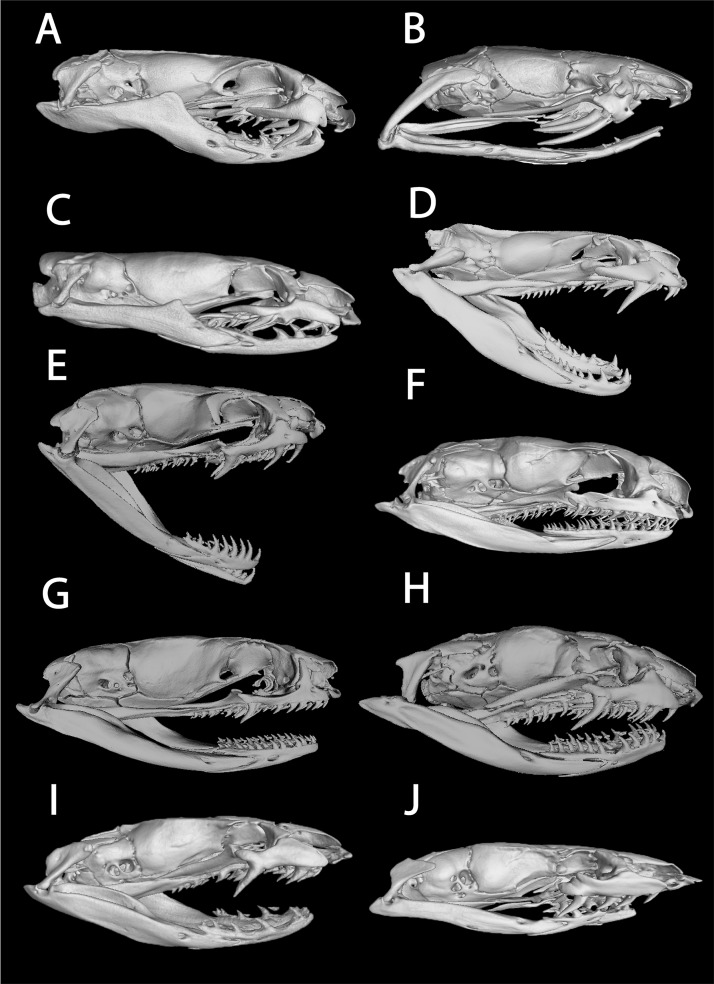
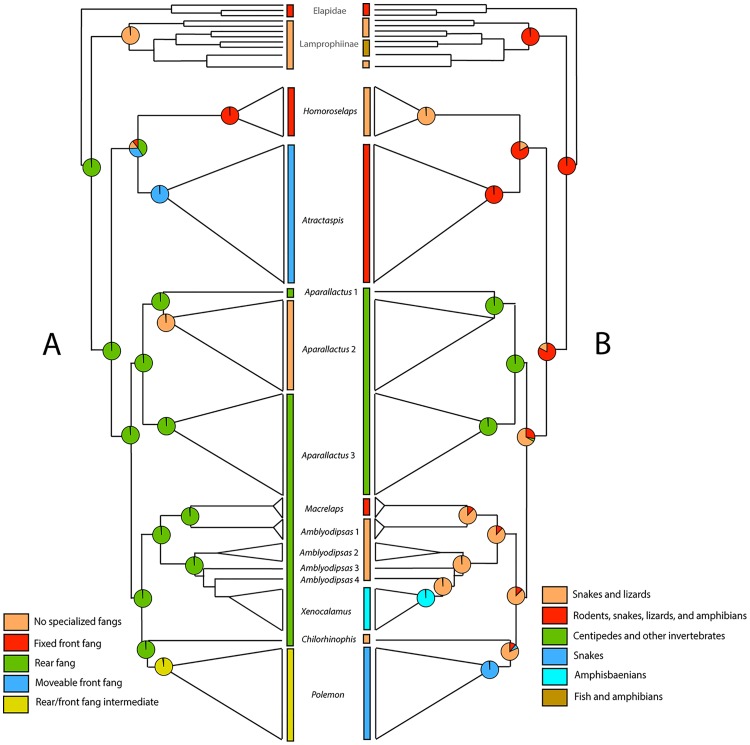
Atractaspidines are poorly studied, fossorial snakes that are found throughout Africa and western Asia, including the Middle East. We employed concatenated gene-tree analyses and divergence dating approaches to investigate evolutionary relationships and biogeographic patterns of atractaspidines with a multi-locus data set consisting of three mitochondrial (16S, cyt b, and ND4) and two nuclear genes (c-mos and RAG1). We sampled 91 individuals from both atractaspidine genera (Atractaspis and Homoroselaps). Additionally, we used ancestral-state reconstructions to investigate fang and diet evolution within Atractaspidinae and its sister lineage (Aparallactinae). Our results indicated that current classification of atractaspidines underestimates diversity within the group. Diversification occurred predominantly between the Miocene and Pliocene. Ancestral-state reconstructions suggest that snake dentition in these taxa might be highly plastic within relatively short periods of time to facilitate adaptations to dynamic foraging and life-history strategies.
Conflict of interest statement
MFB is affiliated with Flora Fauna & Man, Ecological Services Ltd. This does not alter our adherence to PLOS ONE policies on sharing data and materials.
Figures
References
-
- Wüster W, Crookes S, Ineich I, Mané Y, Pook CE, Trape J-F, et al. The phylogeny of cobras inferred from mitochondrial DNA sequences: Evolution of venom spitting and the phylogeography of the African spitting cobras (Serpentes: Elapidae: Naja nigricollis complex). Mol. Phylogenet. Evol., 2007; 45: 437–453. 10.1016/j.ympev.2007.07.021 - DOI - PubMed
-
- Kelly CMR, Branch WR, Broadley DG, Barker NP, Villet MH. Molecular systematics of the African snake family Lamprophiidae Fitzinger, 1843 (Serpentes: Elapoidea), with particular focus on the genera Lamprophis Fitzinger 1843 and Mehelya Csiki 1903. Mol. Phylogenet. Evol., 2011; 58: 415–426. 10.1016/j.ympev.2010.11.010 - DOI - PubMed
-
- Menegon M, Loader SP, Marsden SJ, Branch WR, Davenport TRB, Ursenbacher S. The genus Atheris (Serpentes: Viperidae) in East Africa: Phylogeny and the role of rifting and climate in shaping the current pattern of species diversity. Mol. Phylogenet. Evol., 2014; 79: 12–22. 10.1016/j.ympev.2014.06.007 - DOI - PubMed
-
- Greenbaum E, Portillo F, Jackson K, Kusamba C. A phylogeny of Central African Boaedon (Serpentes: Lamprophiidae), with the description of a new cryptic species from the Albertine Rift. Afr. J. Herpetol., 2015; 64: 18–38. 10.1080/21564574.2014.996189 - DOI
-
- Wüster W, Chirio L, Trape J-F, Ineich I, Jackson K, Greenbaum E, et al. Integration of nuclear and mitochondrial gene sequences and morphology reveal unexpected diversity in the forest cobra (Naja melanoleuca) species complex in Central and West Africa (Serpentes: Elapidae). Zootaxa, 2018; 4455: 68–98. 10.11646/zootaxa.4455.1.3 - DOI - PubMed
Publication types
MeSH terms
Substances
Grants and funding
LinkOut - more resources
Full Text Sources
