


Cementless short-stem total hip arthroplasty in the elderly patient - is it a safe option?: a prospective multicentre observational study
- PMID: 30995903
- PMCID: PMC6472082
- DOI: 10.1186/s12877-019-1123-1
Cementless short-stem total hip arthroplasty in the elderly patient - is it a safe option?: a prospective multicentre observational study
Abstract
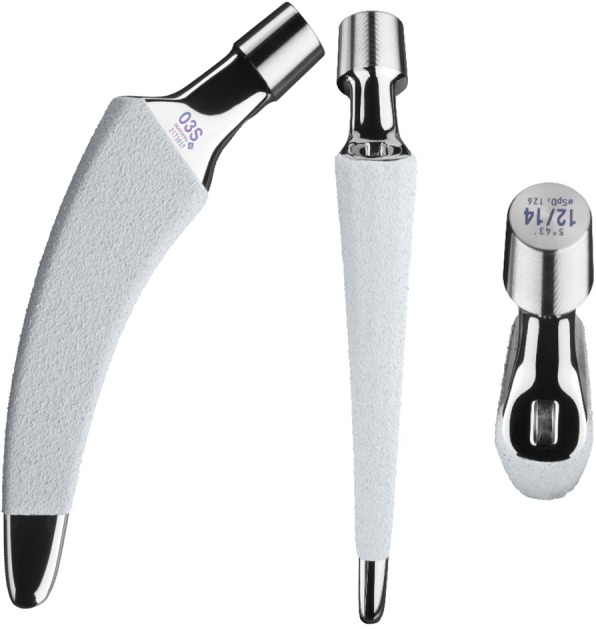
Background: Due to its bone preserving philosophy, short-stem total hip arthroplasty (THA) has primarily been recommended for young and active patients. However, there may be benefits for elderly patients given a less invasive operative technique due to the short curved implant design. The purpose of this study was to compare the clinical and radiological outcomes as well as perioperative complications of a calcar-guided short stem between a young (< 60 years) and a geriatric (> 75 years) population.
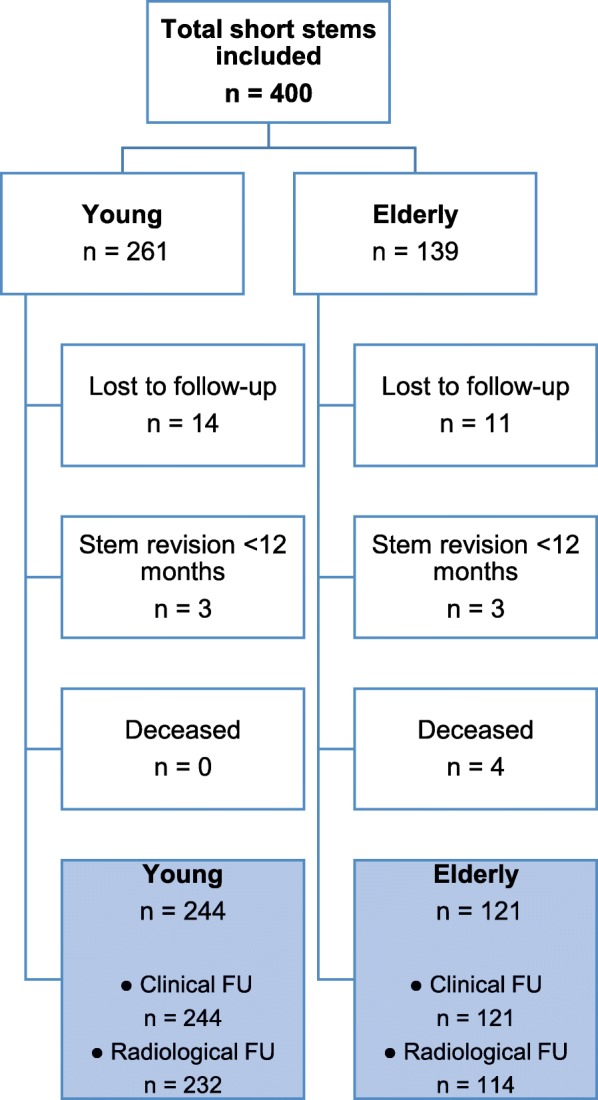
Methods: Data were collected in a total of 5 centers, and 400 short-stems were included as part of a prospective multicentre observational study between 2010 and 2014 with a mean follow-up of 49.2 months. Preoperative femur morphology was analysed using the Dorr classification. Clinical and radiological outcomes were assessed in both groups as well as perioperative complications, rates and reasons for stem revision.
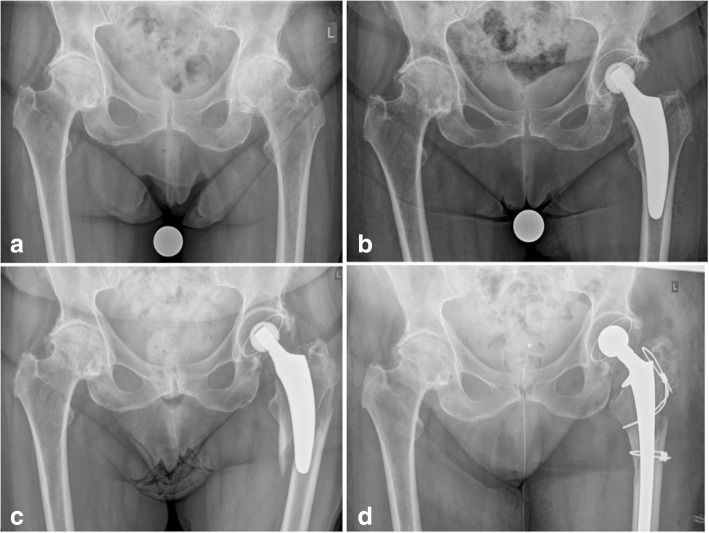
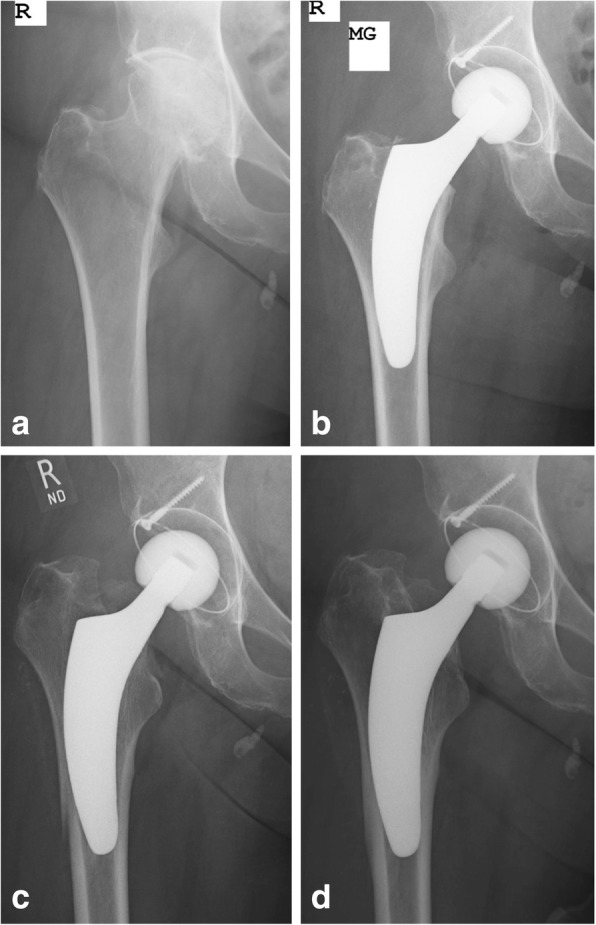
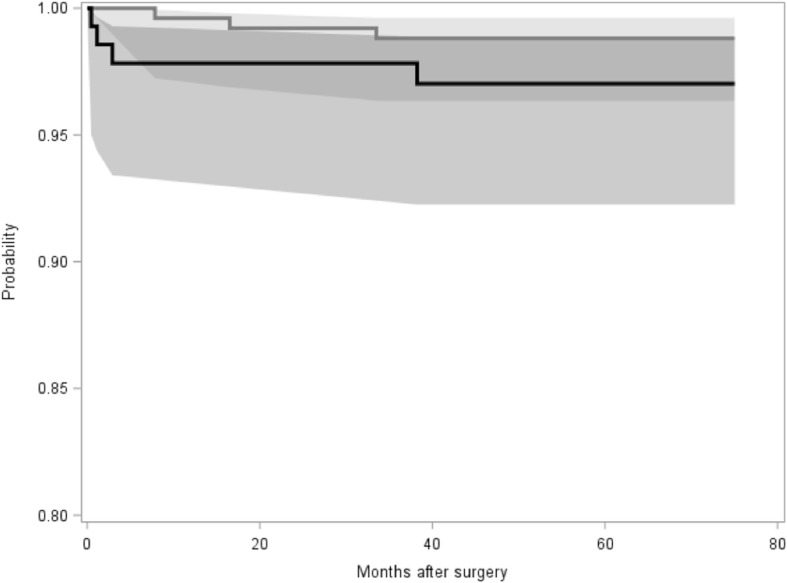
Results: No differences were found for the mean visual analogue scale (VAS) values of rest pain, load pain, and satisfaction, whereas Harris Hip Score (HHS) was slightly better in the young group. Comparing both groups, none of the radiological parameters that were assessed (stress-shielding, cortical hypertrophy, radiolucency, osteolysis) reached differences of statistical significance. While in young patients aseptic loosening is the main cause of implant failure, in the elderly group particularly postoperative periprosthetic fractures due to accidental fall have to be considered to be of high risk. The incidence of periprosthetic fractures was found to be 0% in Dorr type A femurs, whereas in Dorr types B and C fractures occurred in 2.1 and 22.2% respectively.
Conclusions: Advanced age alone is not necessarily to be considered as contra-indications for calcar-guided short-stem THA, although further follow-up is needed. However, markedly reduced bone quality with femur morphology of Dorr type C seems to be associated with increased risk for postoperative periprosthetic fractures, thus indication should be limited to Dorr types A and B.
Trial registration: German Clinical Trials Register; DRKS00012634 , 07.07.2017 (retrospectively registered).
Keywords: Age; Elderly; Optimys; Short stem; Total hip arthroplasty; Young.
Conflict of interest statement
Ethics approval and consent to participate
All procedures performed were in accordance with the 1964 Helsinki declaration and its later amendments or comparable ethical standards. Ethical approval was obtained from the Freiburg Ethics Commission International (feki Code: 010/2071).
Written consent was obtained from all individual participants included in the study.
Consent for publication
Not applicable.
Competing interests
Author KPK serves as instructor for the optimys stem for Mathys Ltd. Bettlach, Switzerland. All other authors declare that they have no competing interest.
Publisher’s Note
Springer Nature remains neutral with regard to jurisdictional claims in published maps and institutional affiliations.
Figures
References
Publication types
MeSH terms
Substances
LinkOut - more resources
Full Text Sources
Medical
