


Visualizing flow in an intact CSF network using optical coherence tomography: implications for human congenital hydrocephalus
- PMID: 30996265
- PMCID: PMC6470164
- DOI: 10.1038/s41598-019-42549-4
Visualizing flow in an intact CSF network using optical coherence tomography: implications for human congenital hydrocephalus
Erratum in
-
Author Correction: Visualizing flow in an intact CSF network using optical coherence tomography: implications for human congenital hydrocephalus.Sci Rep. 2020 Feb 12;10(1):2791. doi: 10.1038/s41598-020-59301-y. Sci Rep. 2020. PMID: 32047215 Free PMC article.
Abstract
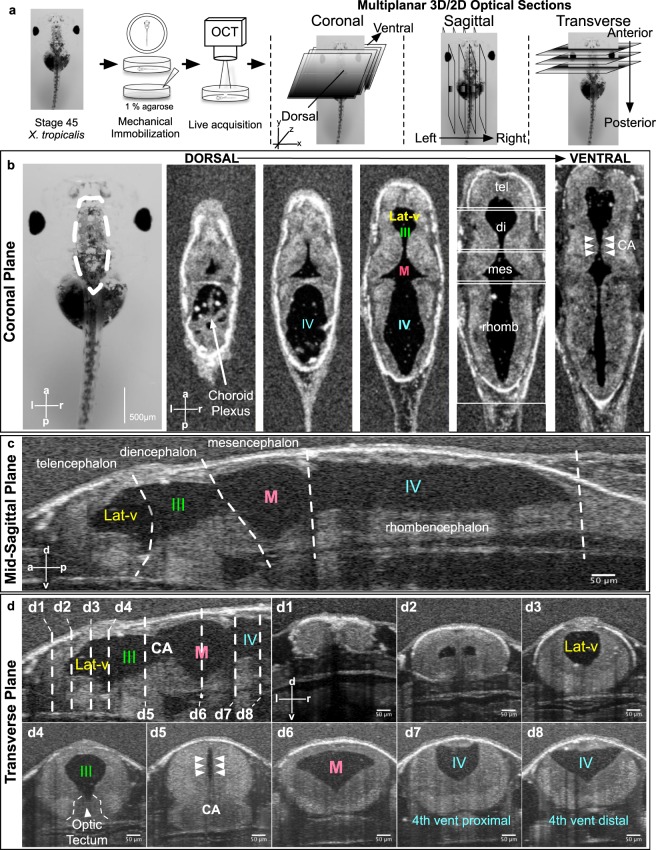
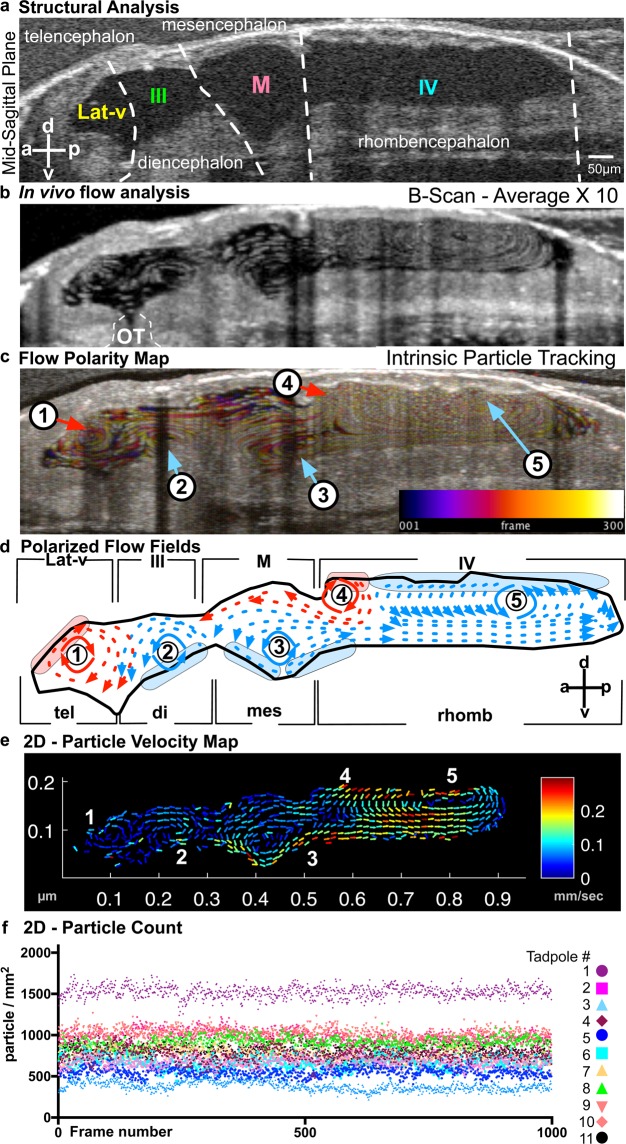
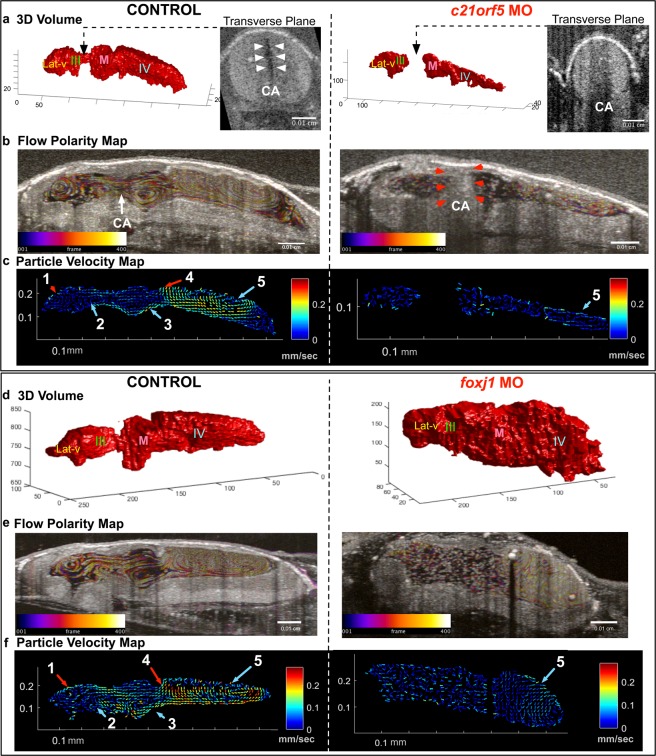
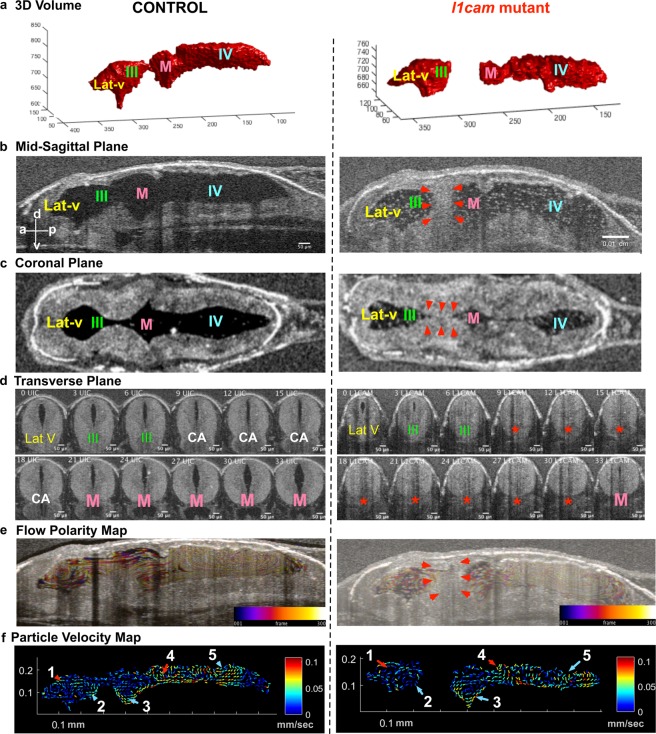
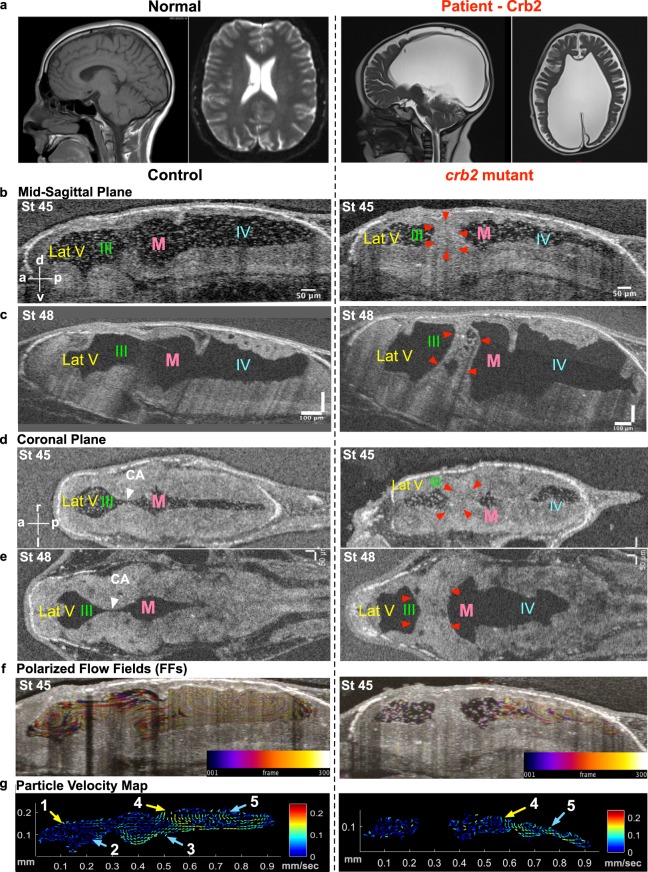
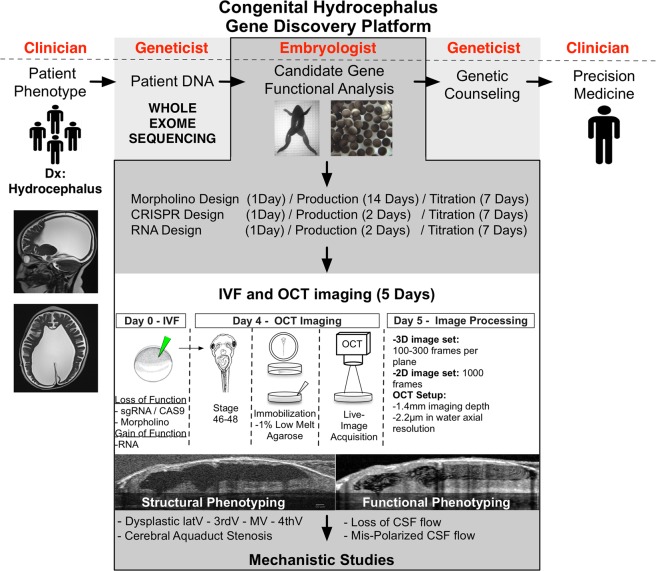
Cerebrospinal fluid (CSF) flow in the brain ventricles is critical for brain development. Altered CSF flow dynamics have been implicated in congenital hydrocephalus (CH) characterized by the potentially lethal expansion of cerebral ventricles if not treated. CH is the most common neurosurgical indication in children effecting 1 per 1000 infants. Current treatment modalities are limited to antiquated brain surgery techniques, mostly because of our poor understanding of the CH pathophysiology. We lack model systems where the interplay between ependymal cilia, embryonic CSF flow dynamics and brain development can be analyzed in depth. This is in part due to the poor accessibility of the vertebrate ventricular system to in vivo investigation. Here, we show that the genetically tractable frog Xenopus tropicalis, paired with optical coherence tomography imaging, provides new insights into CSF flow dynamics and role of ciliary dysfunction in hydrocephalus pathogenesis. We can visualize CSF flow within the multi-chambered ventricular system and detect multiple distinct polarized CSF flow fields. Using CRISPR/Cas9 gene editing, we modeled human L1CAM and CRB2 mediated aqueductal stenosis. We propose that our high-throughput platform can prove invaluable for testing candidate human CH genes to understand CH pathophysiology.
Conflict of interest statement
The authors declare no competing interests.
Figures
References
-
- Abdelhamed Zakia, Vuong Shawn M., Hill Lauren, Shula Crystal, Timms Andrew, Beier David, Campbell Kenneth, Mangano Francesco T., Stottmann Rolf W., Goto June. A mutation in Ccdc39 causes neonatal hydrocephalus with abnormal motile cilia development in mice. Development. 2018;145(1):dev154500. doi: 10.1242/dev.154500. - DOI - PMC - PubMed
Publication types
MeSH terms
Substances
Grants and funding
LinkOut - more resources
Full Text Sources
Medical
