. 2019 Mar 13;10(4):534-538.
doi: 10.1021/acsmedchemlett.8b00569. eCollection 2019 Apr 11.

Discovery of Stereospecific PARP-1 Inhibitor Isoindolinone NMS-P515

Affiliations

Discovery of Stereospecific PARP-1 Inhibitor Isoindolinone NMS-P515

Gianluca Papeo et al. ACS Med Chem Lett. .

Abstract

Poly(ADP-ribose) polymerase-1 (PARP-1) is an enzyme involved in signaling and repair of DNA single strand breaks. PARP-1 employs NAD+ to modify substrate proteins via the attachment of poly(ADP-ribose) chains. PARP-1 is a well established target in oncology, as testified by the number of marketed drugs (e.g., Lynparza, Rubraca, Zejula, and Talzenna) used for the treatment of ovarian, breast, and prostate tumors. Efforts in investigating an uncharted region of the previously identified isoindolinone carboxamide series delivered (S)-13 (NMS-P515), a potent inhibitor of PARP-1 both in biochemical (K d: 0.016 μM) and cellular (IC50: 0.027 μM) assays. Cocrystal structure allowed explaining NMS-P515 stereospecific inhibition of the target. After having ruled out potential loss of enantiopurity in vitro and in vivo, NMS-P515 was synthesized in an asymmetric fashion. NMS-P515 ADME profile and its antitumor activity in a mouse xenograft cancer model render the compound eligible for further optimization.


Conflict of interest statement

The authors declare no competing financial interest.

Figures

Figure 1
Figure 1
Marketed PARP-1 inhibitors (14) and isoindolinone carboxamide derivatives (57).
Scheme 1
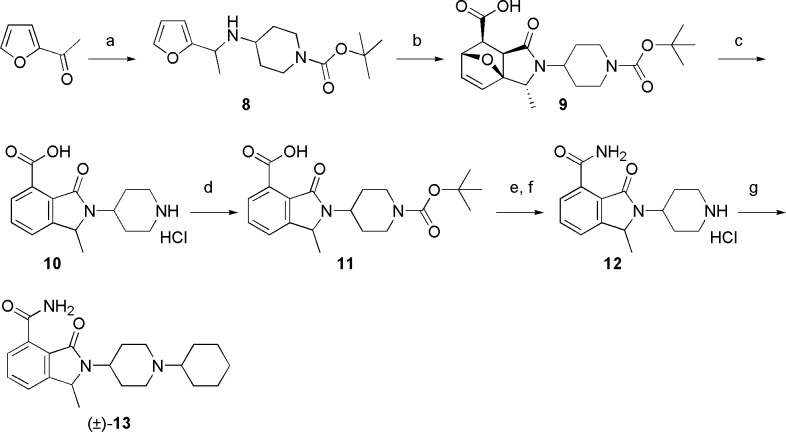
Scheme 1. Synthesis of Compound (±)-13
Reagents and conditions: (a) 4-amino-piperidine-1-carboxylic acid tert-butyl ester, 1 M TiCl4 in DCM, TEA, DCM, reflux, then NaCNBH3, MeOH, rt, 80%; (b) maleic anhydride, toluene, reflux, 6 h, 80%; (c) 37% HCl, reflux, 70%; (d) di-tert-butyl dicarbonate, K2CO3, pyridine, MeOH, rt, 78%; (e) HOBt·NH3, EDCI·HCl, DIPEA, DMF, rt, 75%; (f) 4 M HCl in dioxane, 50 °C; (g) cyclohexanone, NaCNBH3, NaOAc, DCM/MeOH, rt, 76%.
Scheme 2
Scheme 2. Synthesis of Compound (±)-18
Reagents and conditions: (a) NBS, Bz2O2, methyl pivalate, reflux then 1-cyclohexyl-piperidine-4-ylamine, TEA, acetonitrile, reflux, 40%; (b) MeI, NaHMDS 1 M in THF, rt, 90 min; (c) CuCN, DMF, reflux, 90 min, 54%; (d) 37% HCl, 100 °C then HOBt·NH3, EDCI·HCl, DIPEA, DMF, rt, 38%.
Figure 2
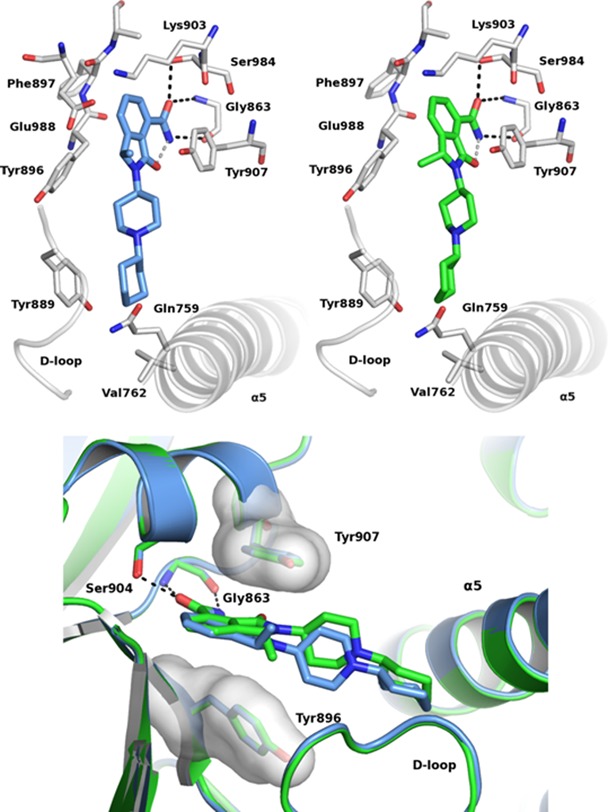
Figure 2
Cocrystal structure of (S)-13 (NMS-P515, blue, top left) and (R)-13 (green, top right) with chicken PARP-1 CD and their overlapping (bottom).
Figure 3
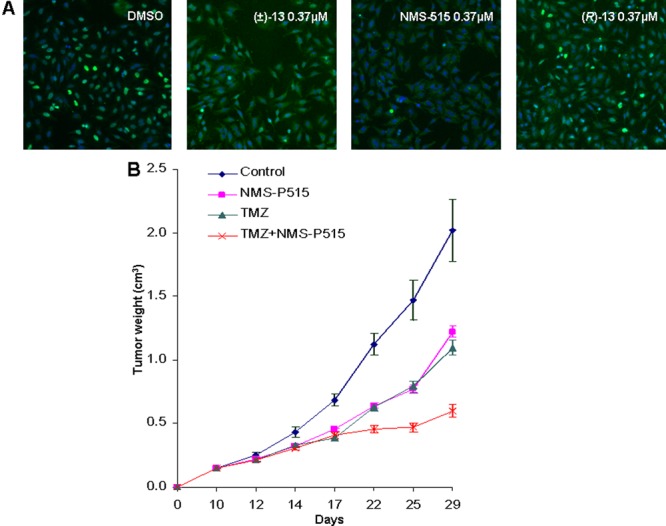
Figure 3
(A) ArrayScan Images of HeLa cells treated with dimethyl sulfoxide (DMSO, control), and same concentration (0.37 μM) of (±)-13 (NMS-P515) and (R)-13 followed by hydrogen peroxide-induced PAR formation (blue, Hoechst (DNA); green, antibody anti-PAR). (B) Tumor growth inhibition of Capan-1 pancreatic cancer xenograft model (control, blue line; NMS-P515, purple line; Temozolomide, green line; NMS-P515 + Temozolomide, red line).
Scheme 3
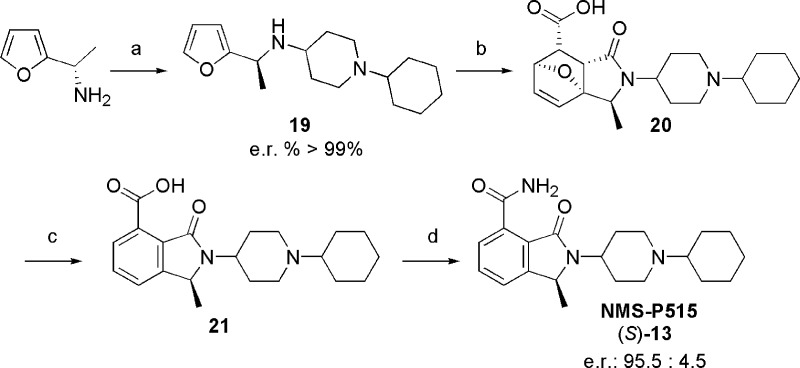
Scheme 3. Asymmetric Synthesis of NMS-P515
Reagents and conditions: (a) 1-cyclohexyl-piperidin-4-one, 1 M TiCl4, DCM, then NaCNBH3, MeOH, 52%; (b) maleic anhydride, toluene, 110 °C; (c) 37% HCl, 100 °C; (d) HOBt·NH3, EDCI·HCl, Et3N, THF, 40%.

References

    1. Hengel S. R.; Spies M. A.; Spies M. Small-Molecule Inhibitors Targeting DNA Repair and DNA Repair Deficiency in Research and Cancer Therapy. Cell Chem. Biol. 2017, 24, 1101–1119. 10.1016/j.chembiol.2017.08.027. - DOI - PMC - PubMed
    1. Desai A.; Yan Y.; Gerson S. L. Advances in therapeutic targeting of the DNA damage response in cancer. DNA Repair 2018, 66–67, 24–29. 10.1016/j.dnarep.2018.04.004. - DOI - PMC - PubMed
    1. Hottiger M. O.; Hassa P. O.; Lüscher B.; Schüler H.; Koch-Nolte F. Toward a unified nomenclature for mammalian ADP-ribosyltransferases. Trends Biochem. Sci. 2010, 35, 208–219. 10.1016/j.tibs.2009.12.003. - DOI - PubMed
    1. Di Girolamo M.; Fabrizio G. The ADP-Ribosyl-Transferases Diphtheria Toxin-Like (ARTDs) Family: An Overview. Challenges 2018, 9, 24.10.3390/challe9010024. - DOI
    1. Bürkle A.; Virág L. Poly(ADP-ribose): PARadigms and PARadoxes. Mol. Aspects Med. 2013, 34, 1046–1065. 10.1016/j.mam.2012.12.010. - DOI - PubMed

LinkOut - more resources