


Costs of implementing and sustaining enhanced collaborative care programs involving community partners
- PMID: 30999936
- PMCID: PMC6471861
- DOI: 10.1186/s13012-019-0882-6
Costs of implementing and sustaining enhanced collaborative care programs involving community partners
Abstract
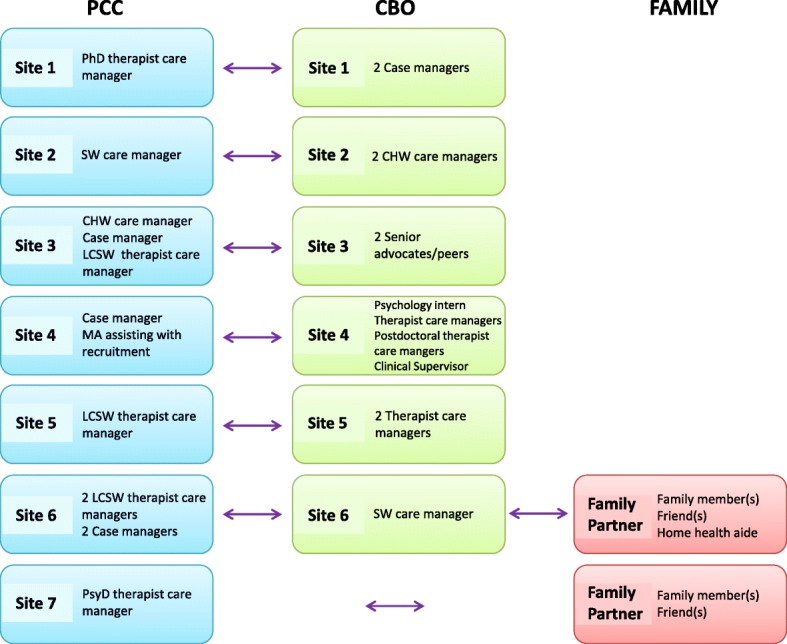
Background: Collaborative care is an evidence-based program for treating depression in primary care. We sought to expand this model by recruiting clinics interested in incorporating community partners (i.e., community-based organizations (CBO) and/or family members) in the care team. Seven sites implemented evidence-based collaborative care programs with community partners while collecting information on costs of implementing and sustaining programs.
Methods: Sites retrospectively collected data on planning and implementation costs with technical assistance from study researchers. Sites also prospectively collected cost of care activities over a 1-month period once the program was implemented to determine resources needed to sustain programs. Personnel salary costs were adjusted, adding 30% for benefits and 30% for administrative overhead.
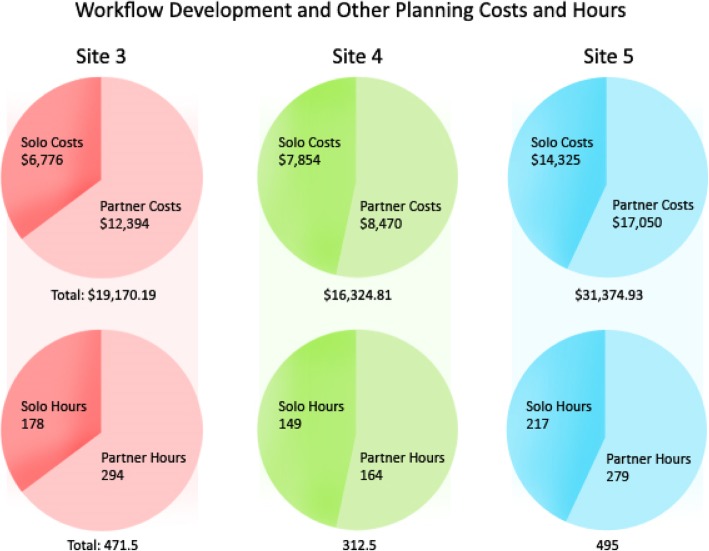
Results: The programs implemented varied considerably in staffing, involvement of care partners, and allocation of costs. Total planning and implementation costs varied from $39,280 to $60,575. The largest implementation cost category involved workflow development and ranged from $16,325 to $31,375 with the highest costs in this category attributed to the most successful implementation among clinic-CBO programs. Following implementation, cost per patient over the 1-month period ranged from $154 to $544. Ongoing strategic decision-making and administrative costs, which were included in cost of care, ranged from $284 to $2328 for the month.
Conclusions: Sites implemented collaborative care through differing partnerships, staffing, and related costs. Costs to implement and sustain programs developed in partnership are often not collected but are crucial to understanding financial aspects of developing sustainable partnerships. Assessing such costs is feasible and can inform future partnership efforts.
Keywords: Adaptation; Collaborative care implementation; Community partners; Depression; Family; Older adults.
Conflict of interest statement
Ethics approval and consent to participate
The larger Care Partners evaluation was reviewed by the University of Washington and University of California Davis IRBs and determined to be exempt. The subsequently funded cost evaluation was discussed with the University of Washington IRB and self-determined to be exempt based on the larger parent grant’s exempt status.
Consent for publication
We consent to publication.
Competing interests
The authors declare that they have no competing interests.
Publisher’s Note
Springer Nature remains neutral with regard to jurisdictional claims in published maps and institutional affiliations.
Figures
References
Publication types
MeSH terms
LinkOut - more resources
Full Text Sources
Medical
Molecular Biology Databases
