


Extracellular Vesicles in the Synovial Joint: Is there a Role in the Pathophysiology of Osteoarthritis?
- PMID: 31001376
- PMCID: PMC6459045
- DOI: 10.5704/MOJ.1903.012
Extracellular Vesicles in the Synovial Joint: Is there a Role in the Pathophysiology of Osteoarthritis?
Abstract
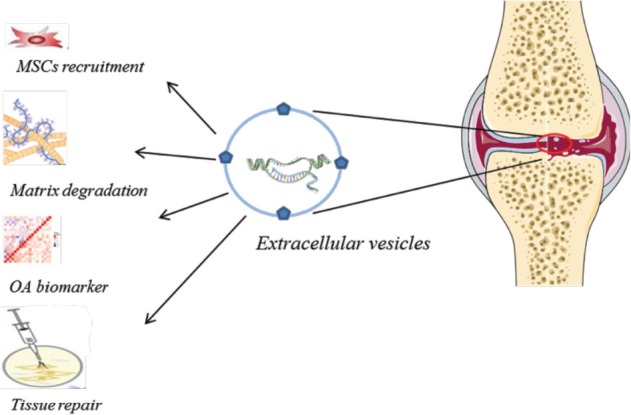
The role of extracellular vesicles (EV) in osteoarthritis has become the focus of much research. These vesicles were isolated from several cell types found in synovial joint including chondrocytes and synovium. As articular cartilage is an avascular tissue surrounded by synovial fluid, it is believed that EV might play a crucial role in the homeostasis of cartilage and also could hold key information in the pathogenesis of osteoarthritis. This is thought to be due to activation of pro-inflammatory factors leading to a catabolic state and degradation of cartilage. In addition, due to the nature of articular cartilage lacking neuronal innervation, knowledge of EV can contribute to identification of novel biomarkers in this debilitating condition. This can be either directly isolated from aspirate of synovial fluid or from peripheral blood. Finally, EVs are known to shuttle important signalling molecules which can be utilised as unique modality in transferring therapeutic compounds in a cell free manner.
Keywords: articular cartilage; biomarkers; extracellular vesicles; osteoarthritis; therapeutics.
Figures
References
-
- Nelson L, Fairclough J, Archer CW. Use of stem cells in the biological repair of articular cartilage. Expert Opin Biol Ther. 2010;10(1):43–55. - PubMed
-
- Schiphof D, van den Driest JJ, Runhaar J. Osteoarthritis year in review 2017: rehabilitation and outcomes. Osteoarthritis Cartilage. 2018;26(3):326–40. - PubMed
LinkOut - more resources
Full Text Sources
Research Materials