A 192-heme electron transfer network in the hydrazine dehydrogenase complex
- PMID: 31001586
- PMCID: PMC6469936
- DOI: 10.1126/sciadv.aav4310
A 192-heme electron transfer network in the hydrazine dehydrogenase complex
Abstract
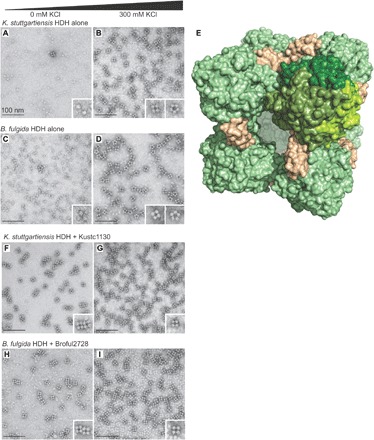
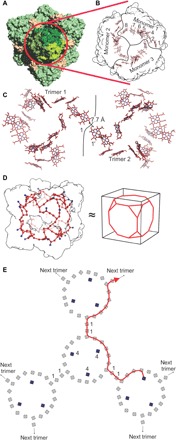
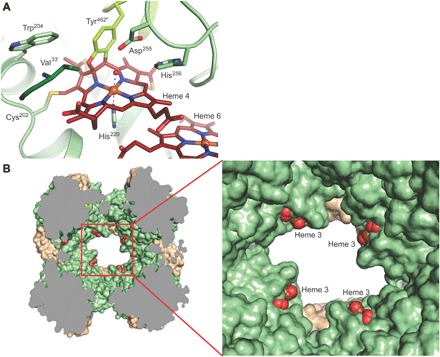
Anaerobic ammonium oxidation (anammox) is a major process in the biogeochemical nitrogen cycle in which nitrite and ammonium are converted to dinitrogen gas and water through the highly reactive intermediate hydrazine. So far, it is unknown how anammox organisms convert the toxic hydrazine into nitrogen and harvest the extremely low potential electrons (-750 mV) released in this process. We report the crystal structure and cryo electron microscopy structures of the responsible enzyme, hydrazine dehydrogenase, which is a 1.7 MDa multiprotein complex containing an extended electron transfer network of 192 heme groups spanning the entire complex. This unique molecular arrangement suggests a way in which the protein stores and releases the electrons obtained from hydrazine conversion, the final step in the globally important anammox process.
Figures
References
-
- Mulder A., van de Graaf A. A., Robertson L. A., Kuenen J. G., Anaerobic ammonium oxidation discovered in a denitrifying fluidized bed reactor. FEMS Microbiol. Ecol. 16, 177–183 (1995).
-
- Arrigo K. R., Marine microorganisms and global nutrient cycles. Nature 437, 349–355 (2005). - PubMed
-
- van Niftrik L. A., Fuerst J. A., Damsté J. S. S., Kuenen J. G., Jetten M. S. M., Strous M., The anammoxosome: An intracytoplasmic compartment in anammox bacteria. FEMS Microbiol. Lett. 233, 7–13 (2004). - PubMed
-
- Kartal B., de Almeida N. M., Maalcke W. J., Op den Camp H. J. M., Jetten M. S. M., Keltjens J. T., How to make a living from anaerobic ammonium oxidation. FEMS Microbiol. Rev. 37, 428–461 (2013). - PubMed
-
- Dietl A., Ferousi C., Maalcke W. J., Menzel A., de Vries S., Keltjens J. T., Jetten M. S. M., Kartal B., Barends T. R. M., The inner workings of the hydrazine synthase multiprotein complex. Nature 527, 394–397 (2015). - PubMed
Publication types
MeSH terms
Substances
LinkOut - more resources
Full Text Sources