


Preferences of people with Type 2 diabetes for diabetes care: a discrete choice experiment
- PMID: 31001855
- PMCID: PMC7586937
- DOI: 10.1111/dme.13969
Preferences of people with Type 2 diabetes for diabetes care: a discrete choice experiment
Abstract
Aims: Limited knowledge exists on the preferences of people with Type 2 diabetes towards diabetes care. Consequently, these care preferences cannot yet be considered in the development of tailored diabetes care approaches. Therefore, this study aimed to assess care preferences and their determinants in people with Type 2 diabetes.
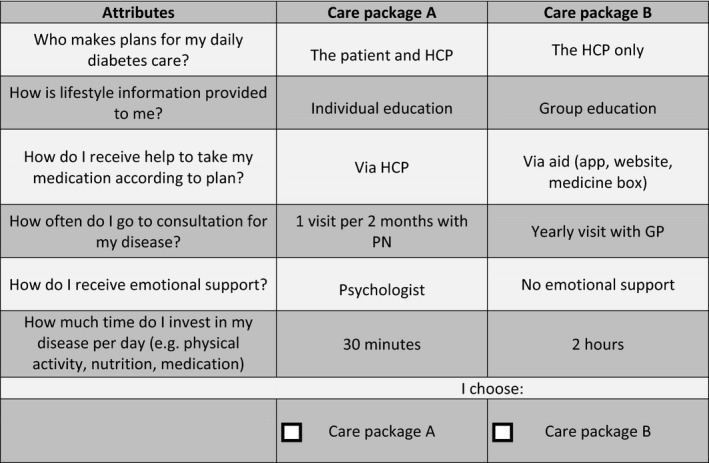
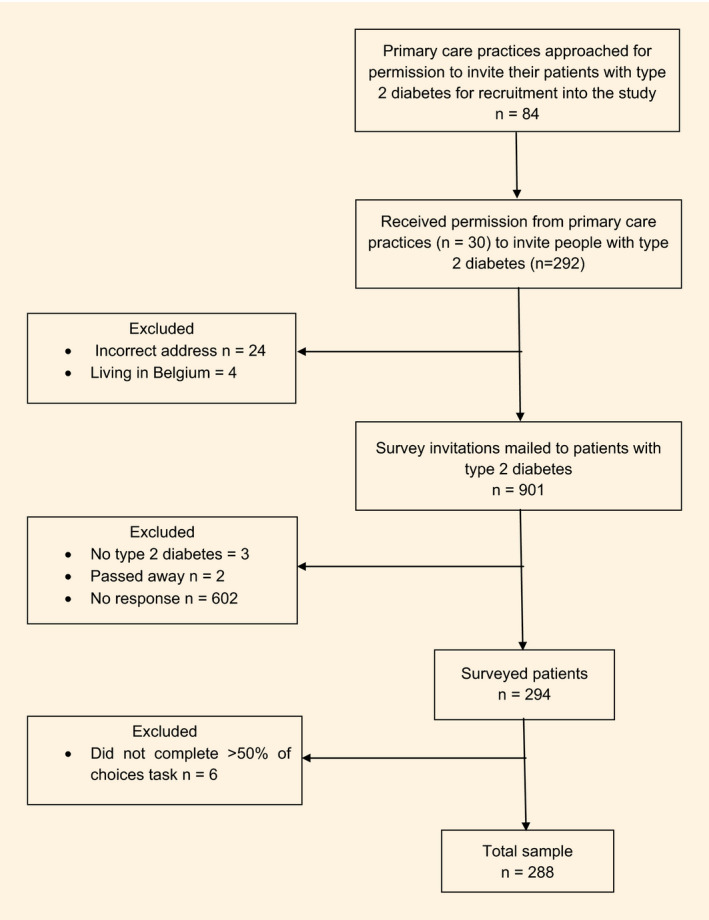
Methods: A discrete choice experiment was conducted to elicit people's preferences. People with Type 2 diabetes, treated in 30 Dutch primary care practices, were asked to choose repeatedly between two hypothetical diabetes care packages, which differed in six attributes: role division in daily diabetes care planning, lifestyle education method, type of medication management support, consultation frequency, emotional support and time spend on self-management. A mixed-logit model was used to estimate the relative importance of the included attributes. Preference heterogeneity among people with different person- and disease-related characteristics was investigated.
Results: In total, 288 participants completed the experiment. They preferred to plan their daily diabetes care together with a healthcare provider, to receive individual lifestyle education, medication and emotional support from a healthcare provider, one consultation visit every 3 months and to spend less time on self-management. Participants did not prefer to receive emotional support from a psychologist. Heterogeneity in preferences could partly be explained by differences in sex, education level and glucose-lowering drug use.
Conclusion: People with Type 2 diabetes show a preference for traditional care models. Emotional support was identified by participants as the most important attribute. It is therefore important to adequately guide them when changes in diabetes care organization are implemented.
© 2019 The Authors. Diabetic Medicine published by John Wiley & Sons Ltd on behalf of Diabetes UK.
Figures
References
-
- Kleefstra N, Landman GW, Van Hateren KJ, Meulepas M, Romeijnders A, Rutten GE et al Dutch diabetes prevalence estimates (DUDE‐1). J Diabetes 2016; 8: 863–865. - PubMed
-
- Hek K, Ursum J, Tol J, Verheij RA. Eerstelijnszorggebruik voor diabetes: een overzicht. Nivel Zorgregistraties eerste lijn, 2016. Available at https://www.nivel.nl/nl/zorgregistraties-eerste-lijn/zorggebruik-de-eers... Last accessed 25 April 2019.
-
- Nederlands huisartsen genootschap . NHG‐standaard Diabetes mellitus type 2 (vierde (partitiële) herziening), 2018. Available at https://www.nhg.org/standaarden/volledig/nhg-standaard-diabetes-mellitus... Last accessed 25 April 2019.
-
- Bakker K, Bilo HJG. Diabetes care in the Netherlands: now and in the future. Pract Diab Int 2004; 21: 88–91.
-
- Cebolla Garrofé B, Björnberg A, Yung Phang A. Euro Diabetes Index 2014. Marseillan, France: Health Consumer Powerhouse Ltd; 2014.
Publication types
MeSH terms
Grants and funding
LinkOut - more resources
Full Text Sources
Medical
