Evaluation of Propofol in Comparison with Other General Anesthetics for Surgery in Children Younger than 3 Years: a Systematic Review and Meta-Analysis
- PMID: 31001938
- PMCID: PMC6473090
- DOI: 10.3346/jkms.2019.34.e124
Evaluation of Propofol in Comparison with Other General Anesthetics for Surgery in Children Younger than 3 Years: a Systematic Review and Meta-Analysis
Abstract
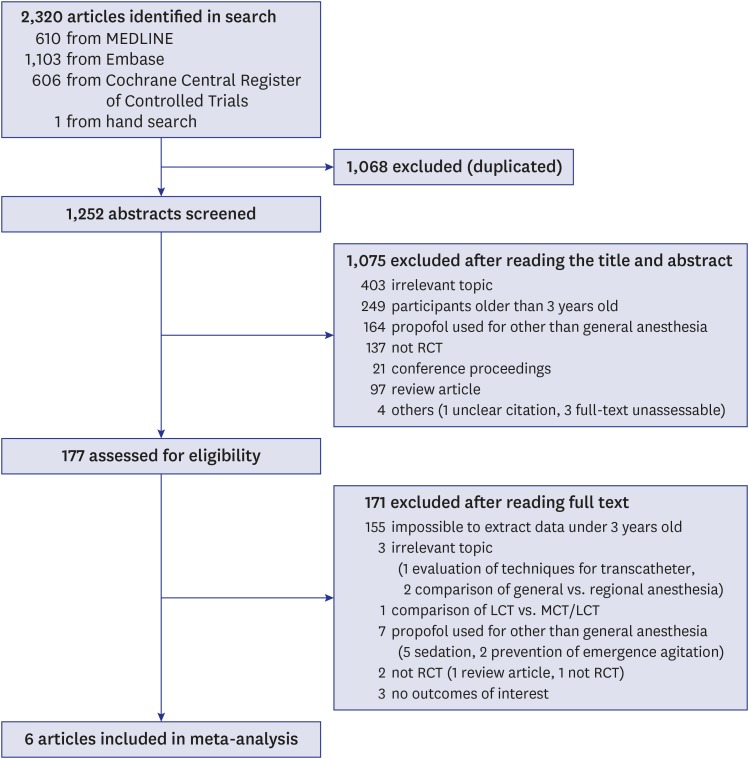
Background: Despite well-known advantages, propofol remains off-label in many countries for general anesthesia in children under 3 years of age due to insufficient evidence regarding its use in this population. This study aimed to evaluate the efficacy and safety of propofol compared with other general anesthetics in children under 3 years of age undergoing surgery through a systematic review and meta-analysis of existing randomized clinical trials.
Methods: A comprehensive literature search was conducted of MEDLINE, Embase, and the Cochrane Central Register of Controlled Trials to find all randomized clinical trials comparing propofol with another general anesthetic that included children under 3 years of age. The relative risk or arcsine-transformed risk difference for dichotomous outcomes and the weighted or standardized mean difference for continuous outcomes were estimated using a random-effects model.
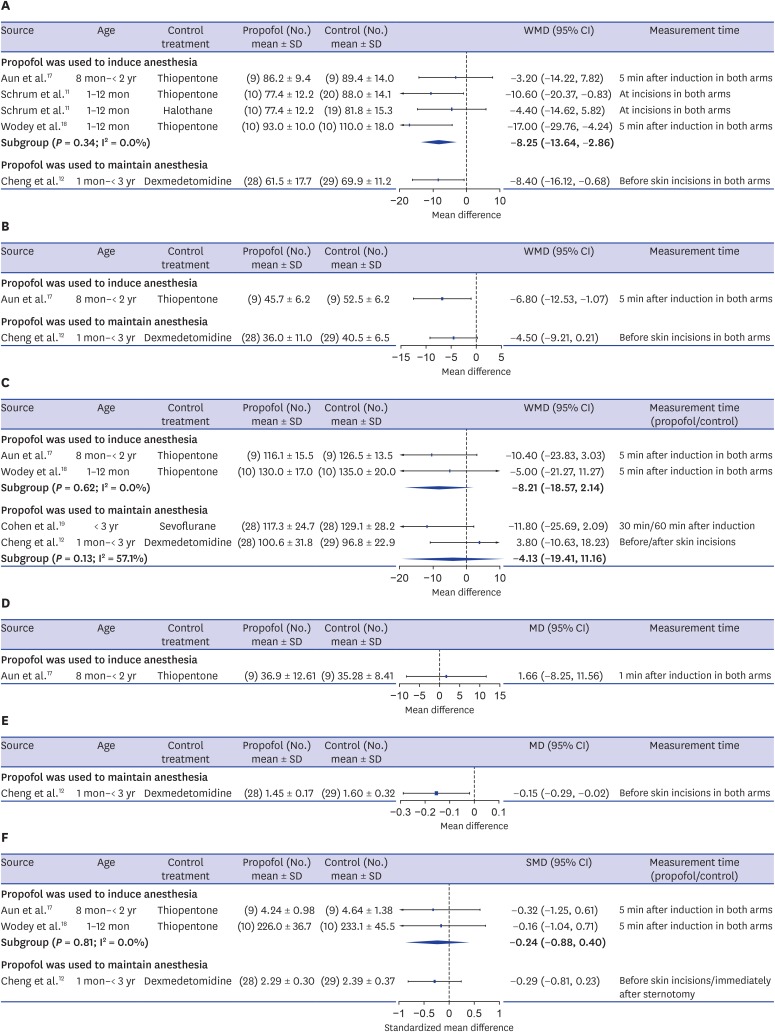
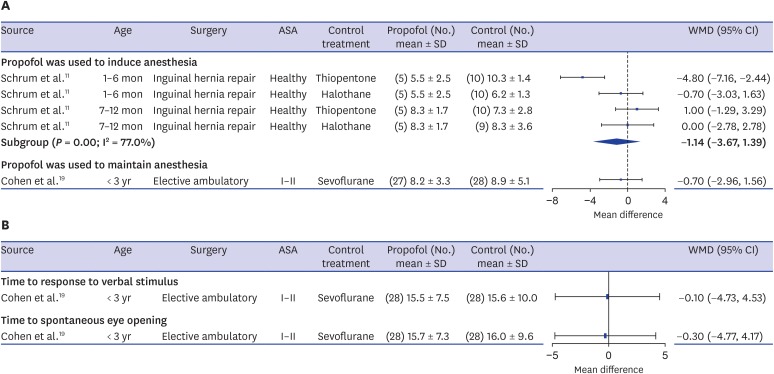
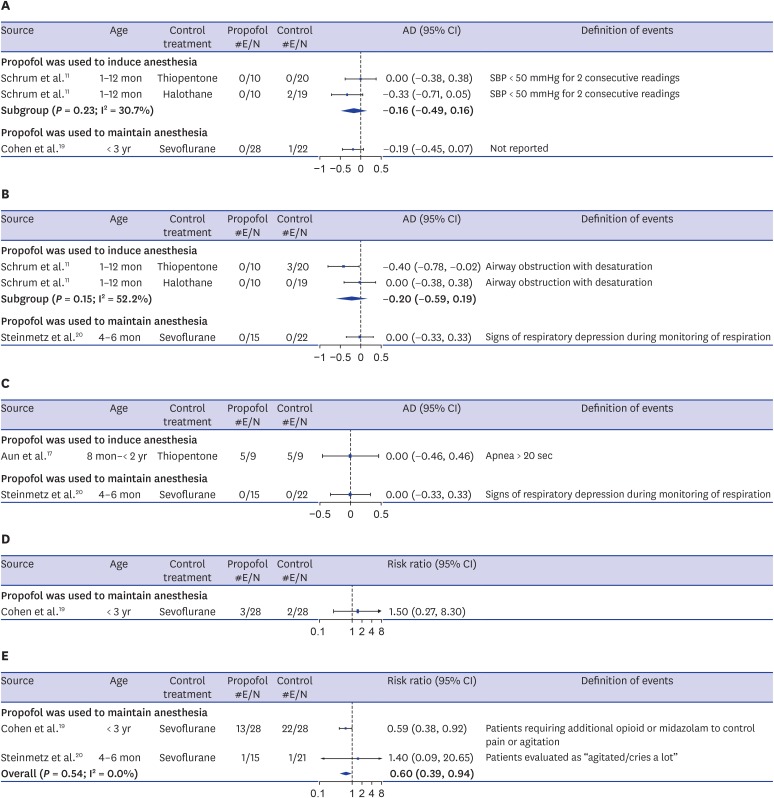
Results: A total of 249 young children from 6 publications were included. The children who received propofol had statistically significantly lower systolic and diastolic blood pressures, but hypotension was not observed in the propofol groups. The heart rate, stroke volume index, and cardiac index were not significantly different between the propofol and control groups. The propofol groups showed slightly shorter recovery times and a lower incidence of emergence agitation than the control groups, while no difference was observed for the incidence of hypotension, desaturation, and apnea.
Conclusion: This systematic review and meta-analysis indicates that propofol use for general anesthesia in young healthy children undergoing surgery does not increase complications and that propofol could be at least comparable to other anesthetic agents.
Keywords: Child; General Anesthesia; Infant; Propofol; Systematic Review.
© 2019 The Korean Academy of Medical Sciences.
Conflict of interest statement
The authors have no potential conflicts of interest to disclose.
Figures
Comment in
-
Letter to the Editor: Is Propofol Good Choice for Procedural Sedation? Evaluation of Propofol in Comparison with Other General Anesthetics for Surgery in Children Younger than 3 Years.J Korean Med Sci. 2019 Jul 22;34(28):e191. doi: 10.3346/jkms.2019.34.e191. J Korean Med Sci. 2019. PMID: 31327177 Free PMC article. No abstract available.
-
The Author's Response: Evaluation of Propofol in Comparison with Other General Anesthetics for Surgery in Children Younger than 3 Years: a Systematic Review and Meta-Analysis.J Korean Med Sci. 2019 Jul 22;34(28):e192. doi: 10.3346/jkms.2019.34.e192. J Korean Med Sci. 2019. PMID: 31327178 Free PMC article. No abstract available.
References
-
- World Health Organization. WHO Model List of Essential Medicines for Children. 6th ed. Geneva: World Health Organization; 2017.
-
- British Medical Association; Royal Pharmaceutical Society; Royal College of Paediatrics and Child Health; Neonatal and Paediatric Pharmacists Group. BNF for Children 2011–2012 [Internet] [Accessed 21 Jun, 2017]. www.bnfc.org.
-
- Salvo I, Landoni G, Mucchetti M, Cabrini L, Pani L. Use and reimbursement of off-label drugs in pediatric anesthesia: the Italian experience. Paediatr Anaesth. 2014;24(6):625–631. - PubMed
Publication types
MeSH terms
Substances
Grants and funding
LinkOut - more resources
Full Text Sources