


Innervation of cervical carcinoma is mediated by cancer-derived exosomes
- PMID: 31003747
- PMCID: PMC6589362
- DOI: 10.1016/j.ygyno.2019.04.651
Innervation of cervical carcinoma is mediated by cancer-derived exosomes
Abstract
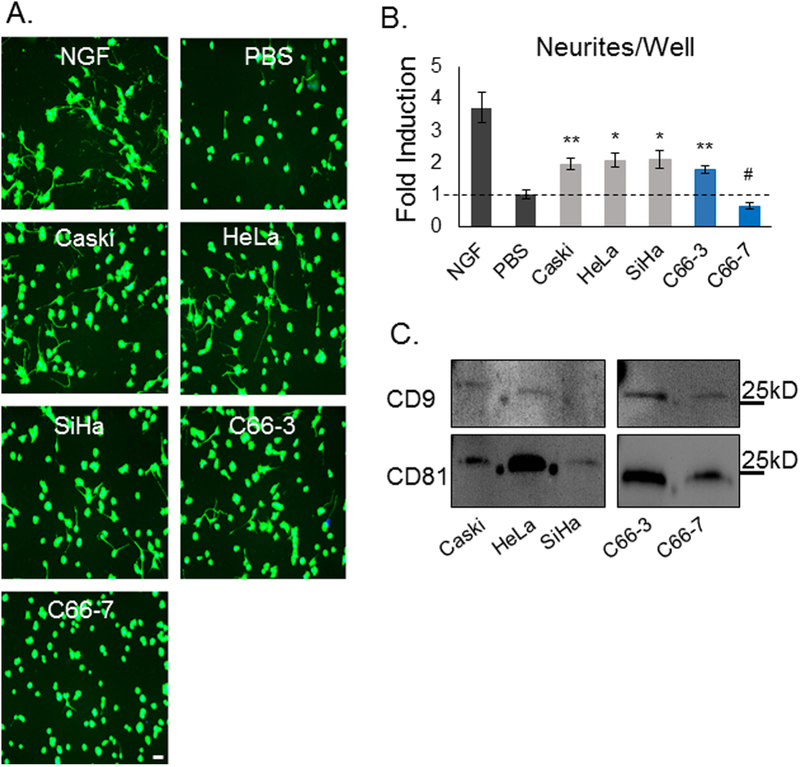
Objective: Recently, our laboratory identified sensory innervation within head and neck squamous cell carcinomas (HNSCCs) and subsequently defined a mechanism whereby HNSCCs promote their own innervation via the release of exosomes that stimulate neurite outgrowth. Interestingly, we noted that exosomes from human papillomavirus (HPV)-positive cell lines were more effective at promoting neurite outgrowth than those from HPV-negative cell lines. As nearly all cervical tumors are HPV-positive, we hypothesized that these findings would extend to cervical cancer.
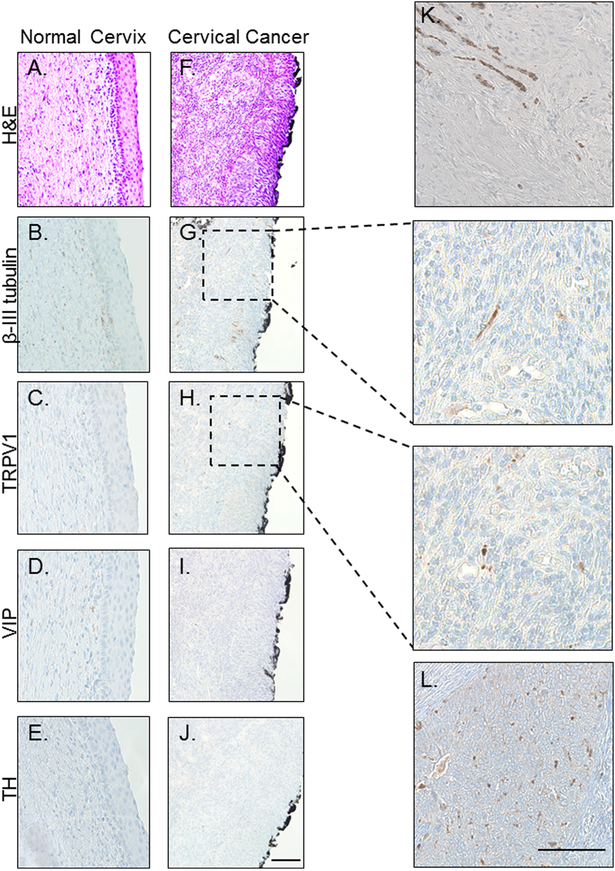
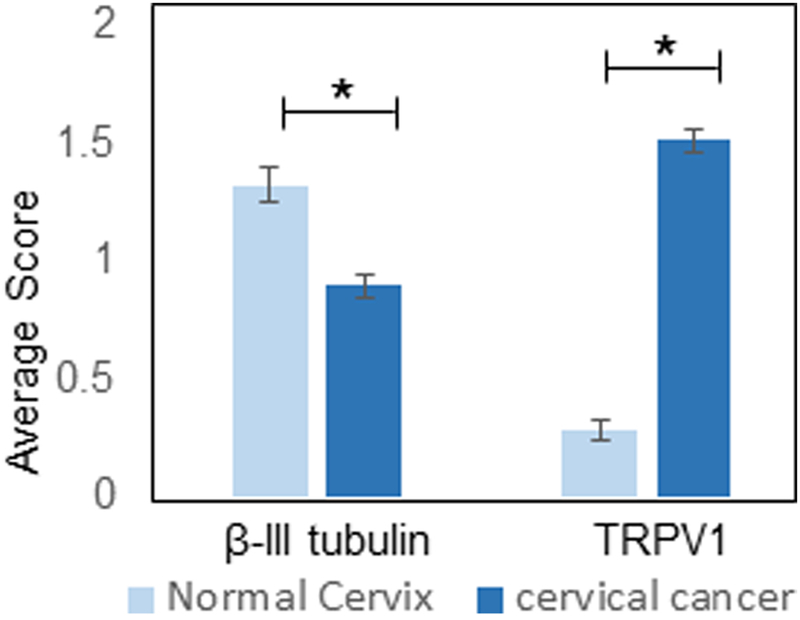
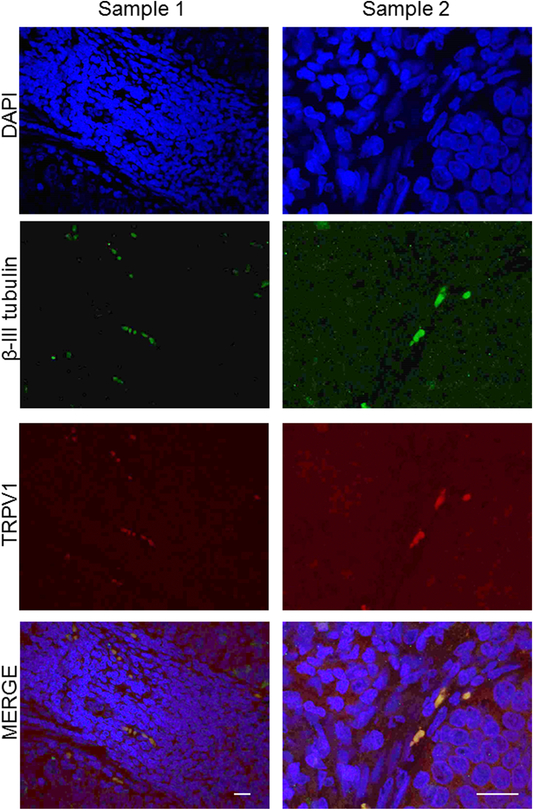
Methods: We use an in vitro assay with PC12 cells to quantify the axonogenic potential of cervical cancer exosomes. PC12 cells are treated with cancer-derived exosomes, stained with the pan-neuronal marker (β-III tubulin) and the number of neurites quantified. To assess innervation in cervical cancer, we immunohistochemically stained cervical cancer patient samples for β-III tubulin and TRPV1 (sensory marker) and compared the staining to normal cervix.
Results: Here, we show the presence of sensory nerves within human cervical tumors. Additionally, we show that exosomes derived from HPV-positive cervical cancer cell lines effectively stimulate neurite outgrowth.
Conclusions: These data identify sensory nerves as components of the cervical cancer microenvironment and suggest that tumor- derived exosomes promote their recruitment.
Keywords: Cervical cancer; Exosomes; HPV; Innervation.
Copyright © 2019 The Authors. Published by Elsevier Inc. All rights reserved.
Figures
References
-
- Gynecologic Cancers: Cervical Cancer Statistics: Centers for Disease Control and Prevention; 2018. Available from: https://www.cdc.gov/cancer/cervical/statistics/index.htm.
