


Generation of a highly attenuated strain of Pseudomonas aeruginosa for commercial production of alginate
- PMID: 31006977
- PMCID: PMC6922527
- DOI: 10.1111/1751-7915.13411
Generation of a highly attenuated strain of Pseudomonas aeruginosa for commercial production of alginate
Abstract
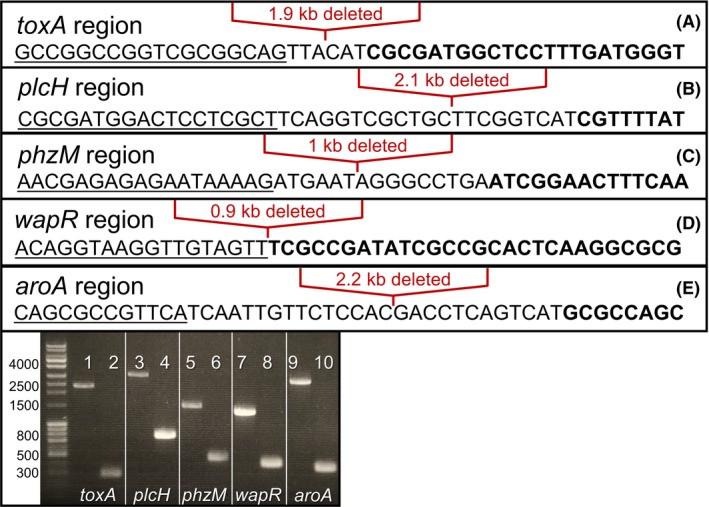
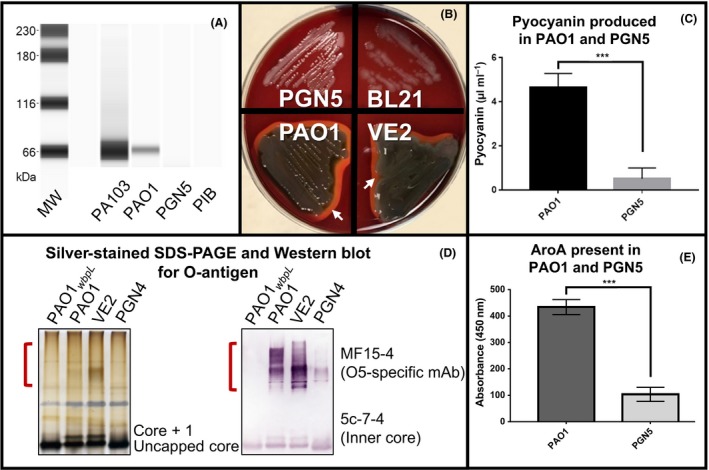
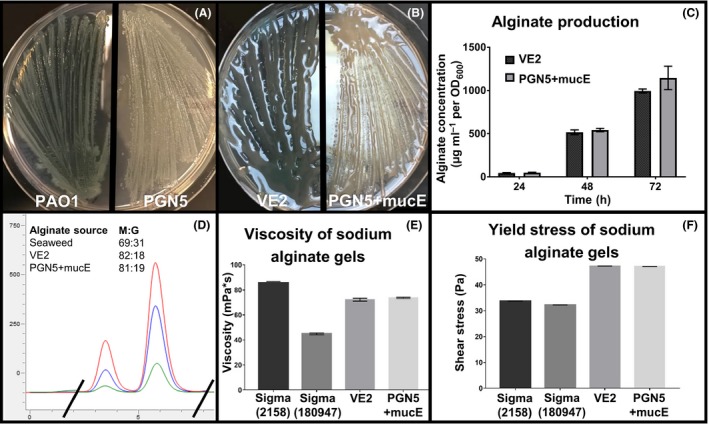
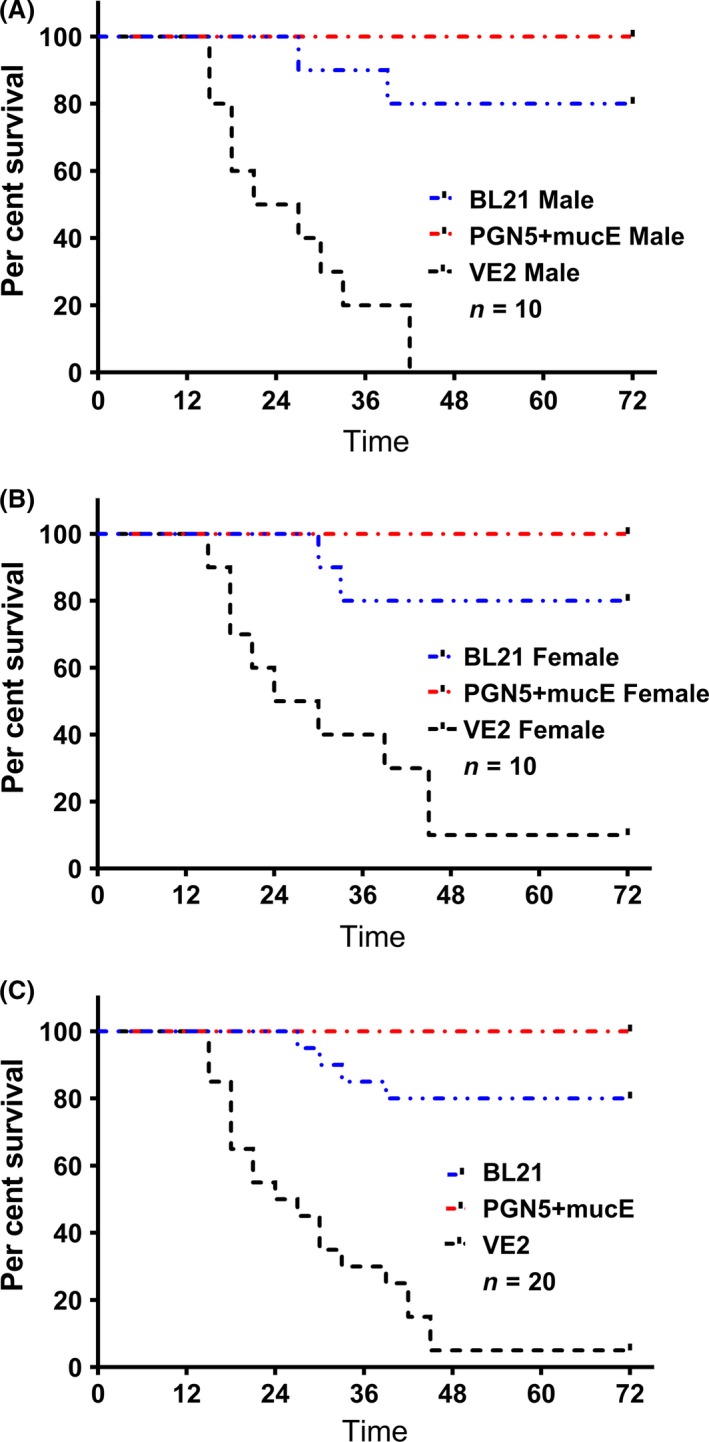
Alginate is an important polysaccharide that is commonly used as a gelling agent in foods, cosmetics and healthcare products. Currently, all alginate used commercially is extracted from brown seaweed. However, with environmental changes such as increasing ocean temperature and the increasing number of biotechnological uses of alginates with specific properties, there is an emerging need for more reliable and customizable sources of alginate. An alternative to seaweed for alginate production is Pseudomonas aeruginosa, a common Gram-negative bacterium that can form alginate-containing biofilms. However, P. aeruginosa is an opportunistic pathogen that can cause life-threatening infections in immunocompromised patients. Therefore, we sought to engineer a non-pathogenic P. aeruginosa strain that is safe for commercial production of alginate. Using a homologous recombination strategy, we sequentially deleted five key pathogenicity genes from the P. aeruginosa chromosome, resulting in the marker-free strain PGN5. Intraperitoneal injection of mice with PGN5 resulted in 0% mortality, while injection with wild-type P. aeruginosa resulted in 95% mortality, providing evidence that the systemic virulence of PGN5 is highly attenuated. Importantly, PGN5 produces large amounts of alginate in response to overexpression of MucE, an activator of alginate biosynthesis. The alginate produced by PGN5 is structurally identical to alginate produced by wild-type P. aeruginosa, indicating that the alginate biosynthetic pathway remains functional in this modified strain. The genetic versatility of P. aeruginosa will allow us to further engineer PGN5 to produce alginates with specific chemical compositions and physical properties to meet different industrial and biomedical needs.
© 2019 The Authors. Microbial Biotechnology published by John Wiley & Sons Ltd and Society for Applied Microbiology.
Conflict of interest statement
RMN and HDY are co‐founders of Progenesis Technologies, LLC, which develops, produces and markets bacterial alginates.
Figures
References
-
- Andersen, T. , Strand, B.L. , Formo, K. , Alsberg, E. , and Christensen, B.E. (2012) Alginates as biomaterials in tissue engineering. Carbohydr Chem 37: 227–258.
-
- Augst, A.D. , Kong, H.J. , and Mooney, D.J. (2006) Alginate hydrogels as biomaterials. Macromol Biosci 6(8): 623–633. - PubMed
-
- Blake, M.S. , Johnston, K.H. , Russell‐Jones, G.J. , and Gotschlich, E.C. (1984) A rapid, sensitive method for detection of alkaline phosphatase‐conjugated anti‐antibody on Western blots. Anal Biochem 136(1): 175–179. - PubMed
-
- Carver, T.J. , Rutherford, K.M. , Berriman, M. , Rajandream, M.A. , Barrell, B.G. , and Parkhill, J. (2005) ACT: the Artemis Comparison Tool. Bioinformatics 21(16): 3422–3423. - PubMed
Publication types
MeSH terms
Substances
Associated data
- Actions
- Actions
- Actions
Grants and funding
LinkOut - more resources
Full Text Sources
Other Literature Sources
