


6-hydroxydopamine treatments enhance behavioral responses to intracerebral microinjection of D1- and D2-dopamine agonists into nucleus accumbens and striatum without changing dopamine antagonist binding
- PMID: 3100767
- PMCID: PMC3014604
6-hydroxydopamine treatments enhance behavioral responses to intracerebral microinjection of D1- and D2-dopamine agonists into nucleus accumbens and striatum without changing dopamine antagonist binding
Abstract
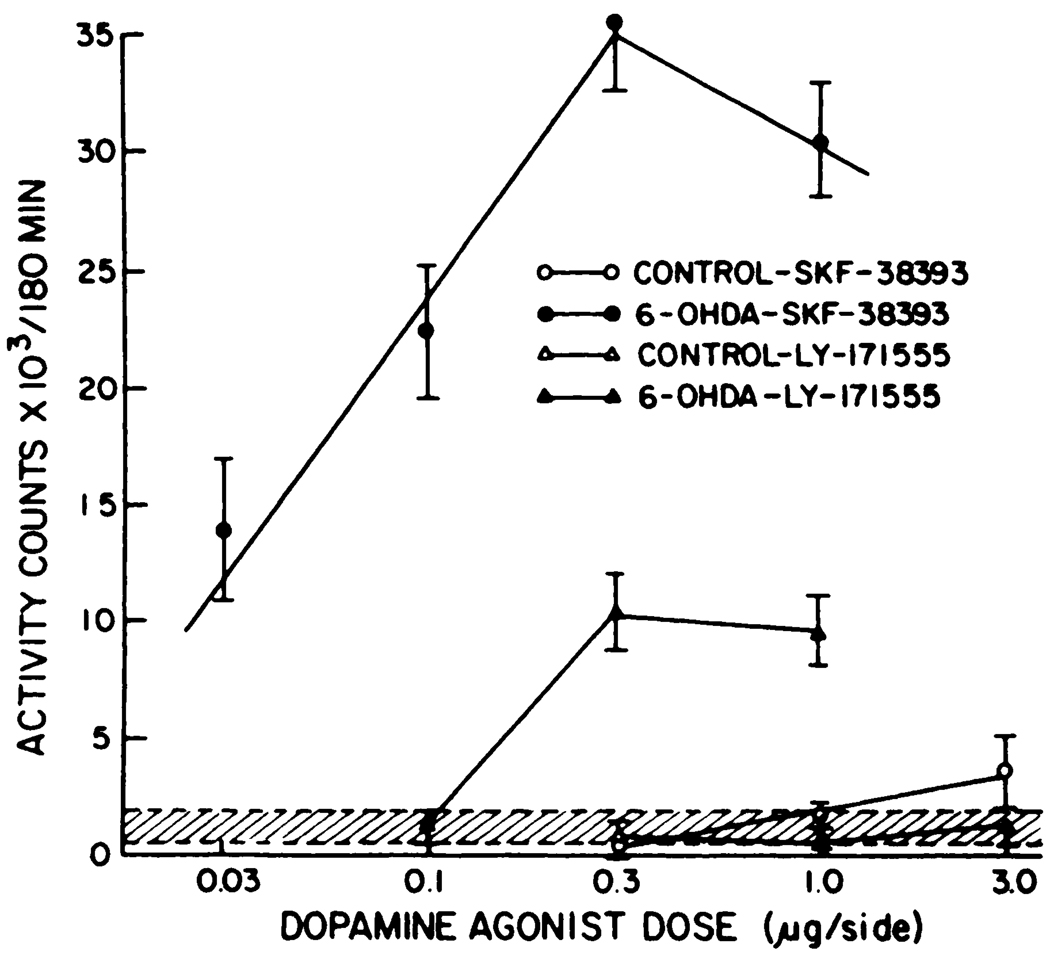
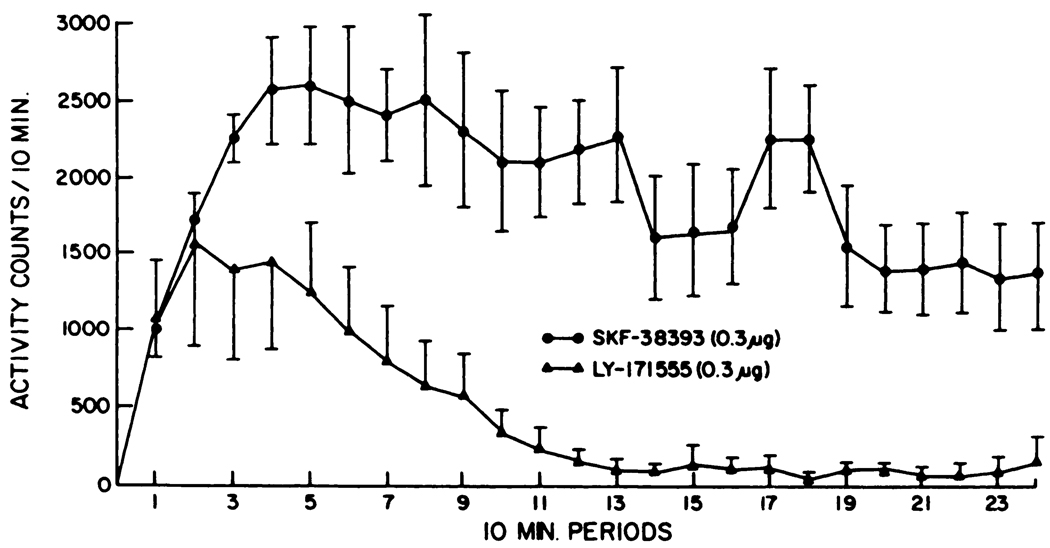
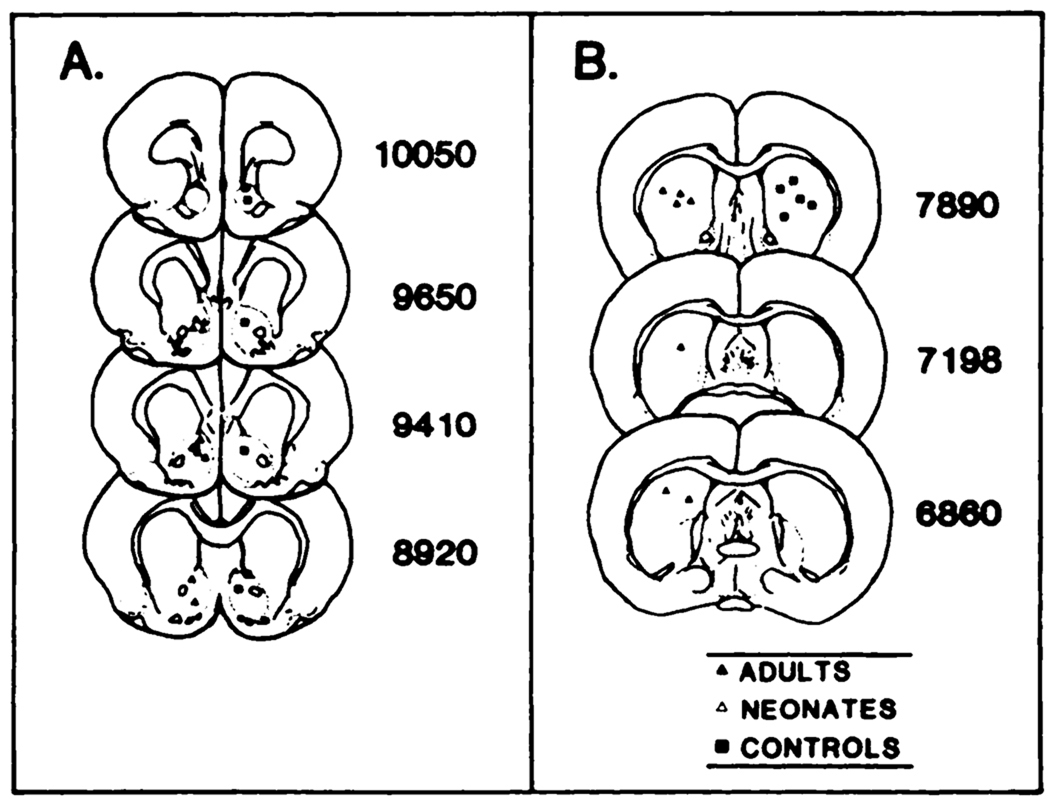
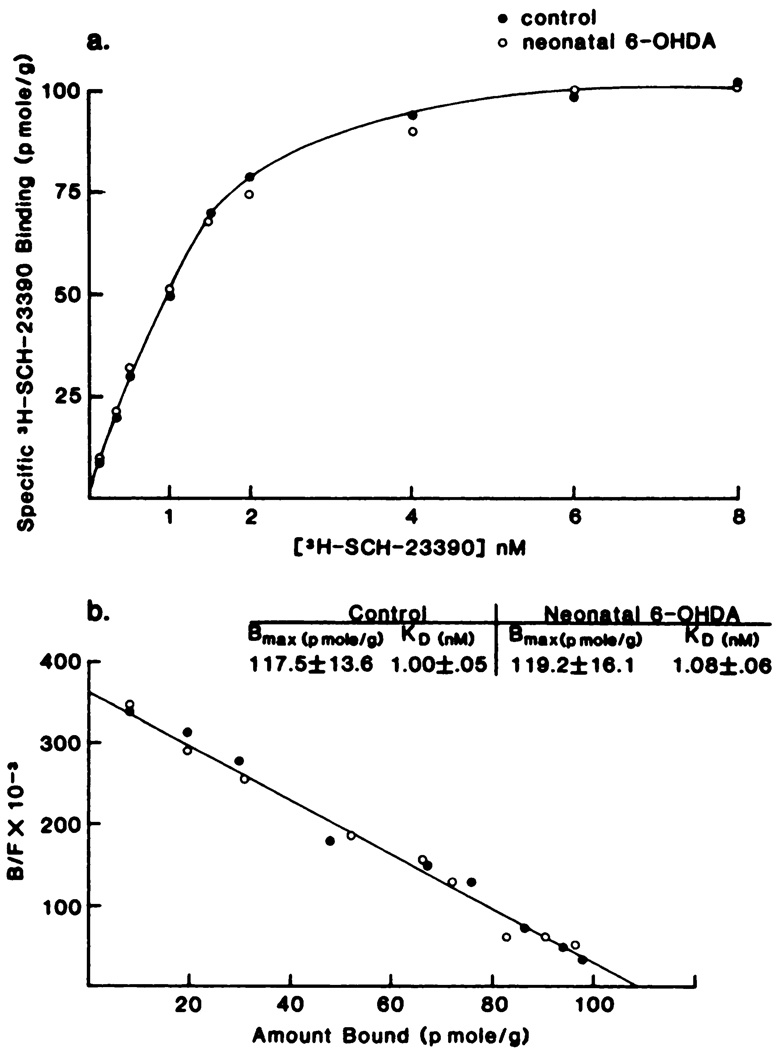
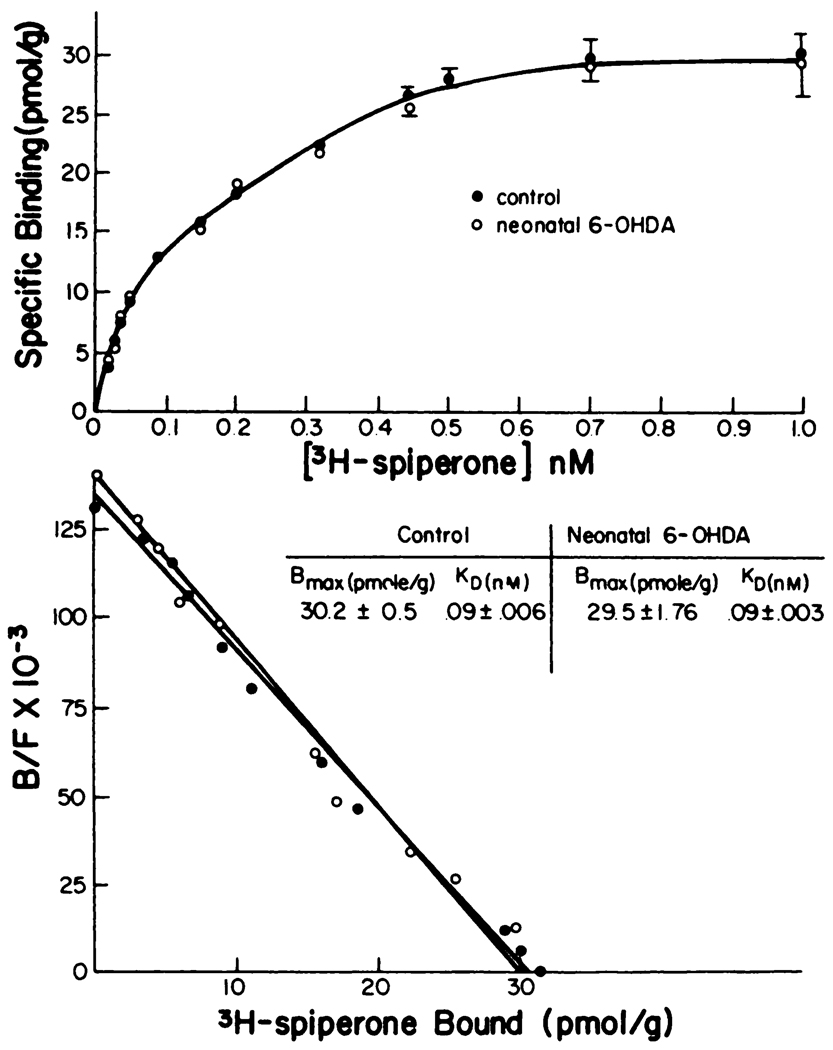
Behavioral responses to D1 and D2-dopamine agonists are enhanced when these agonists are administered systemically to 6-hydroxydopamine (6-OHDA)-lesioned rats. In the present investigation, microinjection of SKF-38393, a D1-dopamine agonist, into the nucleus accumbens of adult rats lesioned as neonates with 6-OHDA produced a dose-related increase in locomotor activity that was enhanced markedly compared to control. LY-171555, a D2-agonist, elicited less locomotor activity than did SKF-38393 after microinjection into this site. Administration of SKF-38393 or LY-171555 into the nucleus accumbens did not increase locomotion in unlesioned rats at the doses administered to lesioned animals. In adult-6-OHDA-lesioned rats, microinjection of SKF-38393 into the nucleus accumbens also increased locomotion more than did LY-171555. As described previously, systemic administration of SKF-38393 produced little locomotion in adult-6-OHDA-lesioned rats, whereas LY-171555 produced a markedly enhanced response. Administration of SKF-38393 or LY-171555 into the caudate nucleus of neonatally and adult-6-OHDA-lesioned rats produced negligible locomotor activity, but did induce stereotypic behaviors similar to those observed after systemic treatment with these drugs. Stereotypic behaviors occurred to a greater degree in the 6-OHDA-lesioned rats than in unlesioned controls. A regional specificity for certain behaviors induced by dopamine agonist administration was observed. In spite of the enhanced behavioral responses of D1 and D2-dopamine agonists after microinjection into the brain of 6-OHDA-lesioned rats, binding of [3H]spiperone (D2-receptor antagonist ligand) and [3H]SCH 23390 (D1-receptor antagonist ligand) to tissue from striatum and nucleus accumbens was not altered significantly. In contrast to this lack of change in binding characteristics in 6-OHDA-lesioned rats, blockade of dopaminergic transmission with haloperidol treatment caused an elevation of [3H]spiperone binding sites in striatum without affecting affinity for the site. However, chronic haloperidol treatment did not alter significantly [3H]SCH 23390 binding to striatal membranes. These latter findings suggest that chronic dopamine receptor blockade need not produce the same adaptive mechanisms as destruction of dopamine-containing neurons. Thus, a change in receptor characteristics as measured by dopamine antagonist binding does not account for the behavioral supersensitivity observed after D1- and D2-dopamine agonist administration to neonatally or adult-6-OHDA-treated rats.
Figures
References
-
- Altar CA, Kim H, Marshall JF. Computer imaging and analysis of dopamine (D2) and serotonin (S2) binding sites in rat basal ganglia or neocortex labeled by [3H]spiroperidol. J. Pharmacol. Exp. Ther. 1985;233:527–538. - PubMed
-
- Arnt J. Hyperactivity induced by stimulation of separate D-1 and D-2 receptors in rats with bilateral 6-OHDA lesions. Life Sci. 1985;37:717–723. - PubMed
-
- Arnt J, Hyttel J. Differential inhibition by dopamine D-1 and D-2 antagonists of circling behavior induced by dopamine agonists in rats with unilateral 6-hydroxydopamine lesions. Eur. J. Pharmacol. 1984;102:349–354. - PubMed
-
- Bennett JP, Jr, Wooten GF. Dopamine denervation does not alter in vivo3H-spiperone binding in rat striatum: Implications for external imaging of dopamine receptors in Parkinson’s disease. Ann. Neurol. 1986;19:378–383. - PubMed
-
- Billard W, Ruperto V, Crosby G, Iorio LC, Barnett A. Characterization of the binding of 3H-Sch-23390, a selective D-1 receptor antagonist ligand, in rat striatum. Life Sci. 1984;35:1885–1893. - PubMed
Publication types
MeSH terms
Substances
Grants and funding
LinkOut - more resources
Full Text Sources
Molecular Biology Databases
Research Materials
Miscellaneous