


Epigenetic Influences in the Obesity/Colorectal Cancer Axis: A Novel Theragnostic Avenue
- PMID: 31007685
- PMCID: PMC6441533
- DOI: 10.1155/2019/7406078
Epigenetic Influences in the Obesity/Colorectal Cancer Axis: A Novel Theragnostic Avenue
Abstract
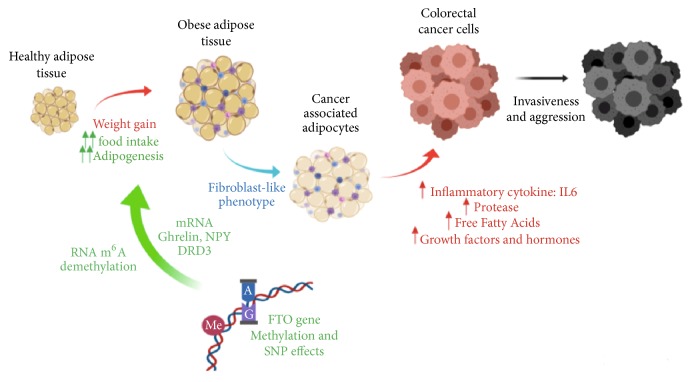
The World Health Organization (WHO) considers that obesity has reached proportions of pandemic. Experts also insist on the importance of considering obesity as a chronic disease and one of the main contributors to the worldwide burden of other nontransmissible chronic diseases, which have a great impact on health, lifestyle, and economic cost. One of the most current challenges of biomedical science faces is to understand the origin of the chronic nontransmissible diseases, such as obesity and cancer. There is a large evidence, both in epidemiological studies in humans and in animal models, of the association between obesity and an increased risk of cancer incidence. In the last years, the initial discovery of epigenetic mechanisms represents the most relevant finding to explain how the genome interacts with environmental factors and the ripple effects on disease pathogeneses. Since then, all epigenetic process has been investigated by the scientific communities for nearly two decades to determine which components are involved in this process. DNA/RNA methylation and miRNA are classified as two of the most important representative classes of such epigenetic mechanisms and dysregulated activity of such mechanism can certainly contribute to disease pathogenesis and/or progression especially in tumors. This review article serves to highlight the impact of DNA/RNA methylation and miRNA-based epigenetic mechanism activities in the interplay between obesity and the development and clinical significance of colorectal cancer.
Figures
References
-
- Organización Mundial de la Salud. Report of a WHO Consultation. (WHO Technical Report Series 894) Vol. 894. WHO; 2000. Obesity: preventing and managing the global epidemic; pp. 1–253. - PubMed
-
- Finucane M. M., Stevens G. A., Cowan M. J., et al. National, regional, and global trends in body-mass index since 1980: Systematic analysis of health examination surveys and epidemiological studies with 960 country-years and 9·1 million participants. Lancet. 2011;4:557–567. doi: 10.1016/S0140-6736(10)62037-5. - DOI - PMC - PubMed
