


Amyloid Peptide β 1-42 Induces Integrin α IIb β 3 Activation, Platelet Adhesion, and Thrombus Formation in a NADPH Oxidase-Dependent Manner
- PMID: 31007831
- PMCID: PMC6441506
- DOI: 10.1155/2019/1050476
Amyloid Peptide β 1-42 Induces Integrin α IIb β 3 Activation, Platelet Adhesion, and Thrombus Formation in a NADPH Oxidase-Dependent Manner
Abstract
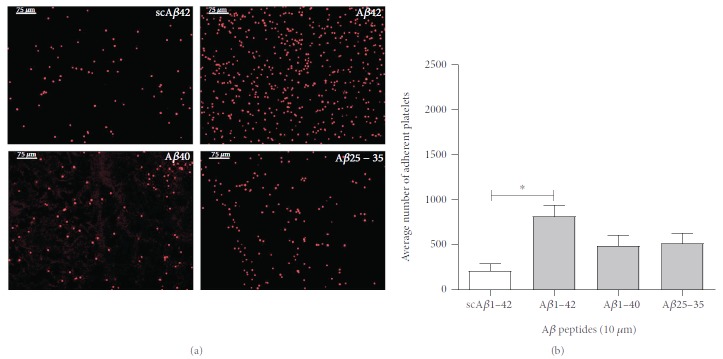
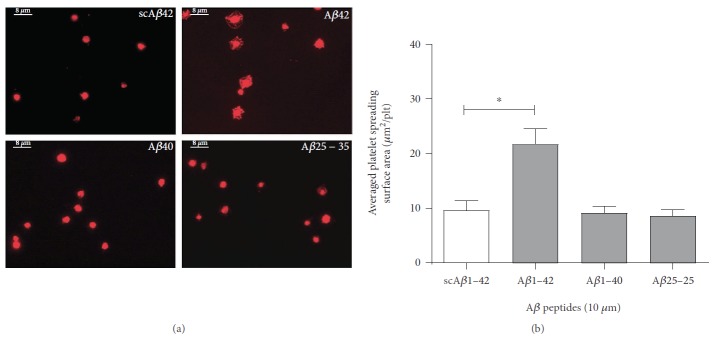
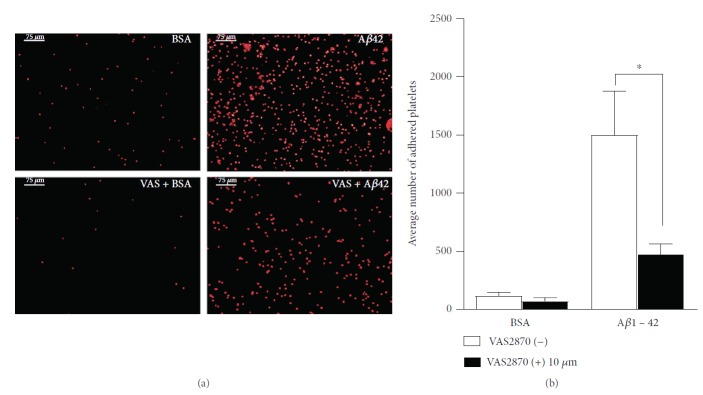
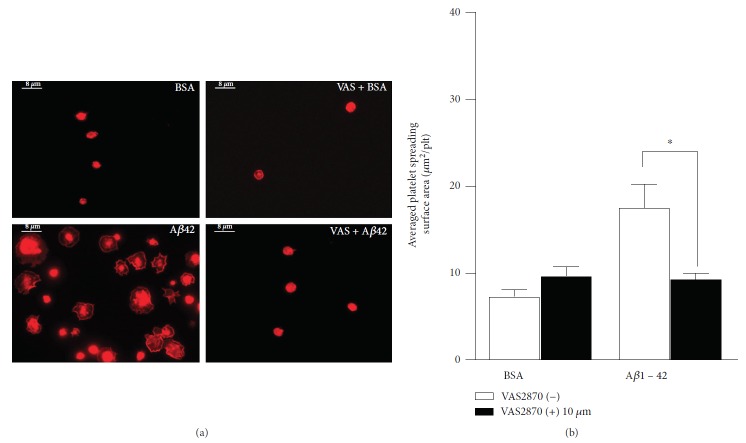
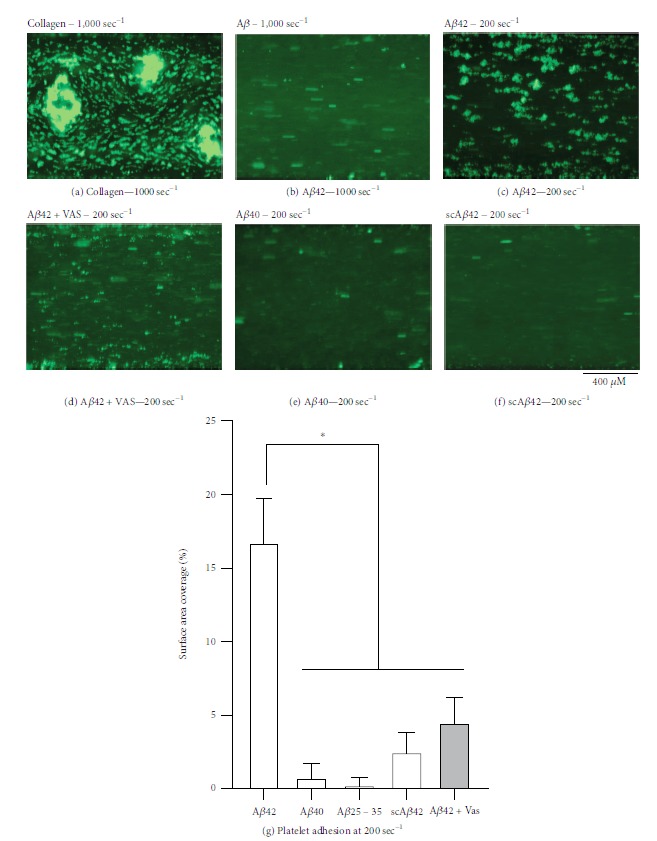
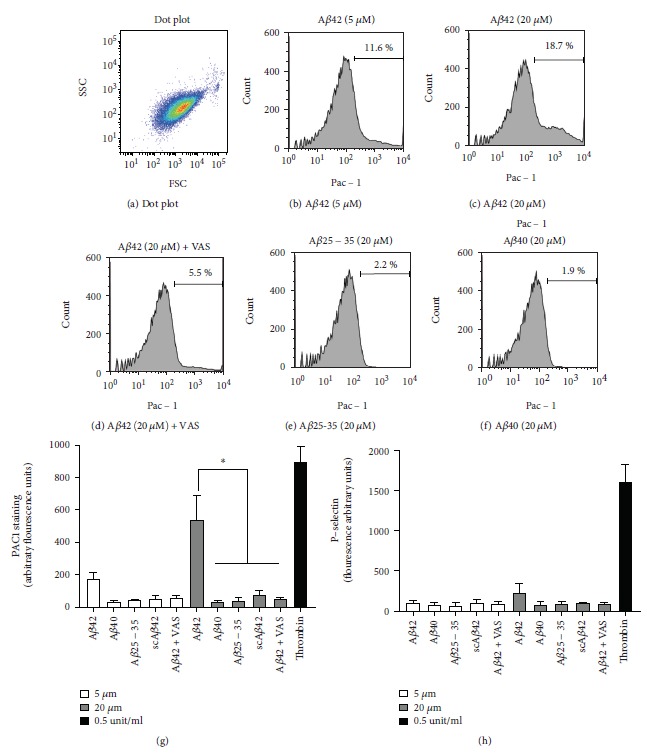
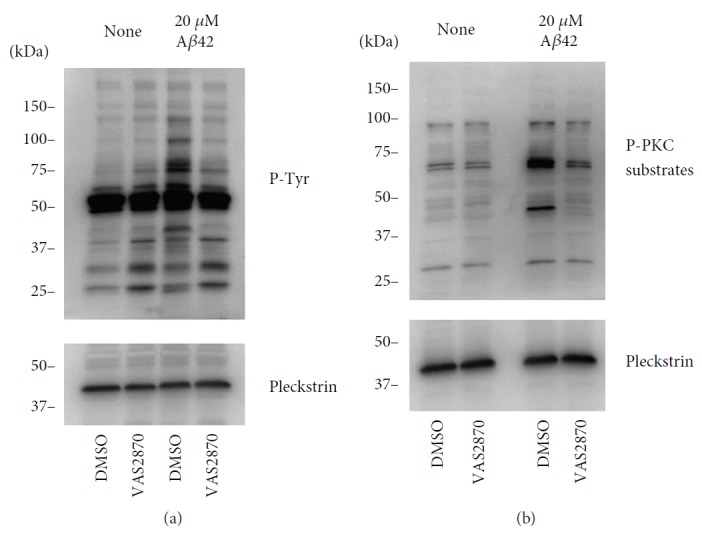
The progression of Alzheimer's dementia is associated with neurovasculature impairment, which includes inflammation, microthromboses, and reduced cerebral blood flow. Here, we investigate the effects of β amyloid peptides on the function of platelets, the cells driving haemostasis. Amyloid peptide β1-42 (Aβ1-42), Aβ1-40, and Aβ25-35 were tested in static adhesion experiments, and it was found that platelets preferentially adhere to Aβ1-42 compared to other Aβ peptides. In addition, significant platelet spreading was observed over Aβ1-42, while Aβ1-40, Aβ25-35, and the scAβ1-42 control did not seem to induce any platelet spreading, which suggested that only Aβ1-42 activates platelet signalling in our experimental conditions. Aβ1-42 also induced significant platelet adhesion and thrombus formation in whole blood under venous flow condition, while other Aβ peptides did not. The molecular mechanism of Aβ1-42 was investigated by flow cytometry, which revealed that this peptide induces a significant activation of integrin αIIbβ3, but does not induce platelet degranulation (as measured by P-selectin membrane translocation). Finally, Aβ1-42 treatment of human platelets led to detectable levels of protein kinase C (PKC) activation and tyrosine phosphorylation, which are hallmarks of platelet signalling. Interestingly, the NADPH oxidase (NOX) inhibitor VAS2870 completely abolished Aβ1-42-dependent platelet adhesion in static conditions, thrombus formation in physiological flow conditions, integrin αIIbβ3 activation, and tyrosine- and PKC-dependent platelet signalling. In summary, this study highlights the importance of NOXs in the activation of platelets in response to amyloid peptide β1-42. The molecular mechanisms described in this manuscript may play an important role in the neurovascular impairment observed in Alzheimer's patients.
Figures
Comment in
-
Oxidative Stress and Mitochondrial Damage in Neurodegenerative Diseases: From Molecular Mechanisms to Targeted Therapies.Oxid Med Cell Longev. 2020 May 4;2020:1270256. doi: 10.1155/2020/1270256. eCollection 2020. Oxid Med Cell Longev. 2020. PMID: 32454930 Free PMC article. No abstract available.
References
MeSH terms
Substances
Grants and funding
LinkOut - more resources
Full Text Sources
Medical
