


Predictors and Implications of Accelerated Cognitive Aging
- PMID: 31007841
- PMCID: PMC6469682
- DOI: 10.1080/19485565.2018.1552513
Predictors and Implications of Accelerated Cognitive Aging
Abstract
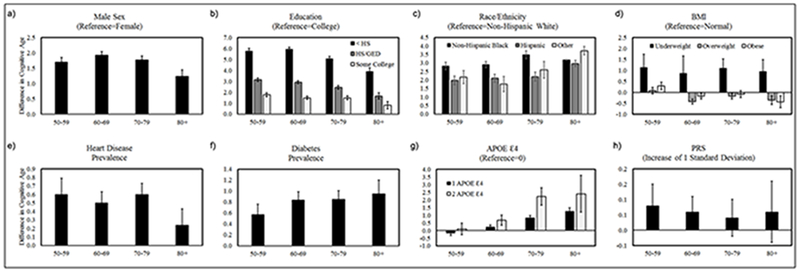
Aging is a major risk factor for both normal and pathological cognitive decline. However, individuals vary in their rate of age-related decline. We developed an easily interpretable composite measure of cognitive age, and related both the level of cognitive age and cognitive slope to sociodemographic, genetic, and disease indicators and examine its prediction of dementia transition. Using a sample of 19,594 participants from the Health and Retirement Study, cognitive age was derived from a set of performance tests administered at each wave. Our findings reveal different conclusions as they relate to levels versus slopes of cognitive age, with more pronounced differences by sex and race/ethnicity for absolute levels of cognitive decline rather than for rates of declines. We also find that both level and slope of cognitive age are inversely related to education, as well as increased for persons with APOE ε4 and/or diabetes. Finally, results show that the slope in cognitive age predicts subsequent dementia among non-demented older adults. Overall, our study suggests that this measure is applicable to cross-sectional and longitudinal studies on cognitive aging, decline, and dementia with the goal of better understanding individual differences in cognitive decline.
Keywords: APOE; Aging; Cognitive Decline; Dementia; Education; Polygenic Risk Score.
Figures
References
-
- Bäckman L, Small BJ, & Wahlin Å 2001. Aging and memory: Cognitive and biological perspectives Handbook of the Psychology of Aging, ed. Birren JE & Schaie KW, 349–377. San Diego, CA, US: Academic Press.
-
- Brayne C and Calloway P, 1990. The association of education and socioeconomic status with the Mini Mental State Examination and the clinical diagnosis of dementia in elderly people. Age and Ageing, 19(2), pp.91–96. - PubMed
-
- Cagney KA and Lauderdale DS, 2002. Education, wealth, and cognitive function in later life. The Journals of Gerontology Series B : Psychological Sciences and Social Sciences, 57(2), pp.P163–P172. - PubMed
Publication types
MeSH terms
Grants and funding
LinkOut - more resources
Full Text Sources
Miscellaneous
