


Rivaroxaban for secondary stroke prevention in patients with embolic strokes of undetermined source: Design of the NAVIGATE ESUS randomized trial
- PMID: 31008276
- PMCID: PMC6301240
- DOI: 10.1177/2396987316663049
Rivaroxaban for secondary stroke prevention in patients with embolic strokes of undetermined source: Design of the NAVIGATE ESUS randomized trial
Abstract
Background: Embolic strokes of undetermined source comprise up to 20% of ischemic strokes. The stroke recurrence rate is substantial with aspirin, widely used for secondary prevention. The New Approach riVaroxaban Inhibition of Factor Xa in a Global trial versus ASA to prevenT Embolism in Embolic Stroke of Undetermined Source international trial will compare the efficacy and safety of rivaroxaban, an oral factor Xa inhibitor, versus aspirin for secondary prevention in patients with recent embolic strokes of undetermined source.
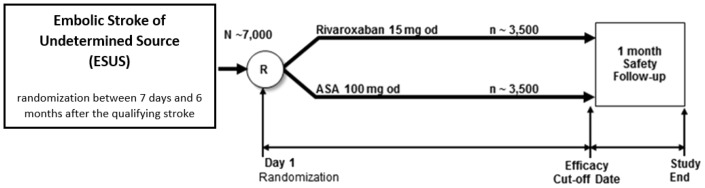
Main hypothesis: In patients with recent embolic strokes of undetermined source, rivaroxaban 15 mg once daily will reduce the risk of recurrent stroke (both ischemic and hemorrhagic) and systemic embolism (primary efficacy outcome) compared with aspirin 100 mg once daily.
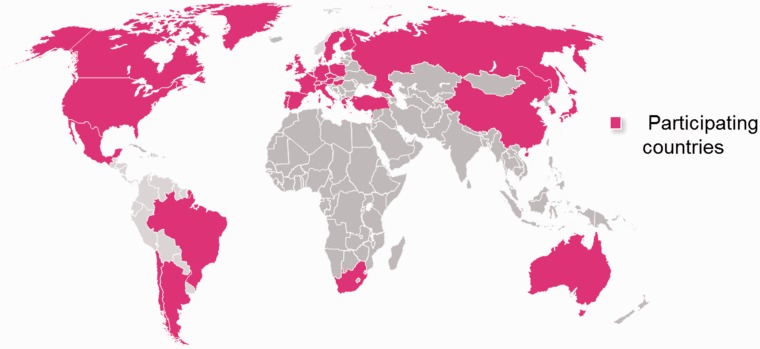
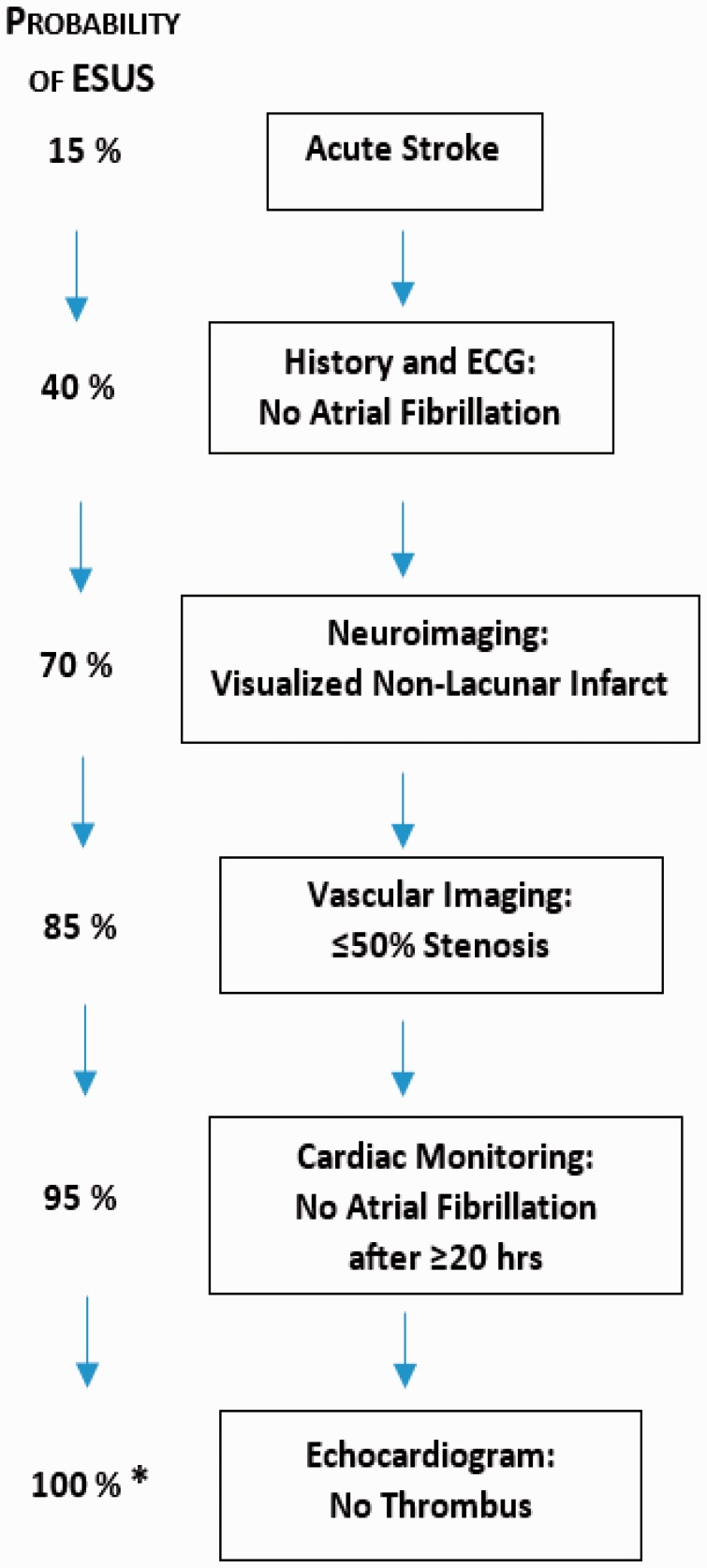
Design: Double-blind, randomized trial in patients with embolic strokes of undetermined source, defined as nonlacunar cryptogenic ischemic stroke, enrolled between seven days and six months from the qualifying stroke. The planned sample size of 7000 participants will be recruited from approximately 480 sites in 31 countries between 2014 and 2017 and followed for a mean of about two years until at least 450 primary efficacy outcome events have occurred. The primary safety outcome is major bleeding. Two substudies assess (1) the relative effect of treatments on MRI-determined covert brain infarcts and (2) the biological underpinnings of embolic strokes of undetermined source using genomic and biomarker approaches.
Summary: The New Approach riVaroxaban Inhibition of Factor Xa in a Global trial versus ASA to prevenT Embolism in Embolic Stroke of Undetermined Source trial is evaluating the benefits and risks of rivaroxaban for secondary stroke prevention in embolic strokes of undetermined source patients. Main results are anticipated in 2018.
Keywords: Stroke; aspirin; cerebral embolism; cryptogenic stroke; embolic stroke of undetermined source; randomized trial; rivaroxaban; stroke prevention.
Conflict of interest statement
The author(s) declared the following potential conflicts of interest with respect to the research, authorship, and/or publication of this article: All of the coauthors have received financial remuneration from Bayer Pharma AG for service on the Steering Committee except H. Mundl, S. Berkowitz, C. Pater, G. Peters, and B. Kirsch who are all employees of the sponsors. All coauthors receive stipend and research support for participation in NAVIGATE ESUS from the industry sponsors.
Figures
References
-
- Hart RG, Diener H-C, Coutts SB, et al. on behalf of the Cryptogenic Stroke/ESUS International Working Group. Embolic strokes of undetermined source: the case for a new clinical construct. Lancet Neurol 2014; 13: 429–438. - PubMed
-
- Sacco RL, Ellenberg JH, Mohr JP, et al. Infarcts of undetermined cause: the NINCDS Stroke Data Bank. Ann Neurol 1989; 25: 382–390. - PubMed
-
- Perera KS, Vanassche T, Bosch J, et al. Embolic strokes of undetermined source: prevalence and patient features in the ESUS Global Registry. Int J Stroke 2016; 11: 526–533. - PubMed
Grants and funding
LinkOut - more resources
Full Text Sources
Medical
