


Alexithymia in individuals with chronic pain and its relation to pain intensity, physical interference, depression, and anxiety: a systematic review and meta-analysis
- PMID: 31009416
- PMCID: PMC6688175
- DOI: 10.1097/j.pain.0000000000001487
Alexithymia in individuals with chronic pain and its relation to pain intensity, physical interference, depression, and anxiety: a systematic review and meta-analysis
Abstract
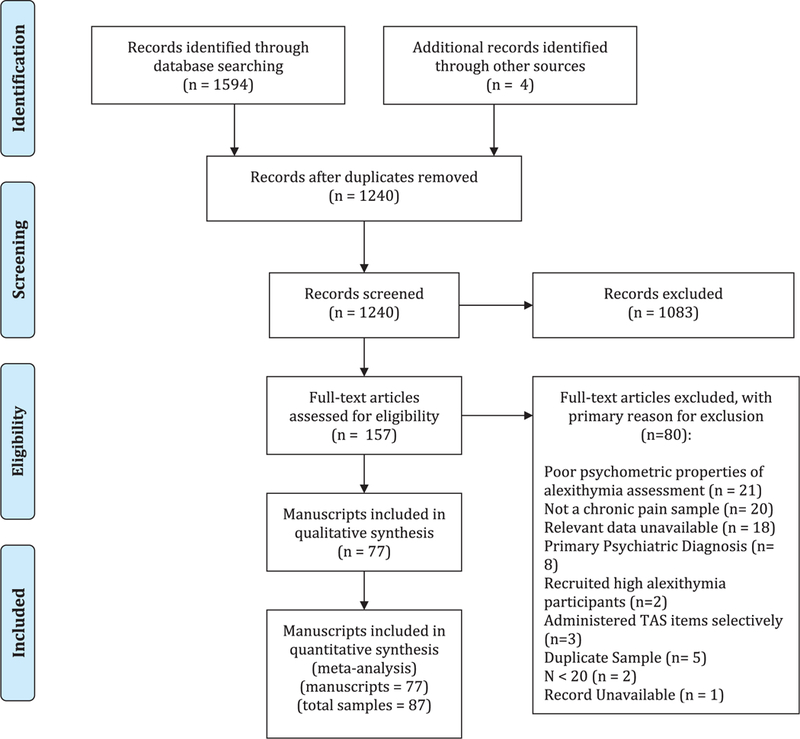
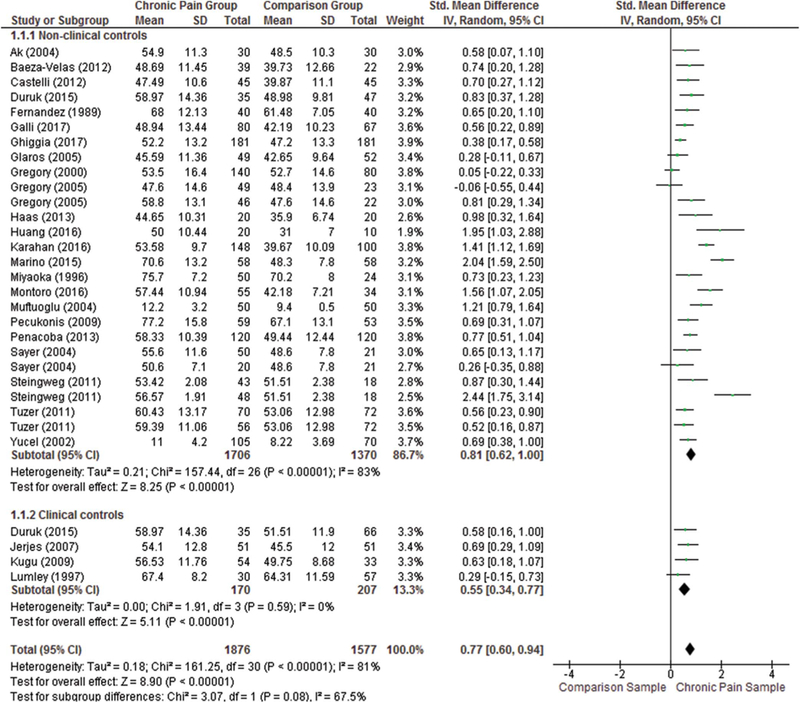
Numerous studies have examined how alexithymia (difficulty identifying and describing one's emotions and a preference for externally oriented thinking) relates to chronic pain and associated disability. We conducted a systematic review and meta-analysis to summarize individual studies that either assessed alexithymia in individuals with chronic pain vs controls or related alexithymia to pain intensity, physical interference, depression, and anxiety. We searched MEDLINE, Embase, and PsycINFO from inception through June 2017; 77 studies met the criteria (valid assessment of alexithymia in adults or children with any chronic pain condition) and were included in analyses (n = 8019 individuals with chronic pain). Primary analyses indicated that chronic pain samples had significantly higher mean alexithymia scores compared with nonclinical (d = 0.81) and clinical nonpain (d = 0.55) controls. In chronic pain samples, alexithymia was significantly positively associated with pain intensity (d = 0.20), physical interference (d = 0.17), depression (d = 0.46), and anxiety (d = 0.43). Secondary meta-analyses of 14 studies that conducted partial correlations that controlled for negative affect-related measures revealed that alexithymia was no longer significantly related to pain intensity or interference. Meta-analysis findings demonstrated that alexithymia is elevated in individuals with chronic pain and related to greater pain intensity and physical interference, although the latter relationships may be accounted for by negative affect. Critical future work is needed that examines alexithymia assessed using non-self-report measures, develops a person-centered perspective on this construct, and identifies how alexithymia is relevant to the assessment and treatment of individuals with chronic pain.
Conflict of interest statement
Conflict of interest statement
The authors have no conflict of interest to declare.
Figures
References
-
- Ak I, Sayar K, Yontem T. Alexithymia, somatosensory amplification and counter-dependency in patients with chronic pain. Pain Clinic 2004;16:43–51.
-
- Asmundson GJ, Katz J. Understanding the co-occurrence of anxiety disorders and chronic pain: state-of-the-art. Depress Anxiety 2009;26: 888–901. - PubMed
-
- Atagun MI, Atagun Z, Evren C, Balaban OD, Yalcinkaya EY, Ones K. Mental symptoms are related with impact of the disease and impairment in quality of life in female patients with fibromyalgia. Dusunen Adam 2012;25:338–44.
-
- Baeza-Velasco C, Carton S, Almohsen C, Blotman F, Gely-Nargeot MC. Alexithymia and emotional awareness in females with painful rheumatic conditions. J Psychosom Res 2012;73:398–400. - PubMed
-
- Bagby M, Taylor GJ, Ryan DJP. Toronto alexithymia scale: relationship with personality and psychopathology measures. Psychother Psychosom 1986;45:207–15. - PubMed
Publication types
MeSH terms
Grants and funding
LinkOut - more resources
Full Text Sources
Medical
Miscellaneous
