


Prepregnancy Habitual Intakes of Total, Supplemental, and Food Folate and Risk of Gestational Diabetes Mellitus: A Prospective Cohort Study
- PMID: 31010874
- PMCID: PMC6609948
- DOI: 10.2337/dc18-2198
Prepregnancy Habitual Intakes of Total, Supplemental, and Food Folate and Risk of Gestational Diabetes Mellitus: A Prospective Cohort Study
Abstract
Objective: To identify novel modifiable risk factors of gestational diabetes mellitus (GDM) by examining the association between prepregnancy habitual folate intake and GDM risk.
Research design and methods: The study included 14,553 women in the Nurses' Health Study II who reported at least one singleton pregnancy between the 1991 and 2001 questionnaires. Prepregnancy intakes of total folate, supplemental folate, and food folate were assessed using a food frequency questionnaire administered every 4 years. Incident GDM was ascertained from a self-reported physician diagnosis. Relative risks (RRs) of GDM were estimated using log-binomial models, with adjustment for demographic, lifestyle, and dietary factors.
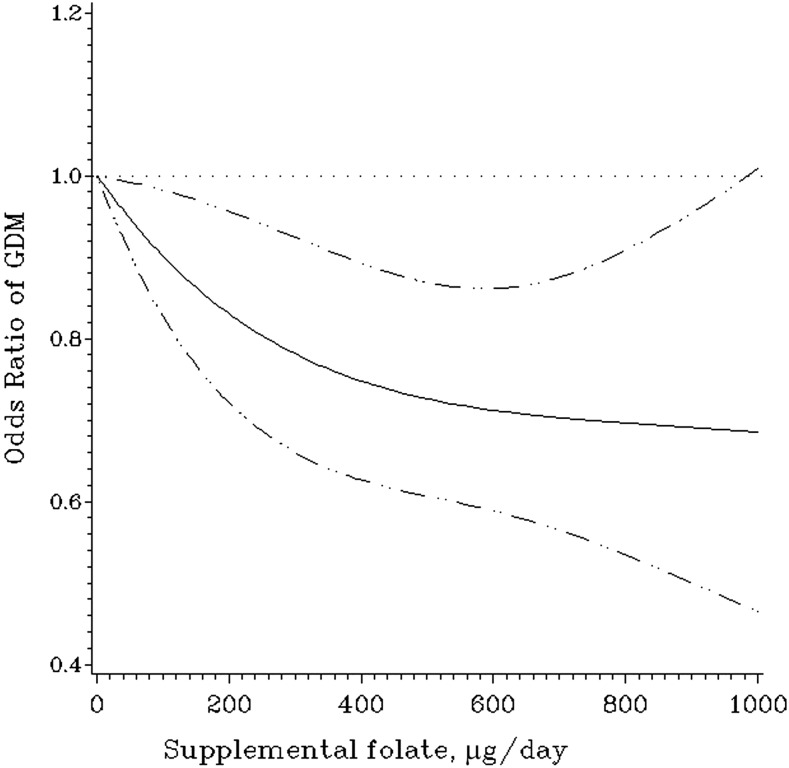
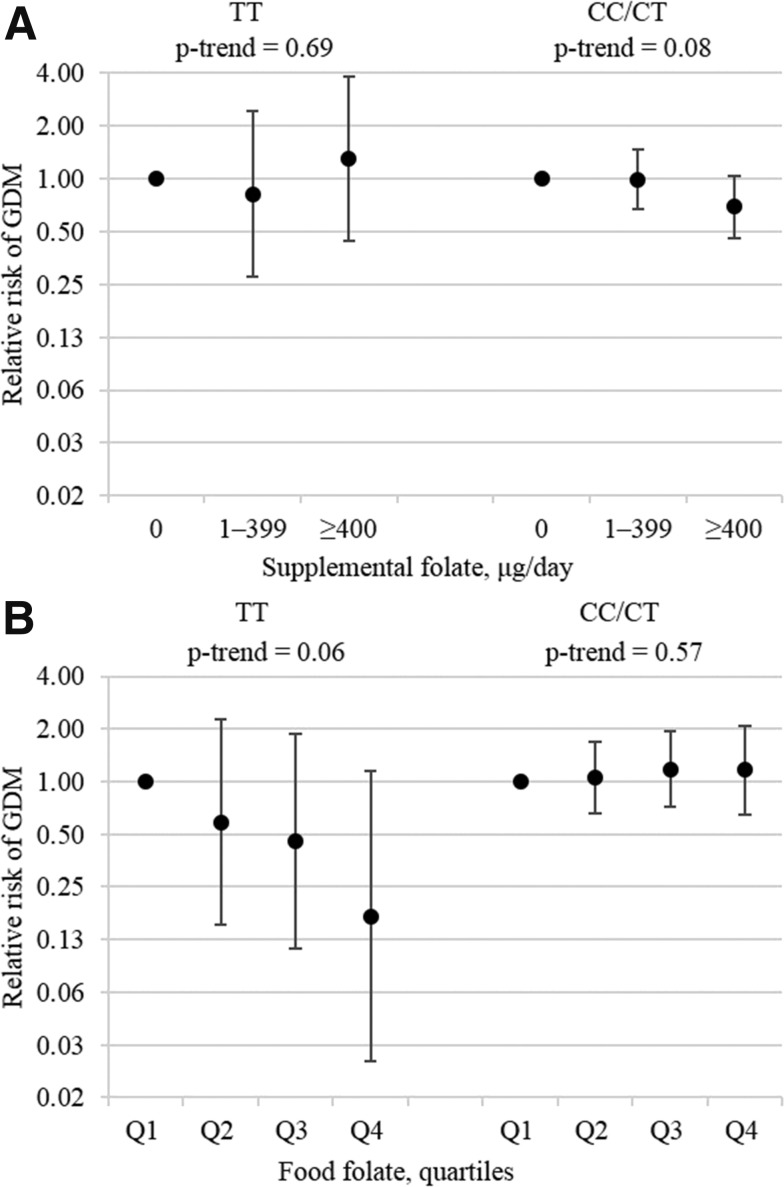
Results: Over the study follow-up, 824 incident GDM cases were reported among 20,199 pregnancies. Women with adequate total folate intake (≥400 μg/day) had an RR of GDM of 0.83 (95% CI 0.72, 0,95, P = 0.007) compared with women with inadequate intake (<400 μg/day). This association was entirely driven by supplemental folate intake. The RRs of GDM for 1-399, 400-599, and ≥600 μg/day of supplemental folate intake were 0.83, 0.77, and 0.70, respectively, compared with no supplemental folate intake (P trend = 0.002). The association between supplemental folate intake and GDM risk largely persisted after additional adjustment for intake of multivitamins and other micronutrients, as well as among women who likely planned for the pregnancy.
Conclusions: Higher habitual intakes of supplemental folate before pregnancy were significantly associated with lower GDM risk. If confirmed, these findings indicate that prepregnancy folic acid supplementation could offer a novel and low-cost avenue to reduce GDM risk.
© 2019 by the American Diabetes Association.
Figures
References
Publication types
MeSH terms
Substances
Grants and funding
- R01 CA050385/CA/NCI NIH HHS/United States
- R01 CA067262/CA/NCI NIH HHS/United States
- UM1 CA176726/CA/NCI NIH HHS/United States
- HHSN275201000020C/HD/NICHD NIH HHS/United States
- HHSN275201500003C/HD/NICHD NIH HHS/United States
- P30 DK046200/DK/NIDDK NIH HHS/United States
- HHSN275201300026I/HD/NICHD NIH HHS/United States
- HHSN275201100002G/HD/NICHD NIH HHS/United States
- P20 GM109036/GM/NIGMS NIH HHS/United States
- R01 DK112940/DK/NIDDK NIH HHS/United States
- HHSN275201100002C/HD/NICHD NIH HHS/United States
- HHSN272201100002I/AO/NIAID NIH HHS/United States
- K99 ES026648/ES/NIEHS NIH HHS/United States
- R00 ES026648/ES/NIEHS NIH HHS/United States
LinkOut - more resources
Full Text Sources
Medical
