


Estrogen receptor α promotes Cav1.2 ubiquitination and degradation in neuronal cells and in APP/PS1 mice
- PMID: 31012223
- PMCID: PMC6612642
- DOI: 10.1111/acel.12961
Estrogen receptor α promotes Cav1.2 ubiquitination and degradation in neuronal cells and in APP/PS1 mice
Abstract
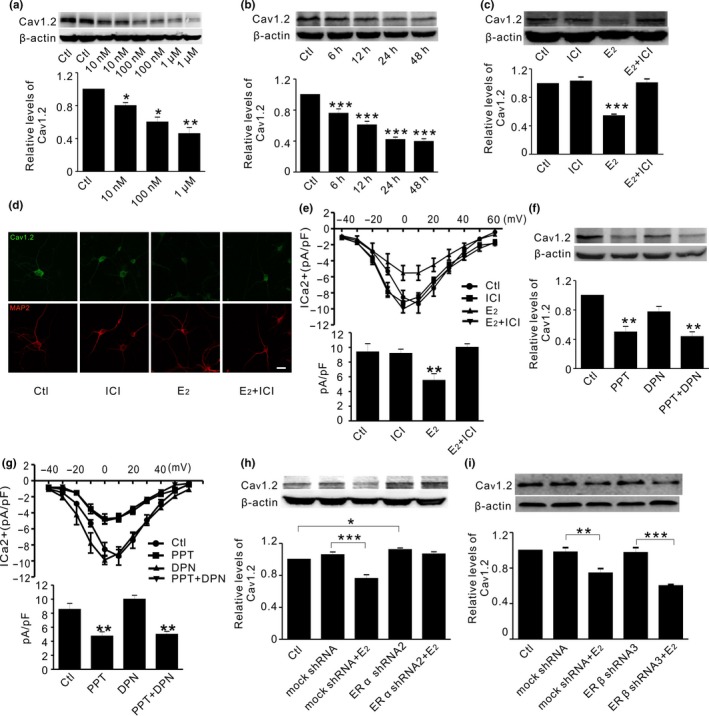
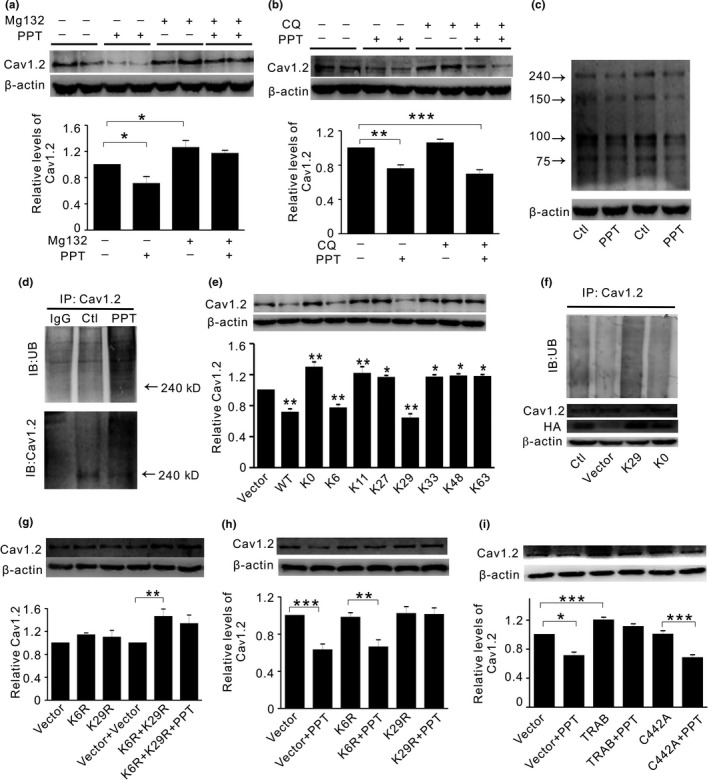
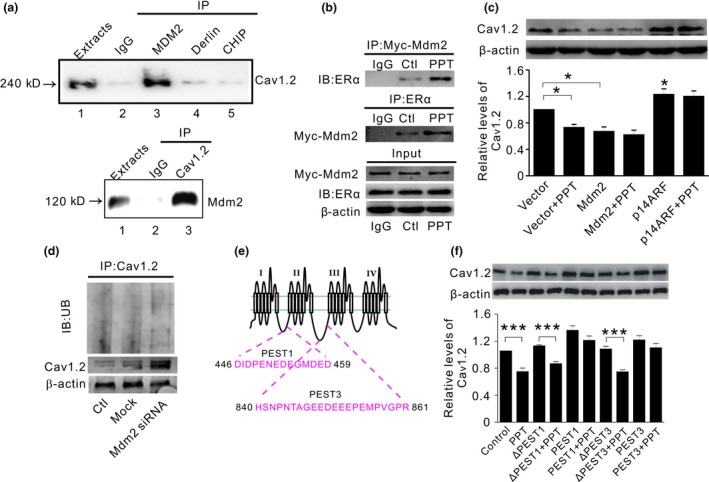
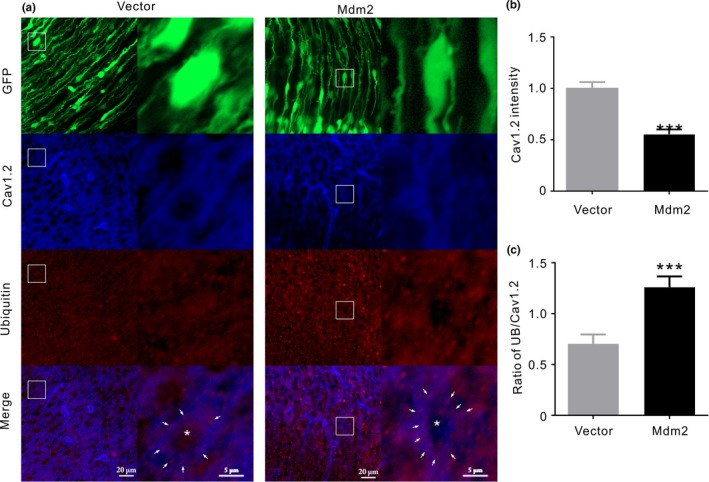
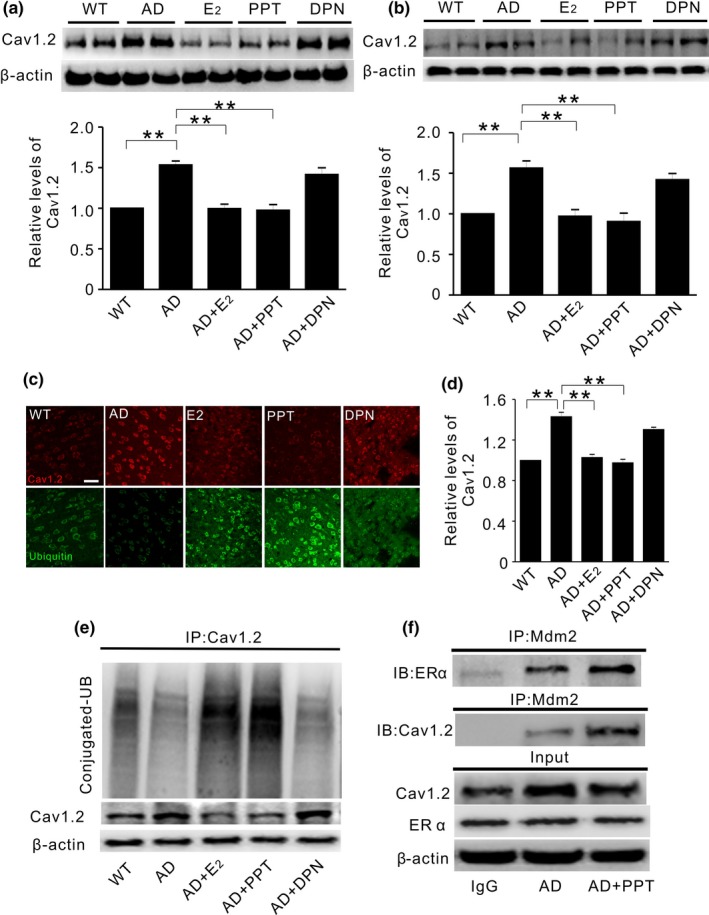
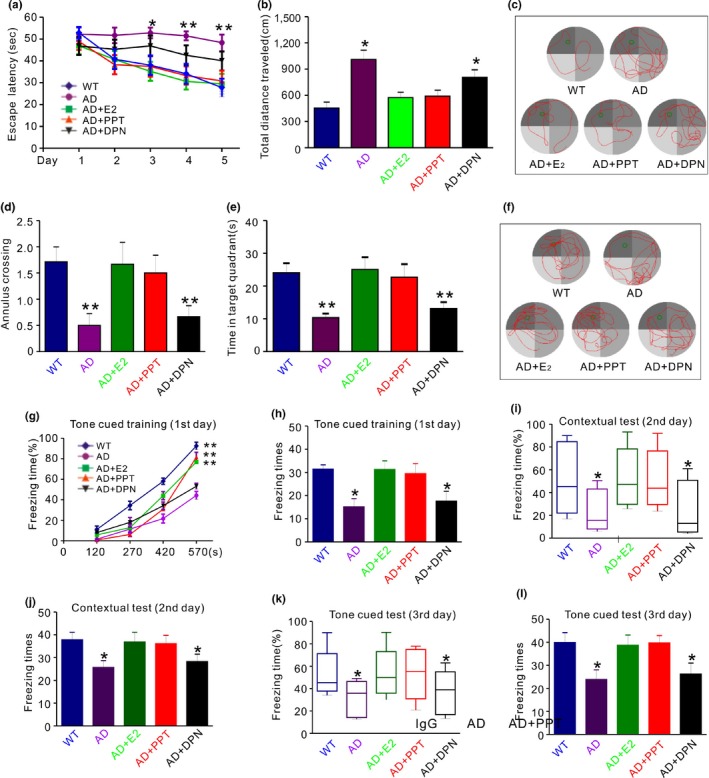
Cav1.2 is the pore-forming subunit of L-type voltage-gated calcium channel (LTCC) that plays an important role in calcium overload and cell death in Alzheimer's disease. LTCC activity can be regulated by estrogen, a sex steroid hormone that is neuroprotective. Here, we investigated the potential mechanisms in estrogen-mediated regulation of Cav1.2 protein. We found that in cultured primary neurons, 17β-estradiol (E2) reduced Cav1.2 protein through estrogen receptor α (ERα). This effect was offset by a proteasomal inhibitor MG132, indicating that ubiquitin-proteasome system was involved. Consistently, the ubiquitin (UB) mutant at lysine 29 (K29R) or the K29-deubiquitinating enzyme TRAF-binding protein domain (TRABID) attenuated the effect of ERα on Cav1.2. We further identified that the E3 ligase Mdm2 (double minute 2 protein) and the PEST sequence in Cav1.2 protein played a role, as Mdm2 overexpression and the membrane-permeable PEST peptides prevented ERα-mediated Cav1.2 reduction, and Mdm2 overexpression led to the reduced Cav1.2 protein and the increased colocalization of Cav1.2 with ubiquitin in cortical neurons in vivo. In ovariectomized (OVX) APP/PS1 mice, administration of ERα agonist PPT reduced cerebral Cav1.2 protein, increased Cav1.2 ubiquitination, and improved cognitive performances. Taken together, ERα-induced Cav1.2 degradation involved K29-linked UB chains and the E3 ligase Mdm2, which might play a role in cognitive improvement in OVX APP/PS1 mice.
Keywords: Alzheimer’s disease; Cav1.2; Estrogen receptor α; K29; Mdm2; ubiquitination.
© 2019 The Authors. Aging Cell published by the Anatomical Society and John Wiley & Sons Ltd.
Conflict of interest statement
None declared.
Figures
References
-
- Altier, C. , Garcia‐Caballero, A. , Simms, B. , You, H. , Chen, L. , Walcher, J. , … Zamponi, G. W. (2011). The Cavbeta subunit prevents RFP2‐mediated ubiquitination and proteasomal degradation of L‐type channels. Nature Neuroscience, 14, 173–180. - PubMed
Publication types
MeSH terms
Substances
Grants and funding
LinkOut - more resources
Full Text Sources
Molecular Biology Databases
Research Materials
Miscellaneous
