


Addiction, Identity, Morality
- PMID: 31012802
- PMCID: PMC6506907
- DOI: 10.1080/23294515.2019.1590480
Addiction, Identity, Morality
Abstract
Background: Recent literature on addiction and judgments about the characteristics of agents has focused on the implications of adopting a "brain disease" versus "moral weakness" model of addiction. Typically, such judgments have to do with what capacities an agent has (e.g., the ability to abstain from substance use). Much less work, however, has been conducted on the relationship between addiction and judgments about an agent's identity, including whether or to what extent an individual is seen as the same person after becoming addicted.
Methods: We conducted a series of vignette-based experiments (total N = 3,620) to assess lay attitudes concerning addiction and identity persistence, systematically manipulating key characteristics of agents and their drug of addiction.
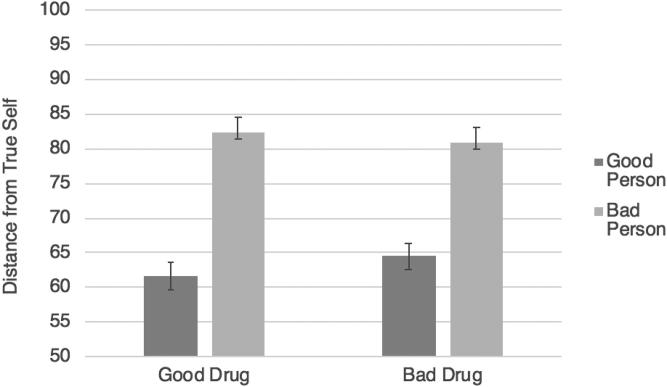
Conclusions: In Study 1, we found that U.S. participants judged an agent who became addicted to drugs as being closer to "a completely different person" than "completely the same person" as the agent who existed prior to the addiction. In Studies 2-6, we investigated the intuitive basis for this result, finding that lay judgments of altered identity as a consequence of drug use and addiction are driven primarily by perceived negative changes in the moral character of drug users, who are seen as having deviated from their good true selves.
Keywords: Phineas Gage effect; addiction; essential moral self; personal identity; true self.
Figures




References
-
- Anonymous 2015. “I was married to a cocaine addict.” Addiction.Com (blog). https://www.addiction.com/11215/i-was-married-to-a-cocaine-addict/.
-
- Bailey L. 2005. Control and desire: the issue of identity in popular discourses of addiction. Addiction Research & Theory 13 (6):535–43. doi: 10.1080/16066350500338195. - DOI
-
- Bench S. W., Schlegel R. J., Davis W. E., and Vess M.. 2015. Thinking about change in the self and others: the role of self-discovery metaphors and the true self. Social Cognition 33 (3):169–85. doi: 10.1521/soco.2015.33.3.2. - DOI
Publication types
MeSH terms
Grants and funding
LinkOut - more resources
Full Text Sources
Medical
