


Strategies to improve adherence and continuation of shorter-term hormonal methods of contraception
- PMID: 31013349
- PMCID: PMC6478403
- DOI: 10.1002/14651858.CD004317.pub5
Strategies to improve adherence and continuation of shorter-term hormonal methods of contraception
Abstract
Background: Worldwide, hormonal contraceptives are among the most popular reversible contraceptives. Despite high perfect-use effectiveness rates, typical-use effectiveness rates for shorter-term methods such as oral and injectable contraceptives are much lower. In large part, this disparity reflects difficulties in ongoing adherence to the contraceptive regimen and low continuation rates. Correct use of contraceptives to ensure effectiveness is vital to reducing unintended pregnancy.
Objectives: To determine the effectiveness of strategies aiming to improve adherence to, and continuation of, shorter-term hormonal methods of contraception compared with usual family planning care.
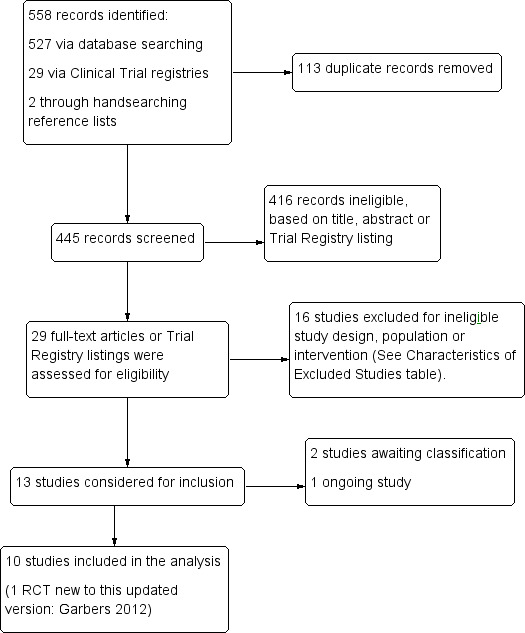
Search methods: We searched to July 2018 in the following databases (without language restrictions): The Cochrane Central Register of Controlled Trials (CENTRAL; 2018, Issue 7), PubMed via MEDLINE, POPLINE, Web of Science, ClinicalTrials.gov, and the International Clinical Trials Registry Platform (ICTRP).
Selection criteria: We included randomized controlled trials (RCTs) comparing strategies aimed to facilitate adherence and continuation of shorter-term hormonal methods of contraception (such as oral contraceptives (OCs), injectable depot medroxyprogesterone acetate (DMPA or Depo-Provera), intravaginal ring, or transdermal patch) with usual family planning care in reproductive age women seeking to avoid pregnancy.
Data collection and analysis: We used standard methodological procedures recommended by Cochrane. Primary outcomes were continuation or discontinuation of contraceptive method, rates of discontinuation due to adverse events (menstrual disturbances and all other adverse events), and adherence to method use as indicated by missed pills and on-time/late injections. Pregnancy was a secondary outcome.
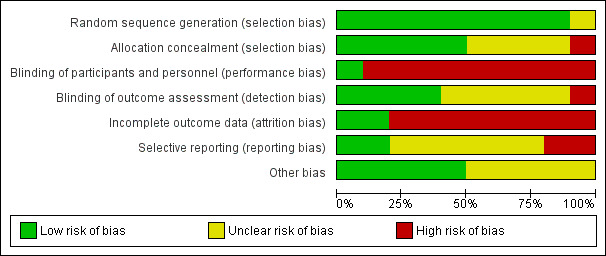
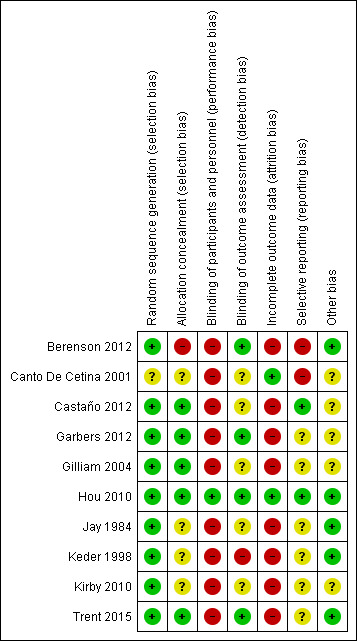
Main results: We included 10 RCTs involving 6242 women. Six trials provided direct in-person counseling using either multiple counseling contacts or multiple components during one visit. Four trials provided intensive reminders of appointments or next dosing, of which two provided additional educational health information as well as reminders. All trials stated 'usual care' as the comparison.The certainty of the evidence ranged from very low to moderate. Main limitations were risk of bias (associated with poor reporting of methodological detail, lack of blinding, and incomplete outcome data), inconsistency, indirectness, and imprecision.Continuation of hormonal contraceptive methodsIt is uncertain whether intensive counseling improves continuation of hormonal contraceptive methods compared with usual care (OR 1.28, 95% CI 1.07 to 1.54; 2624 participants; 6 studies; I2 = 79%; very low certainty evidence). The evidence suggested: if the chance of continuation with usual care is 39%, the chance of continuation with intensive counseling would be between 41% and 50%. The overall pooled OR suggested continuation of improvement, however, when stratified by contraceptive method type, the positive results were restricted to DMPA.It is uncertain whether reminders (+/- educational information) improve continuation of hormonal contraceptive methods compared with usual care (OR 1.33, 95% CI 1.03 to 1.73; 933 participants; 2 studies; I2 = 69%; very low certainty evidence).The evidence suggested: if the chance of continuation with usual care is 52%, the chance of continuation with reminders would be between 52% and 65%.Discontinuation due to adverse eventsThe evidence suggested that counseling may be associated with a decreased rate of discontinuation due to adverse events compared with usual care, with a lower rate of discontinuation due to menstrual disturbances (OR 0.20, 95% CI 0.11 to 0.37; 350 participants; 1 study; low certainty evidence), but may make little or no difference to all other adverse events (OR 0.73, 95% CI 0.36 to 1.47; 350 participants; 1 study; low certainty evidence). The evidence suggested: if the chance of discontinuation with usual care due to menstrual disturbances is 32%, the chance of discontinuation with intensive counseling would be between 5% and 15%; and that if the chance of discontinuation with usual care due to other adverse events is 55%, the chance of discontinuation with intensive counseling would be between 30% and 64%.Discontinuation was not reported among trials that investigated the use of reminders (+/- educational information).Adherence Adherence was not reported among trials that investigated the use of intensive counseling.Among trials that investigated reminders (+/- educational information), there was no conclusive evidence of a difference in adherence as indicated by missed pills (MD 0.80, 95% CI -1.22 to 2.82; 73 participants; 1 study; moderate certainty evidence) or by on-time injections (OR 0.84, 95% CI 0.54 to 1.29; 350 participants; 2 studies; I2 = 0%; low certainty evidence). The evidence suggested: if the chance of adherence to method use as indicated by on-time injections with usual care is 50%, the chance of adherence with method use as indicated by on-time injections with reminders would be between 35% and 56%.PregnancyThere was no conclusive evidence of a difference in rates of pregnancy between intensive counseling and usual care (OR 1.24, 95% CI 0.98 to 1.57; 1985 participants; 3 studies; I2 = 0%, very low certainty evidence). The evidence suggested: if the chance of pregnancy with usual care is 18%, the chance of pregnancy with counseling would be between 18% and 25%.Pregnancy was not reported among trials that investigated the use of reminders (+/- educational information).
Authors' conclusions: Despite the importance of this topic, studies have not been published since the last review in 2013 (nine studies) with only one study added in 2019 that neither changed the results nor improved the certainty of evidence.Overall, the certainty of evidence for strategies to improve adherence and continuation of contraceptives is low. Intensive counseling and reminders (with or without educational information) may be associated with improved continuation of shorter-term hormonal contraceptive methods when compared with usual family planning care. However, this should be interpreted with caution due to the low certainty of the evidence. Included trials used a variety of shorter-term hormonal contraceptive methods which may account for the high heterogeneity. It is possible that the effectiveness of strategies for improving adherence and continuation are contingent on the contraceptive method targeted. There was limited reporting of objectively measurable outcomes (e.g. electronic monitoring device) among included studies. Future trials would benefit from standardized definitions and measurements of adherence, and consistent terminology for describing interventions and comparisons. Further research requires larger studies, follow-up of at least one year, and improved reporting of trial methodology.
Conflict of interest statement
N Mack has no known interests to declare.
TJ Crawford has no known interests to declare.
JM Guise has no known interests to declare.
M Chen has no known interests to declare.
TW Grey has no known interests to declare.
PJ Feldblum has no known interests to declare.
LL Stockton has no known interests to declare.
MF Gallo has no known interests to declare.
Figures


Update of
-
Strategies to improve adherence and acceptability of hormonal methods of contraception.Cochrane Database Syst Rev. 2013 Oct 26;(10):CD004317. doi: 10.1002/14651858.CD004317.pub4. Cochrane Database Syst Rev. 2013. Update in: Cochrane Database Syst Rev. 2019 Apr 23;4:CD004317. doi: 10.1002/14651858.CD004317.pub5. PMID: 24163097 Updated.
References
References to studies included in this review
Berenson 2012 {published data only}
-
- NCT00584038. Improving adolescent adherence to hormonal contraception. http://clinicaltrials.gov/ct2/show/NCT00584038 (first received 2 January 2008). [NCT00584038]
Canto De Cetina 2001 {published data only}
-
- Canto De Cetina TE, Canto P, Luna MO. Effect of counseling to improve compliance in Mexican women receiving depot‐medroxyprogesterone acetate. Contraception 2001;63(3):143‐6. - PubMed
Castaño 2012 {published data only}
-
- Castaño PM, Bynum JY, Andrés R, Lara M, Westhoff C. Effect of daily text messages on oral contraceptive continuation: a randomized controlled trial. Obstetrics and Gynecology 2012;119(1):14‐20. [NCT00677703] - PubMed
Garbers 2012 {published and unpublished data}
-
- Garbers S, Meserve A, Kottke M, Hatcher R, Chiasson MA. Tailored health messaging improves contraceptive continuation and adherence: results from a randomized controlled trial. Contraception 2012;86(5):536‐42. - PubMed
-
- Garbers S, Meserve A, Kottke M, Hatcher R, Ventura A, Chiasson MA. Randomized controlled trial of a computer‐based module to improve contraceptive method choice. Contraception 2012;86(4):383‐90. - PubMed
Gilliam 2004 {published data only}
-
- Gilliam M, Knight S, McCarthy M. Success with oral contraceptives: a pilot study. Contraception 2004;69(5):413‐8. - PubMed
Hou 2010 {published data only}
-
- Hou MY, Hurwitz S, Kavanagh E, Fortin J, Goldberg AB. Using daily text‐message reminders to improve adherence with oral contraceptives. Obstetrics and Gynecology 2010;116(3):633‐40. [NCT00733707] - PubMed
Jay 1984 {published data only}
-
- Jay MS, DuRant RH, Shoffitt T, Linder CW, Litt IF. Effect of peer counselors on adolescent compliance in use of oral contraceptives. Pediatrics 1984;73(2):126‐31. - PubMed
Keder 1998 {published data only}
-
- Keder LM, Rulin MC, Gruss J. Compliance with depot medroxyprogesterone acetate: a randomized, controlled trial of intensive reminders. American Journal of Obstetrics and Gynecology 1998;179(3 Pt 1):583‐5. - PubMed
Kirby 2010 {published data only}
-
- NCT00230880. Young woman's reach project: trial of an intervention to impact contraceptive behavior, unintended pregnancy, and sexually transmitted infections (STIs) among adolescent females (REACH). http://clinicaltrials.gov/ct2/show/NCT00230880 (first received 3 October 2005).
Trent 2015 {published data only}
-
- Trent M, Tomaszewski K. Family planning appointment attendance among urban youth: results from the DepoText trial. Journal of Adolescent Health 2013;52(2):S88.
References to studies excluded from this review
Andolsek 1982 {published and unpublished data}
-
- Andolsek L, Pretnar A. Influence of counseling in postabortal contraception. Reproductive Health Care International Symposium; 1982 October 10‐15; Maui, Hawaii. 1982.
Bender 2004 {published data only}
-
- Bender SS, Geirsson RT. Effectiveness of preabortion counseling on postabortion contraceptive use. Contraception 2004;69(6):481‐7. - PubMed
Burnhill 1985 {unpublished data only}
-
- Burnhill MS, King E, Koteen E. Impact of counseling on repeated unplanned pregnancy and contraceptive behavior in low SES abortion population. New Brunswick (NJ): Department of Obstetrics and Gynecology, UMDNJ ‐ Rutgers Medical School; 1985.
Carneiro 2011 {published data only}
-
- Carneiro Gomes Ferreira AL, Impieri Souza A, Evangelista Pessoa R, Braga C. The effectiveness of contraceptive counseling for women in the postabortion period: an intervention study. Contraception 2011;4:377‐83. - PubMed
-
- NCT00756314. Contraceptive counseling following an abortion (APA). clinicaltrials.gov/ct2/show/study/NCT00756314 (first received 22 September 2008). [NCT00756314]
Gilliam 2010 {published data only}
-
- Gilliam ML, Neustadt A, Kozloski M, Mistretta S, Tilmon S, Godfrey E. Adherence and acceptability of the contraceptive ring compared with the pill among students: a randomized controlled trial. Obstetrics and Gynecology 2010;115(3):503‐10. - PubMed
-
- Hughey AB, Neustadt AB, Mistretta SQ, Tilmon SJ, Gilliam ML. Daily context matters: predictors of missed oral contraceptive pills among college and graduate students. American Journal of Obstetrics and Gynecology 2010;203(4):323 e1‐7. - PubMed
IRCT201205289463N2 2012 {published and unpublished data}
-
- IRCT201205289463N2. The effect of an educational program based on BASNEF model on choosing contraceptive methods in women. www.irct.ir/searchresult.php?id=9463&number=2 (date first received 4 July 2012). [IRCT201205289463N2]
Langston 2010 {published data only}
-
- Langston AM, Rosario L, Westhoff CL. Structured contraceptive counseling ‐ a randomized controlled trial. Patient Education and Counseling 2010;81(3):362‐7. - PubMed
-
- Langston AM, Rosario LY, Westhoff CL. Structured contraceptive counseling: a randomized controlled trial [abstract]. Contraception 2010;82(2):188‐9. - PubMed
-
- NCT00746993. Randomized controlled trial of structured contraceptive counseling in adult women. clinicaltrials.gov/ct2/show/NCT00746993 (first received 04 September 2008). [NCT00746993]
-
- World Health Organization. Decision‐making tool for family planning clients and providers. www.who.int/reproductivehealth/publications/family_planning/9241593229in... (accessed 08 Jan 2012).
Madden 2013 {published data only}
Metson 1991 {published data only}
-
- Metson D, Kassianos GC, Norman DP, Moriarty JMA. Effect of information leaflets on long term recall ‐ useful or useless?. British Journal of Family Planning 1991;17(1):21‐3.
Modesto 2014 {published data only}
-
- Modesto W, Bahamondes MV, Bahamondes L. A randomized clinical trial of the effect of intensive versus non‐intensive counselling on discontinuation rates due to bleeding disturbances of three long‐acting reversible contraceptives. Human Reproduction 2014;29(7):1393‐9. - PubMed
Roye 2007 {published data only}
-
- Roye C, Perlmutter Silverman P, Krauss B. A brief, low‐cost, theory‐based intervention to promote dual method use by black and Latina female adolescents: a randomized clinical trial. Health Education & Behavior 2007;34(4):608‐21. - PubMed
-
- Roye CF, Hudson M. Developing a culturally appropriate video to promote dual‐method use by urban teens: rationale and methodology. AIDS Education and Prevention 2003;15(2):148‐58. - PubMed
Schunmann 2006 {published data only}
-
- Schunmann C, Glasier A. Specialist contraceptive counselling and provision after termination of pregnancy improves uptake of long‐acting methods but does not prevent repeat abortion: a randomized trial. Human Reproduction 2006;21(9):2296‐303. - PubMed
Schwandt 2013 {published data only}
-
- Schwandt HM, Creanga AA, Danso KA, Adanu RM, Agbenyega T, Hindin MJ. Group versus individual family planning counseling in Ghana: a randomized, noninferiority trial. Contraception 2013;88(2):281‐8. - PubMed
Schwarz 2008 {published data only}
Torres 2014 {published data only}
-
- Torres L, Turok DK, Sanders J, Clark E, Godfrey E. Focused contraceptive counseling and case management versus usual care in women postpartum from a preterm birth: a randomized‐controlled trial [abstract]. Contraception 2014;90(3):317.
Zhu 2009 {published data only}
-
- Zhu JL, Zhang WH, Cheng Y, Xu J, Xu X, Gibson D, et al. Impact of post‐abortion family planning services on contraceptive use and abortion rate among young women in China: a cluster randomised trial. European Journal of Contraception and Reproductive Health Care 2009;14(1):46‐54. - PubMed
References to studies awaiting assessment
Chuang 2015 {published data only}
-
- Chuang CH, Velott DL, Weisman CS, Sciamanna CN, Legro RS, Chinchilli VM, et al. Reducing unintended pregnancies through web‐based reproductive life planning and contraceptive action planning among privately insured women: study protocol for the MyNewOptions randomized, controlled trial. Women's Health Issues 2015;25(6):641‐8. - PMC - PubMed
Smith 2015 {published data only}
References to ongoing studies
Royer 2016 {published data only}
-
- Royer P, Jenkins A, Weber L, Jackson B, Sanders J, Turok D. Group versus individual contraceptive counseling for resettled African refugee women: a pilot randomized controlled trial [abstract]. Contraception 2016;94(4):419.
Additional references
Ahmed 2012
-
- Ahmed S, Li Q, Liu L, Tsui AO. Maternal deaths averted by contraceptive use: an analysis of 172 countries. Lancet 2012;380:111‐25. - PubMed
ARHP 2004
-
- Association of Reproductive Health Professionals. Periodic well‐woman visit: individualized contraceptive care. ARHP Clinical Proceedings; 2004 May. 2004.
Belete 2018
-
- Belete N, Zemene A, Hagos H, Yekoge A. Prevalence and factors associated with modern contraceptive discontinuation among reproductive age group women, a community based cross‐sectional study in Humera town, northern Ethiopia. BMC Women's Health 2018;18(190):DOI: 10.1186/s12905‐018‐0663‐4. - PMC - PubMed
Bhutta 2014
-
- Bhutta ZA, Das JK, Bahl R, Lawn JE, Salam RA, Paul VK, et al. Can available interventions end preventable deaths in mothers, newborn babies, and stillbirths, and at what cost?. Lancet 2014;384:347‐70. - PubMed
Blanc 2002
-
- Blanc AK, Curtis SL, Croft TN. Monitoring contraceptive continuation: links to fertility outcomes and quality of care. Studies in Family Planning 2002;33(2):127‐40. - PubMed
Canning 2012
-
- Canning D, Shultz TP. The economic consequences of reproductive health and family planning. Lancet 2012;380:165‐71. - PubMed
Daniels 2013
-
- Daniels K, Mosher WD, Jones J. Contraceptive methods women have ever used: United States, 1982‐2010. National Health Statistics Reports; 2013; No 62. - PubMed
Daniels 2015
-
- Daniels K, Daugherty J, Jones J, Mosher W. Current contraceptive use and variation by selected characteristics among women aged 14‐44: United States, 2011‐2013. National Health Statistics Reports; 2015; No. 86. - PubMed
Dehlendorf 2013
Dehlendorf 2014
Dieben 2002
-
- Dieben TO, Roumen FJ, Apter D. Efficacy, cycle control, and user acceptability of a novel combined contraceptive vaginal ring. Obstetrics and Gynecology 2002;100(3):585‐93. - PubMed
EPOC 2018
-
- Cochrane Effective Practice, Organisation of Care (EPOC). Reporting the effects of an intervention in EPOC reviews. EPOC Resources for review authors, 2018 Available at: epoc.cochrane.org/epocspecific‐resources‐review‐authors.
Farrokh‐Eslamlou 2014
-
- Farrokh‐Eslamlou H, Aghlmand S, Khorasani‐Zavareh D, Mohammad Alizadeh Charandabi S, Moghaddam Tabrizi F, Jahanfar S. Structured versus routine family planning counselling for contraception. Cochrane Database of Systematic Reviews 2014, Issue 7. [DOI: 10.1002/14651858.CD011211] - DOI
Frost 2008
-
- Frost JJ, Darroch JE, Remez L. Improving contraceptive use in the United States. Guttmacher Institute (NY); In Brief; 2008; No. 1. - PubMed
Frost 2012
-
- Frost JJ, Lindberg DL, Finer LB. Young adults’ contraceptive knowledge, norms and attitudes: associations with risk of unintended pregnancy. Perspectives on Sexual and Reproductive Health 2012;44(2):107‐16. - PubMed
Gallo 2013
Gaudet 2004
-
- Gaudet LM, Kives S, Hahn PM, Reid RL. What women believe about oral contraceptives and the effect of counseling. Contraception 2004;69(1):31‐6. - PubMed
GRADE 2013
-
- Schünemann H, Brożek J, Guyatt G, Oxman A. GRADE Handbook [updated October 2013]. gdt.guidelinedevelopment.org/central_prod/_design/client/handbook/handbo... (accessed 29 December 2015).
Hall 2013
Hall 2014
Higgins 2011
-
- Higgins JPT, Green S, editor(s). Cochrane Handbook for Systematic Reviews of Interventions 5.1.0 [updated March 2011]. The Cochrane Collaboration, 2011. Available from handbook.cochrane.org.
Jain 1989
-
- Jain AK. Fertility reduction and the quality of family planning services. Studies in Family Planning 1989;20(1):1‐16. - PubMed
Jawad 2017
Kavanaugh 2018
Leite 2007
Little 1998
Martinez‐Astorquiza‐Ortiz de Zarate 2013
McQueston 2013
-
- McQueston K, Silverman R, Glassman A. The efficacy of interventions to reduce adolescent childbearing in low‐ and middle‐income countries: a systematic review. Studies in Family Planning 2013;44:369‐88. - PubMed
Molloy 2012
Murphy 2008
-
- Murphy PA, Brixner D. Hormonal contraceptive discontinuation patterns according to formulation: investigation of associations in an administrative claims database. Contraception 2008;77(4):257‐63. - PubMed
Nelson 2008
-
- Nelson AL, Westhoff C, Schnare SM. Real‐world patterns of prescription refills for branded hormonal contraceptives: a reflection of contraceptive discontinuation. Obstetrics and Gynecology 2008;112(4):782‐7. - PubMed
NICE 2005
-
- National Institute of Clinical Effectiveness. Long‐acting Reversible Contraception (clinical guideline CG30). London: RCOG Press, 2005. [http://www.ncbi.nlm.nih.gov/books/NBK51051/]
Nieuwlaat 2014
Oringanje 2016
RamaRao 2003
-
- RamaRao S, Lacuesta M, Costello M, Pangolibay B, Jones H. The link between quality of care and contraceptive use. International Family Planning Perspectives 2003;29(2):76‐83. - PubMed
RevMan 2014 [Computer program]
-
- Nordic Cochrane Centre, The Cochrane Collaboration. Review Manager 5 (RevMan 5). Version 5.3. Copenhagen: Nordic Cochrane Centre, The Cochrane Collaboration, 2014.
Robinson 2002
-
- Robinson KA, Dickersin K. Development of a highly sensitive search strategy for the retrieval of reports of controlled trials using PubMed. International Journal of Epidemiology 2002;31(1):150‐3. - PubMed
Rosenberg 1995
-
- Rosenberg MJ, Waugh MS, Long S. Unintended pregnancies and use, misuse, and discontinuation of oral contraceptives. Journal of Reproductive Medicine 1995;40(5):355‐60. - PubMed
Rosenberg 1998
-
- Rosenberg MJ, Waugh MS, Burnhill MS. Compliance, counseling and satisfaction with oral contraceptives: a prospective evaluation. Family Planning Perspectives 1998;30(2):89‐92. - PubMed
Rosenberg 1999
-
- Rosenberg MJ, Waugh MS. Causes and consequences of oral contraceptive noncompliance. American Journal of Obstetrics and Gynecology 1999;180(Suppl 2):276‐9. - PubMed
Ross 2017
-
- Ross J. The Dynamics of Family Planning: Key Demographic Insights. Population Reference Bureau, 2017.
Rudy 2003
-
- Rudy S, Tabbutt‐Henry J, Schaefer L, McQuide P. Improving client‐provider interaction. Population Reports (series Q) 2003;31(4):1‐21.
Smith 2015a
Sonfield 2014
-
- Sonfield A, Hasstedt K, Gold RB. Moving forward: family planning in the era of health reform. Guttmacher Institute; 2014.
Sundaram 2017
Tomaszewski 2017
Triebwasser 2015
Trussell 2011
UN 2015
-
- United Nations, Department of Economic and Social Affairs, Population Division. Trends in Contraceptive Use Worldwide 2015. New York: United Nations, 2015.
UN 2016
-
- United Nations, Department of Economic and Social Affairs, Population Division. Estimates and Projections of the Number of Women Aged 15‐49 who are Married or in a Union: 2016 Revision. New York: United Nations, 2016.
Westhoff 2007
-
- Westhoff C, Heartwell S, Edwards S, Zieman M, Cushman L, Robilotto C, et al. Initiation of oral contraceptives using a quick start compared with a conventional start: a randomized controlled trial. Obstetrics and Gynecology 2007;109(6):1270‐6. - PubMed
White 2011
-
- White KO, Westhoff C. The effect of pack supply on oral contraceptive pill continuation: a randomized controlled trial. Obstetrics and Gynecology 2011;118(3):615‐22. - PubMed
References to other published versions of this review
Halpern 2013
-
- Halpern V, Lopez LM, Grimes DA, Stockton LL, Gallo MF. Strategies to improve adherence and acceptability of hormonal methods of contraception. Cochrane Database of Systematic Reviews 2013, Issue 10. [DOI: 10.1002/14651858.CD004317.pub4] - DOI
Publication types
MeSH terms
Substances
LinkOut - more resources
Full Text Sources
Medical
