


Innate Immune Responses to Acinetobacter baumannii in the Airway
- PMID: 31013462
- PMCID: PMC6909682
- DOI: 10.1089/jir.2019.0008
Innate Immune Responses to Acinetobacter baumannii in the Airway
Abstract
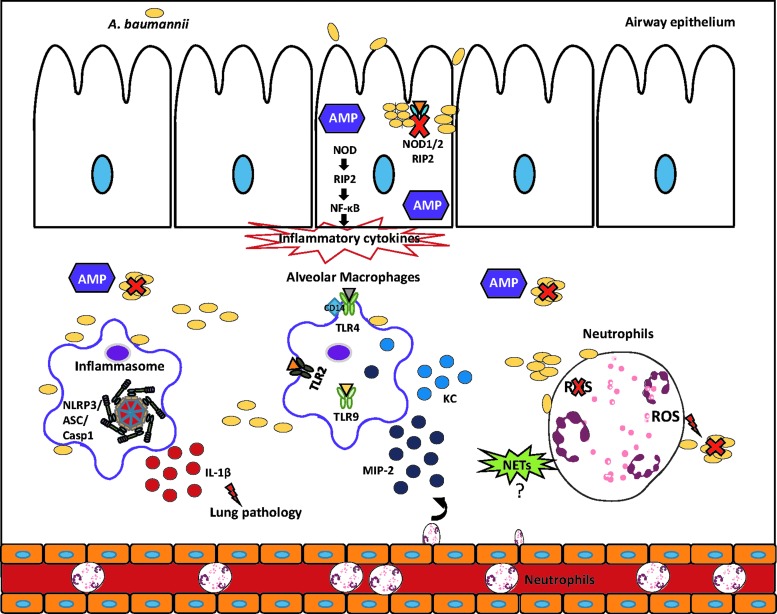
Acinetobacter baumannii is an emerging opportunistic pathogen that has risen to become a serious global threat, prevalent in health care settings and the community, which results in high morbidity and mortality rates. Its alarming expansion of antibiotic resistance is one of the most problematic traits of A. baumannii and as so, this bacterium has been classified as a serious threat and high priority target by the CDC. The most common types of infections induced by this pathogen include pneumonia (both hospital and community acquired), bacteremia, skin and soft tissue, urinary tract infections, endocarditis, and meningitis. Nosocomial pneumonia is the most prevalent of these. This review summarizes the current state of the signaling and innate immune components activated in response to A. baumannii infection in the airway.
Keywords: airway; host-pathogen; innate immunity; lung.
Conflict of interest statement
No competing financial interests exist.
Figures
References
-
- Bhuiyan MS, Ellett F, Murray GL, Kostoulias X, Cerqueira GM, Schulze KE, Mahamad Maifiah MH, Li J, Creek DJ, Lieschke GJ, Peleg AY. 2016. Acinetobacter baumannii phenylacetic acid metabolism influences infection outcome through a direct effect on neutrophil chemotaxis. Proc Natl Acad Sci U S A 113(34):9599–9604 - PMC - PubMed
-
- Blasius AL, Beutler B. 2010. Intracellular toll-like receptors. Immunity 32(3):305–315 - PubMed
Publication types
MeSH terms
Substances
LinkOut - more resources
Full Text Sources
