


Peripheral neuropathy induced by drinking water contaminated with low-dose arsenic in Myanmar
- PMID: 31014238
- PMCID: PMC6480850
- DOI: 10.1186/s12199-019-0781-0
Peripheral neuropathy induced by drinking water contaminated with low-dose arsenic in Myanmar
Abstract
Background: More than 140 million people drink arsenic-contaminated groundwater. It is unknown how much arsenic exposure is necessary to cause neurological impairment. Here, we evaluate the relationship between neurological impairments and the arsenic concentration in drinking water (ACDW).
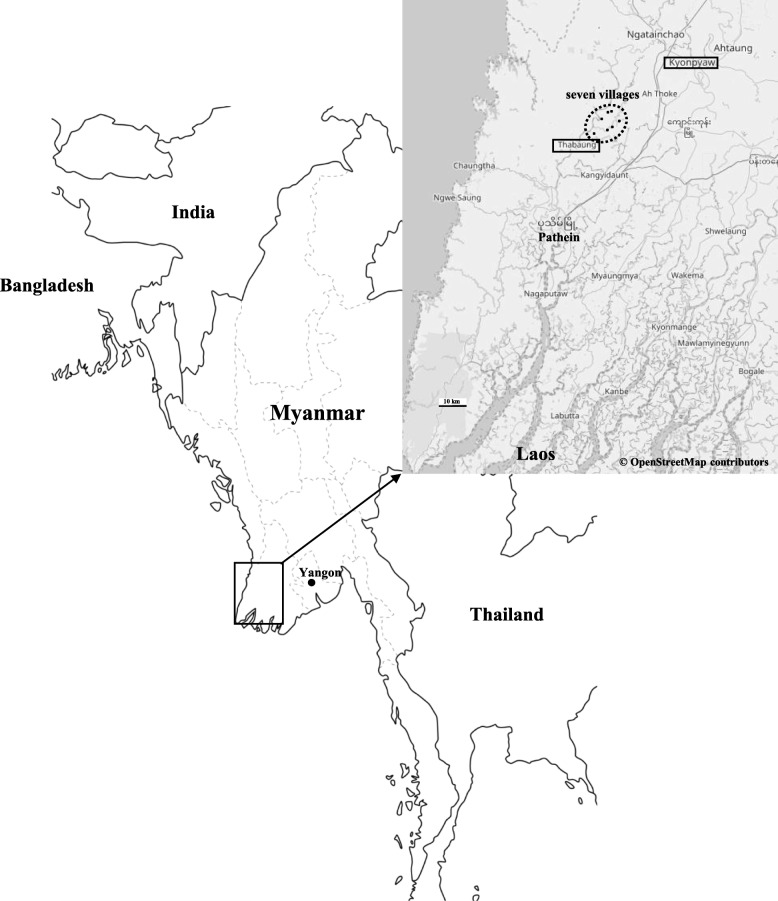
Participants and methods: A cross-sectional study design was employed. We performed medical examinations of 1867 residents in seven villages in the Thabaung township in Myanmar. Medical examinations consisted of interviews regarding subjective neurological symptoms and objective neurological examinations of sensory disturbances. For subjective neurological symptoms, we ascertained the presence or absence of defects in smell, vision, taste, and hearing; the feeling of weakness; and chronic numbness or pain. For objective sensory disturbances, we examined defects in pain sensation, vibration sensation, and two-point discrimination. We analyzed the relationship between the subjective symptoms, objective sensory disturbances, and ACDW.
Results: Residents with ACDW ≥ 10 parts per billion (ppb) had experienced a "feeling of weakness" and "chronic numbness or pain" significantly more often than those with ACDW < 10 ppb. Residents with ACDW ≥ 50 ppb had three types of sensory disturbances significantly more often than those with ACDW < 50 ppb. In children, there was no significant association between symptoms or signs and ACDW.
Conclusion: Subjective symptoms, probably due to peripheral neuropathy, occurred at very low ACDW (around 10 ppb). Objective peripheral nerve disturbances of both small and large fibers occurred at low ACDW (> 50 ppb). These data suggest a threshold for the occurrence of peripheral neuropathy due to arsenic exposure, and indicate that the arsenic concentration in drinking water should be less than 10 ppb to ensure human health.
Keywords: Arsenic; Groundwater; Peripheral neuropathy; Pollution; Sensory disturbance.
Conflict of interest statement
Ethics approval and consent to participate
The study protocol was approved by the Ethics Committee of the University of Miyazaki (approval number: 2016-069) and was carried out in accordance with the Declaration of Helsinki. Informed consent was obtained from all participants.
Consent for publication
Not applicable.
Competing interests
The authors declare that they have no competing interests.
Publisher’s Note
Springer Nature remains neutral with regard to jurisdictional claims in published maps and institutional affiliations.
Figures
References
-
- Ravenscroft P, Brammer H, Richards K. Arsenic pollution—a global synthesis-Peter Ravenscroft Hugh Brammer-140518602X-Wiley Blackw. United Kingdom: Wiley-Blackwell; 2009.
MeSH terms
Substances
Grants and funding
LinkOut - more resources
Full Text Sources
Medical