


Surgical wound infection following open humeral fracture caused by Mycobacterium houstonense: a case report
- PMID: 31014284
- PMCID: PMC6480768
- DOI: 10.1186/s12879-019-3979-2
Surgical wound infection following open humeral fracture caused by Mycobacterium houstonense: a case report
Abstract
Background: Historically Mycobacterium houstonense belongs to the unnamed third biovariant complex of the Mycobacterium fortuitum group, which are sorbitol positive. To date, there have been few reports of human infection induced by M. houstonense worldwide.
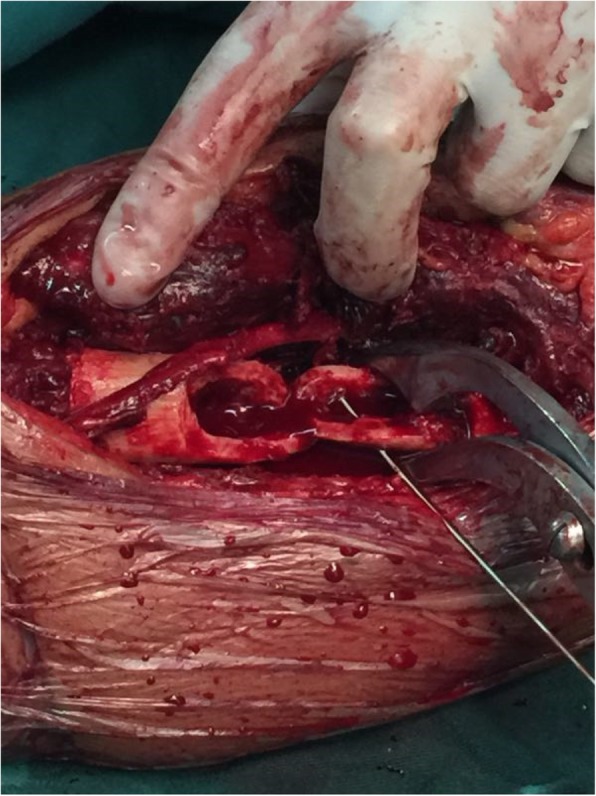
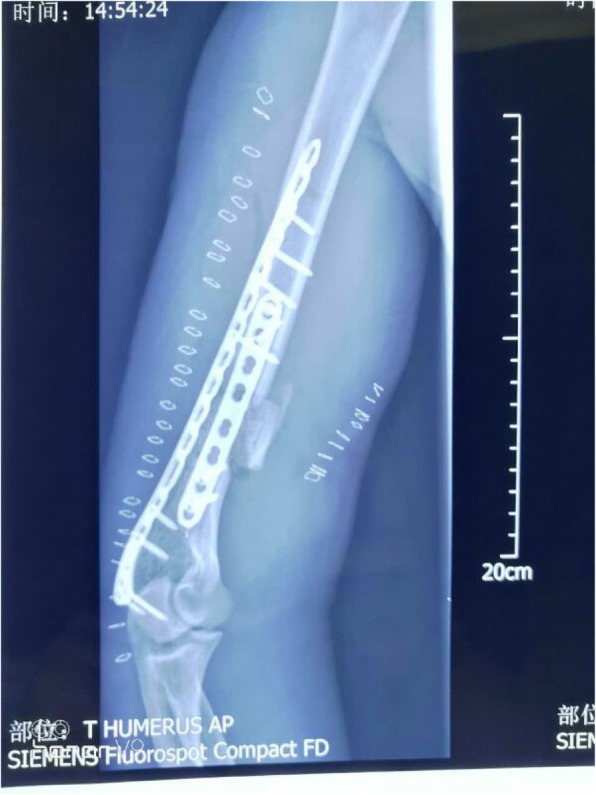
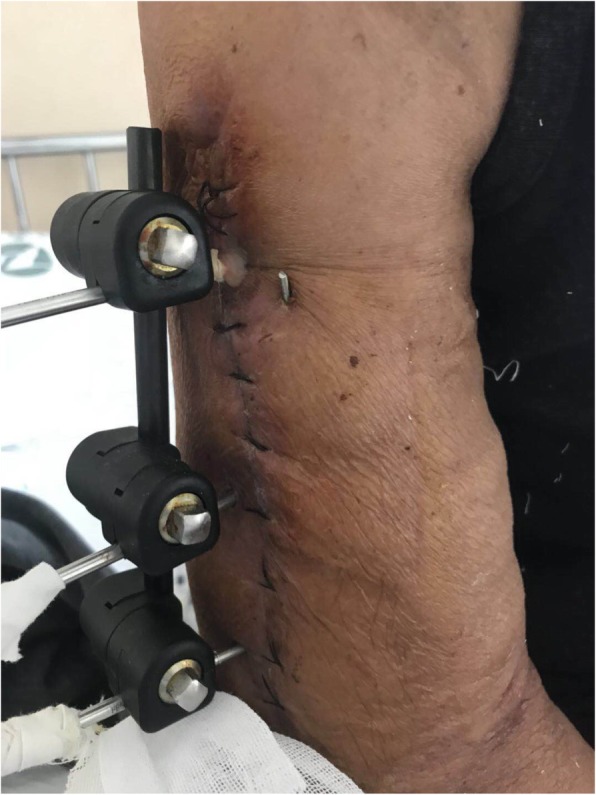
Case presentation: We describe the case of a 68-year-old man with surgical wound infection, following an open humeral fracture, caused by M. houstonense and Escherichia coli. An implant bone plate had been embedded for internal fixation during surgery on the humeral fracture previously. A week later E. coli was isolated from the skin wound secretions. Cefoperazone-sulbactam was used for treatment for two weeks but the infection was not controlled, with a subsequent risk of deep wound infection. External fixation of the fracture was then performed instead of internal fixation. Ten days later, M. houstonense was isolated from new wound secretions. M. houstonense was identified by the molecular sequencing method. The TREK Diagnostic System was used to test the susceptibility to antibiotics by the microbroth dilution method. Levofloxacin and amikacin were used for treatment according to the results of the susceptibility test and the patient's condition obviously improved.
Conclusion: To the best of our knowledge, this is the first case in China of human surgical wound infection caused by M. houstonense following open humeral fracture. The combination of levofloxacin and amikacin was effective in the treatment of M. houstonense infection.
Keywords: Escherichia coli; Microbroth dilution method; Mycobacteria houstonense; Mycobacterium fortuitum group; TREK diagnostic systems.
Conflict of interest statement
Ethics approval and consent to participate
The study protocol was approved by the Tongji Hospital ethics committee for research in health. Informed written consent was obtained from the patient.
Consent for publication
The patient provided written consent for the case details to be published.
Competing interests
The authors declare that they have no competing interest.
Publisher’s Note
Springer Nature remains neutral with regard to jurisdictional claims in published maps and institutional affiliations.
Figures

References
-
- Schinsky MF, Morey RE, Steigerwalt AG, Douglas MP, Wilson RW, Floyd MM, Butler WR, Daneshvar MI, Brown-Elliott BA, Wallace RJ, Jr, et al. Taxonomic variation in the Mycobacterium fortuitum third biovariant complex: description of Mycobacterium boenickei sp. nov., Mycobacterium houstonense sp. nov., Mycobacterium neworleansense sp. nov. and Mycobacterium brisbanense sp. nov. and recognition of Mycobacterium porcinum from human clinical isolates. Int J Syst Evol Microbiol. 2004;54(Pt 5):1653–1667. doi: 10.1099/ijs.0.02743-0. - DOI - PubMed
Publication types
MeSH terms
Substances
Grants and funding
LinkOut - more resources
Full Text Sources
Medical
