


Efficient gene transfer into T lymphocytes by fiber-modified human adenovirus 5
- PMID: 31014302
- PMCID: PMC6480437
- DOI: 10.1186/s12896-019-0514-x
Efficient gene transfer into T lymphocytes by fiber-modified human adenovirus 5
Abstract
Background: The gene transduction efficiency of adenovirus to hematopoietic cells, especially T lymphocytes, is needed to be improved. The purpose of this study is to improve the transduction efficiency of T lymphocytes by using fiber-modified human adenovirus 5 (HAdV-5) vectors.
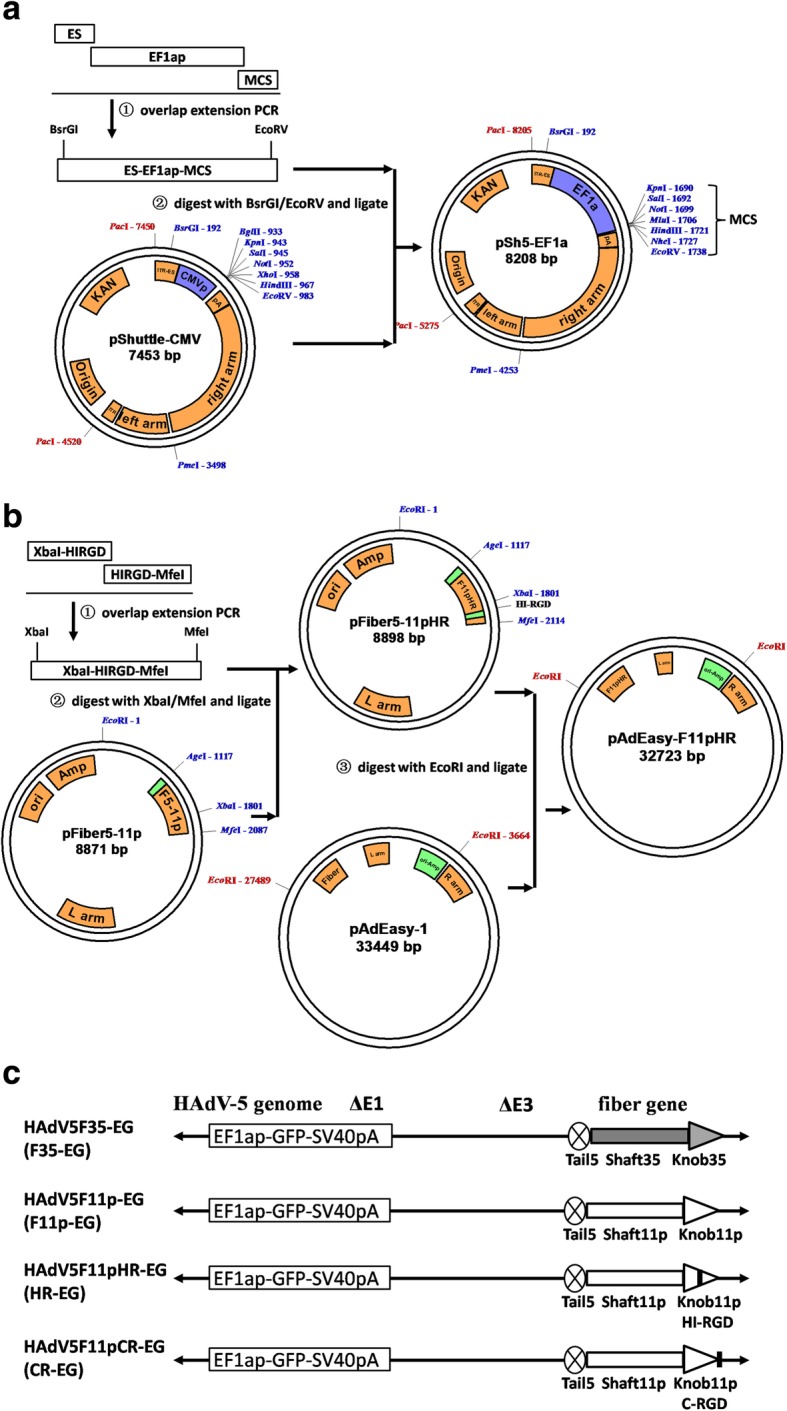
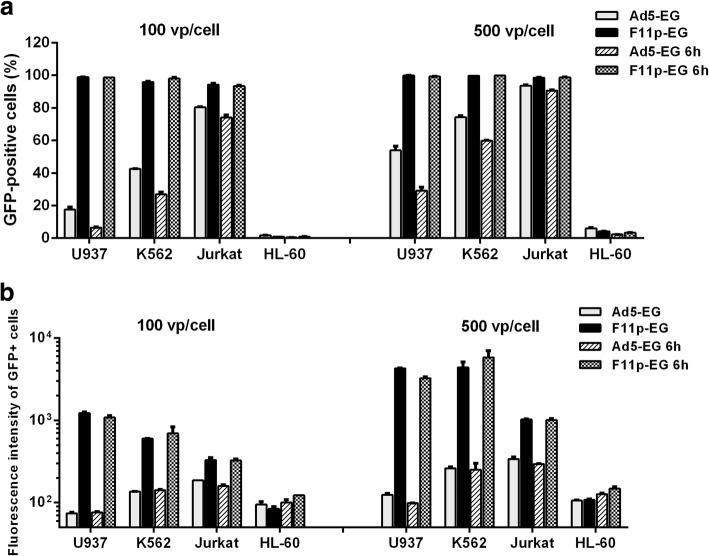
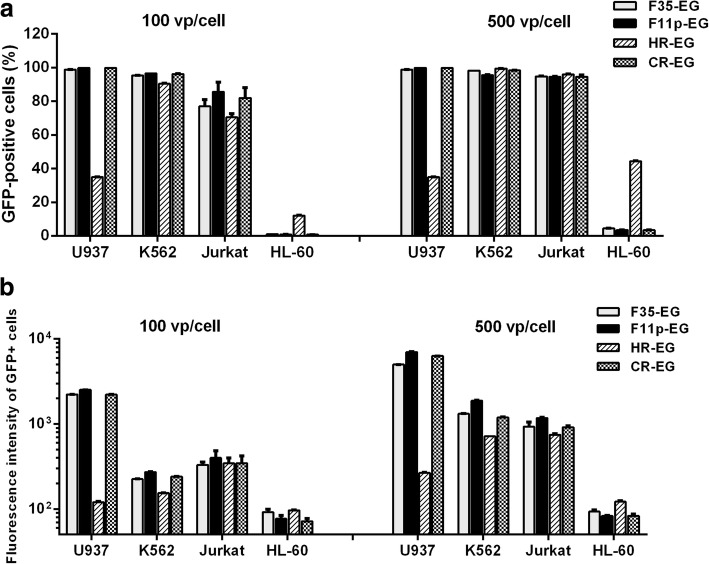
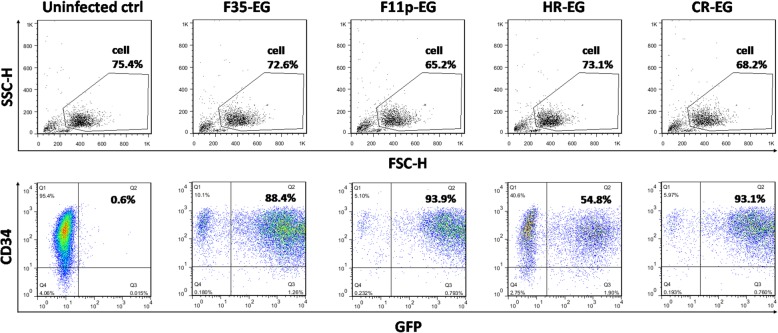
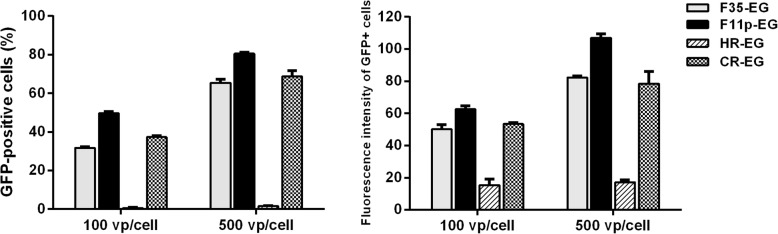
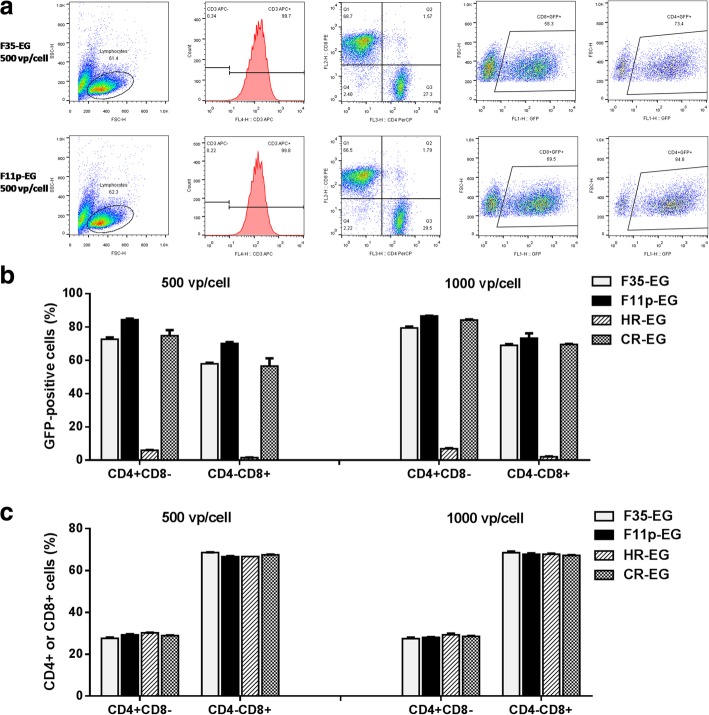
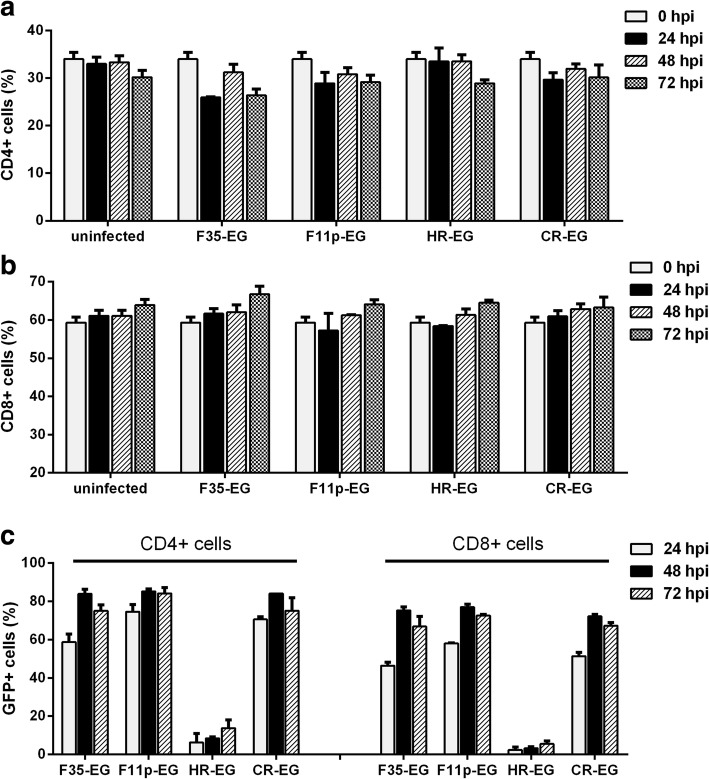
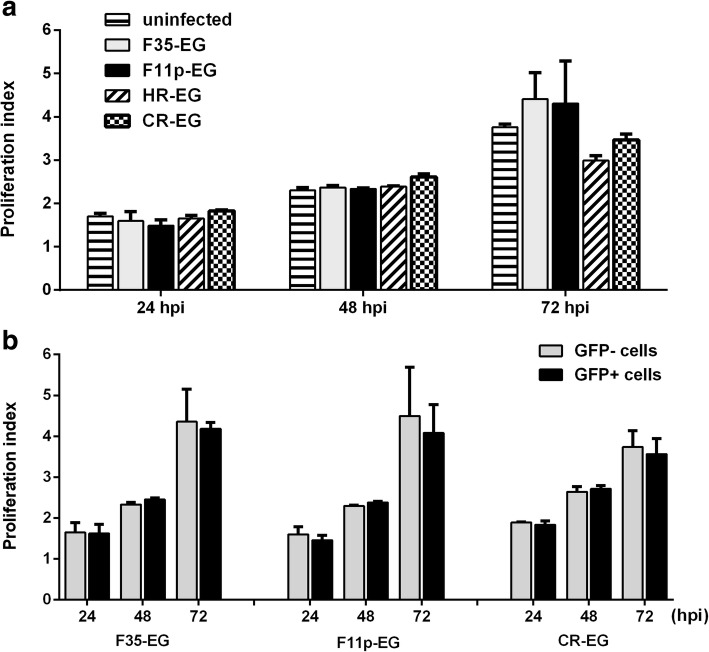
Results: Four fiber-modified human adenovirus 5 (HAdV-5) vectors were investigated to transduce hematopoietic cells. F35-EG or F11p-EG were HAdV-35 or HAdV-11p fiber pseudotyped HAdV-5, and HR-EG or CR-EG vectors were generated by incorporating RGD motif to the HI loop or to the C-terminus of F11p-EG fiber. All vectors could transduce more than 90% of K562 or Jurkat cells at an multiplicity of infection (MOI) of 500 viral particle per cell (vp/cell). All vectors except HR-EG could transduce nearly 90% cord blood CD34+ cells or 80% primary human T cells at the MOI of 1000, and F11p-EG showed slight superiority to F35-EG and CR-EG. Adenoviral vectors transduced CD4+ T cells a little more efficiently than they did to CD8+ T cells. These vectors showed no cytotoxicity at an MOI as high as 1000 vp/cell because the infected and uninfected T cells retained the same CD4/CD8 ratio and cell growth rate.
Conclusions: HAdV-11p fiber pseudotyped HAdV-5 could effectively transduce human T cells when human EF1a promoter was used to control the expression of transgene, suggesting its possible application in T cell immunocellular therapy.
Keywords: Adenovirus 5 vector; Gene therapy; Human hematopoietic cells.
Conflict of interest statement
Ethics approval and consent to participate
Because the ways to get samples have no effect on the health of donors and the samples are not for clinical use, the local ethics committee (Medical ethics committee of affiliated hospital of Qingdao university) agreed to the protocols (Hematopoietic Cell Transduction 2018–03) of this project in which oral inform consent is needed. All donors are oral informed in conversation room under video record.
Consent for publication
Not applicable.
Competing interests
The authors declare that they have no competing interests.
Publisher’s Note
Springer Nature remains neutral with regard to jurisdictional claims in published maps and institutional affiliations.
Figures
References
Publication types
MeSH terms
Substances
LinkOut - more resources
Full Text Sources
Other Literature Sources
Research Materials
Miscellaneous
