


Visual temporal frequency preference shows a distinct cortical architecture using fMRI
- PMID: 31015027
- PMCID: PMC6591056
- DOI: 10.1016/j.neuroimage.2019.04.048
Visual temporal frequency preference shows a distinct cortical architecture using fMRI
Abstract
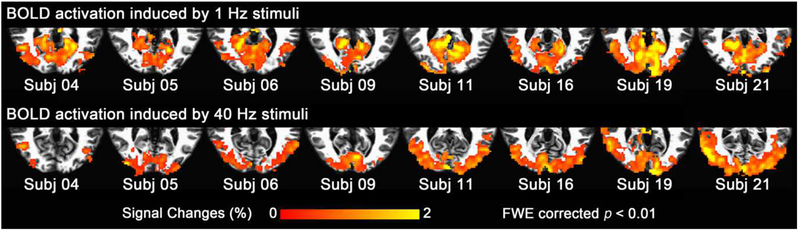
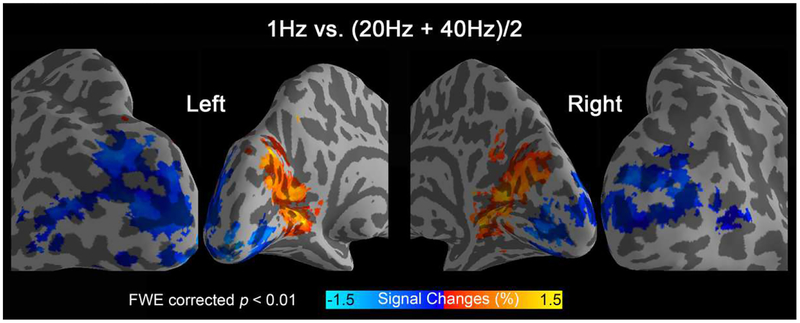
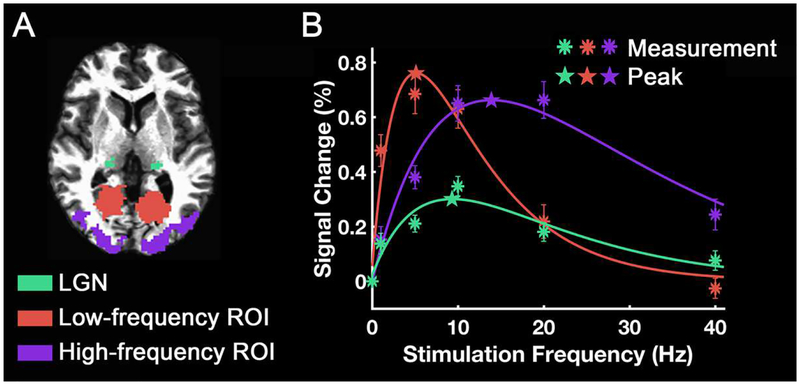
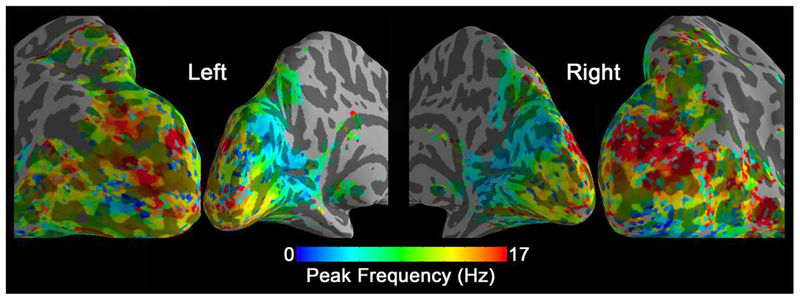
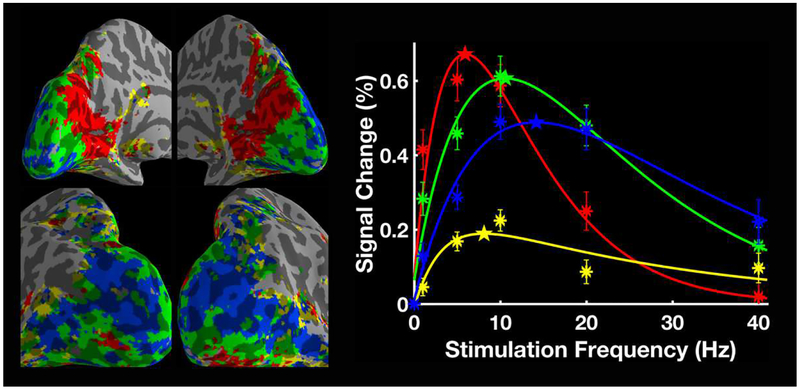
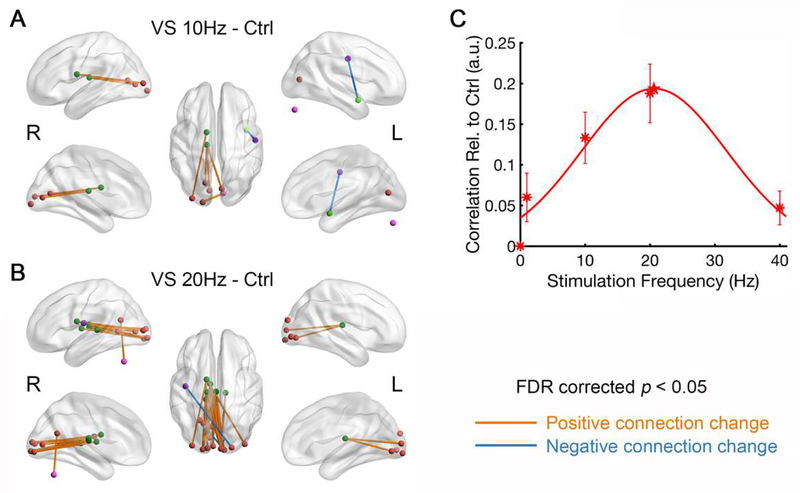
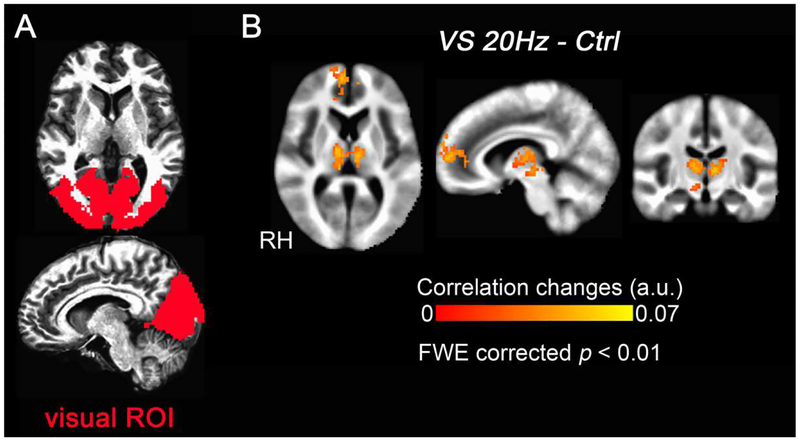
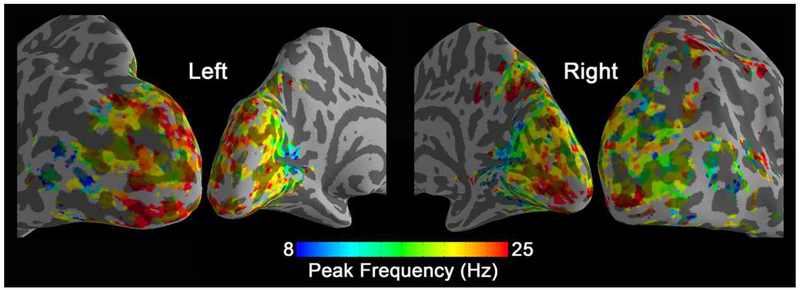
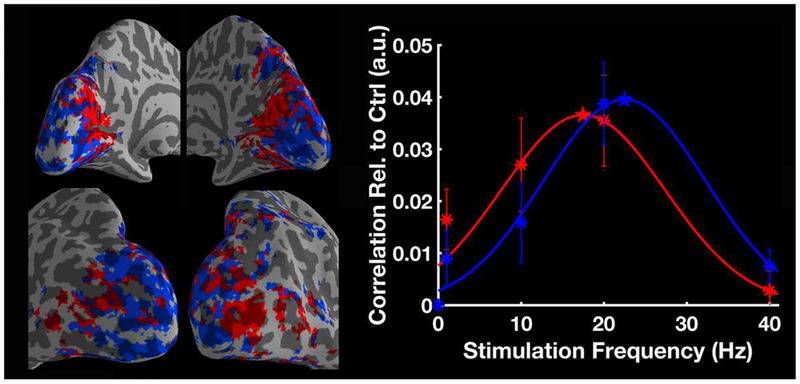
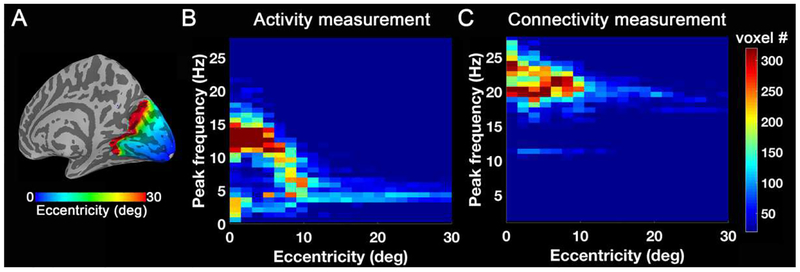
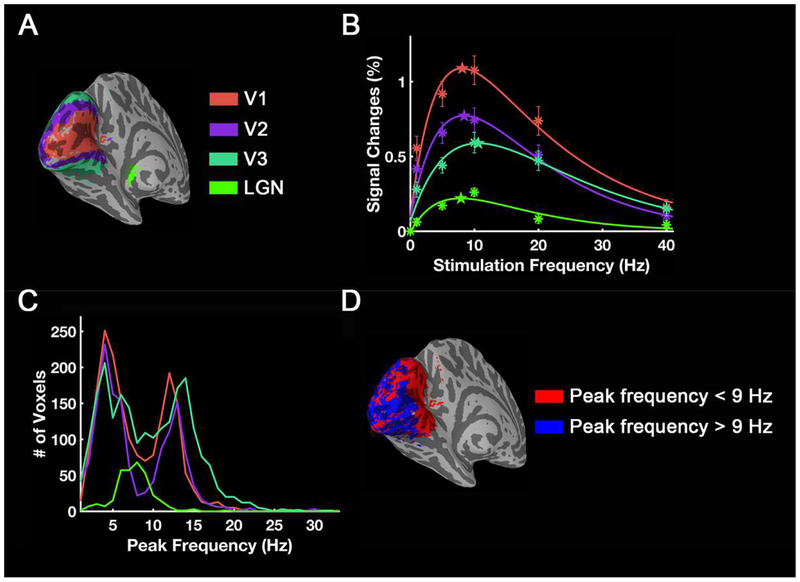
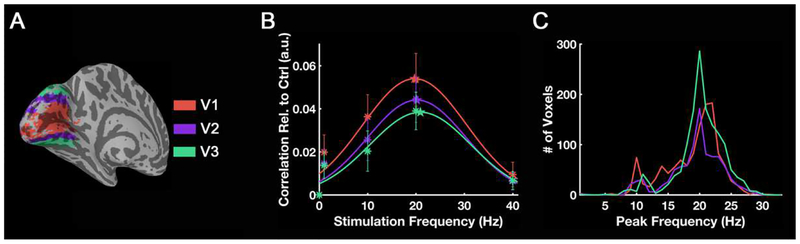
Studies of visual temporal frequency preference typically examine frequencies under 20 Hz and measure local activity to evaluate the sensitivity of different cortical areas to variations in temporal frequencies. Most of these studies have not attempted to map preferred temporal frequency within and across visual areas, nor have they explored in detail, stimuli at gamma frequency, which recent research suggests may have potential clinical utility. In this study, we address this gap by using functional magnetic resonance imaging (fMRI) to measure response to flickering visual stimuli varying in frequency from 1 to 40 Hz. We apply stimulation in both a block design to examine task response and a steady-state design to examine functional connectivity. We observed distinct activation patterns between 1 Hz and 40 Hz stimuli. We also found that the correlation between medial thalamus and visual cortex was modulated by the temporal frequency. The modulation functions and tuned frequencies are different for the visual activity and thalamo-visual correlations. Using both fMRI activity and connectivity measurements, we show evidence for a temporal frequency specific organization across the human visual system.
Keywords: Connectivity; Temporal frequency; Thalamo-visual correlation; Visual frequency; fMRI.
Copyright © 2019 Elsevier Inc. All rights reserved.
Figures
References
-
- Allison JD, Smith KR, Bonds AB, 2001. Temporal-frequency tuning of cross-orientation suppression in the cat striate cortex. Vis Neurosci 18, 941–948. - PubMed
-
- Bayram A, Karahan E, Bilgic B, Ademoglu A, Demiralp T, 2016. Achromatic temporal-frequency responses of human lateral geniculate nucleus and primary visual cortex. Vision Res 127, 177–185. - PubMed
-
- Buckner RL, Krienen FM, Yeo BT, 2013. Opportunities and limitations of intrinsic functional connectivity MRI. Nat Neurosci 16, 832–837. - PubMed
Publication types
MeSH terms
Grants and funding
LinkOut - more resources
Full Text Sources
Miscellaneous
