


Metronomic Chemotherapy: A Systematic Review of the Literature and Clinical Experience
- PMID: 31015835
- PMCID: PMC6446118
- DOI: 10.1155/2019/5483791
Metronomic Chemotherapy: A Systematic Review of the Literature and Clinical Experience
Abstract
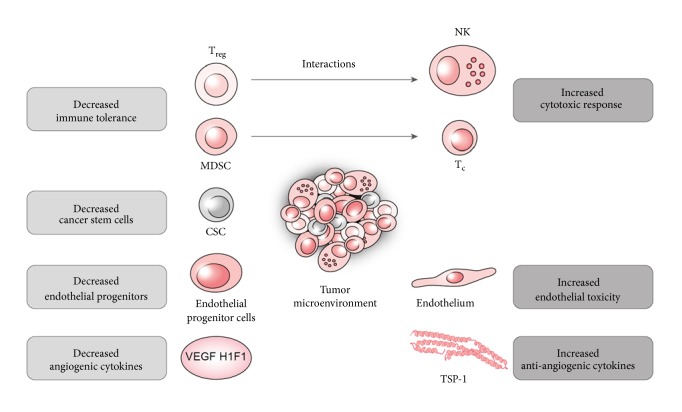
Metronomic chemotherapy, continuous and dose-dense administration of chemotherapeutic drugs with lowered doses, is being evaluated for substituting, augmenting, or appending conventional maximum tolerated dose regimens, with preclinical and clinical studies for the past few decades. To date, the principle mechanisms of its action include impeding tumoral angiogenesis and modulation of hosts' immune system, affecting directly tumor cells, their progenitors, and neighboring stromal cells. Its better toxicity profile, lower cost, and easier use are main advantages over conventional therapies. The evidence of metronomic chemotherapy for personalized medicine is growing, starting with unfit elderly patients and also for palliative treatment. The literature reviewed in this article mainly demonstrates that metronomic chemotherapy is advantageous for selected patients and for certain types of malignancies, which make it a promising therapeutic approach for filling in the gaps. More clinical studies are needed to establish a solidified role for metronomic chemotherapy with other treatment models in modern cancer management.
Figures
References
-
- Browder T., Butterfield C. E., Kräling B. M., et al. Antiangiogenic scheduling of chemotherapy improves efficacy against experimental drug-resistant cancer. Cancer Research. 2000;60(7):1878–1886. - PubMed
Publication types
LinkOut - more resources
Full Text Sources
Miscellaneous
