


Large, Stable, Contemporary Interspecies Recombination Events in Circulating Human Herpes Simplex Viruses
- PMID: 31016321
- PMCID: PMC7325804
- DOI: 10.1093/infdis/jiz199
Large, Stable, Contemporary Interspecies Recombination Events in Circulating Human Herpes Simplex Viruses
Abstract
Background: The ubiquitous human pathogens, herpes simplex virus (HSV)-1 and HSV-2, are distinct viral species that diverged approximately 6 million years ago. At least 4 small, ancient HSV-1 × HSV-2 interspecies recombination events have affected the HSV-2 genome, with recombinants and nonrecombinants at each locus circulating today. However, it is unknown whether interspecies recombination can affect other loci and whether new recombinants continue to be generated.
Methods: Using 255 newly sequenced and 230 existing HSV genome sequences, we comprehensively assessed interspecies recombination in HSV.
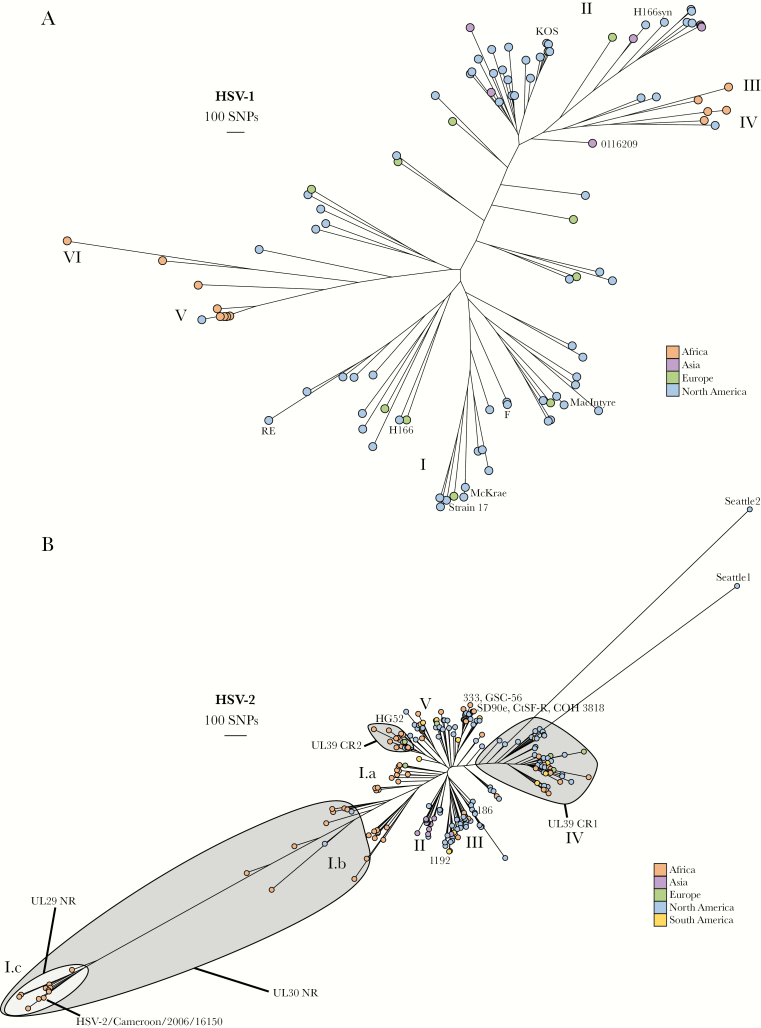
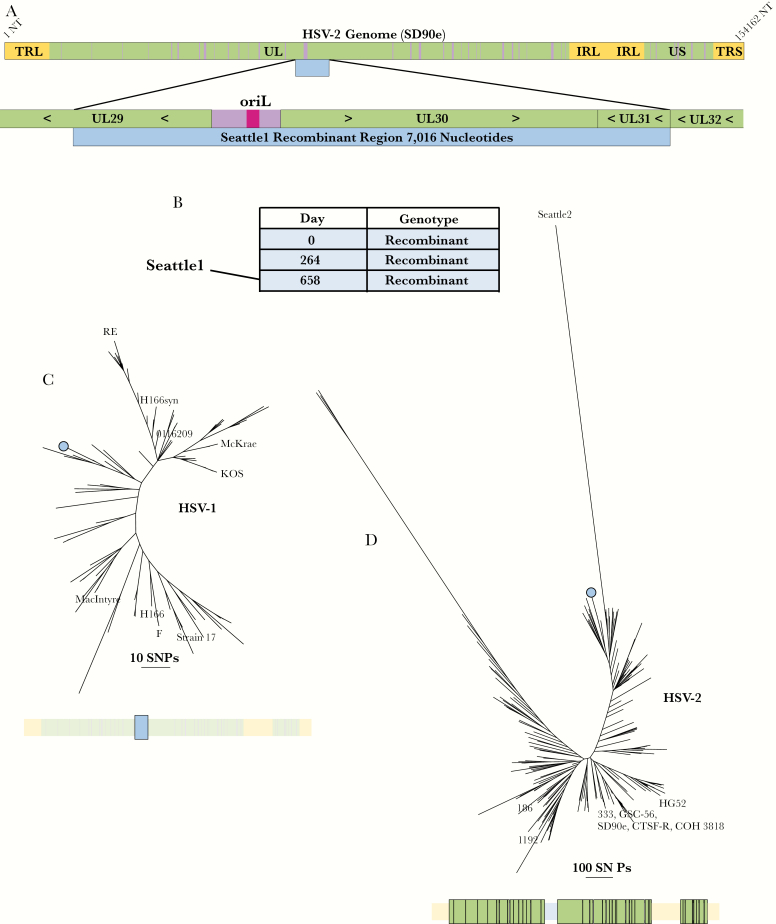
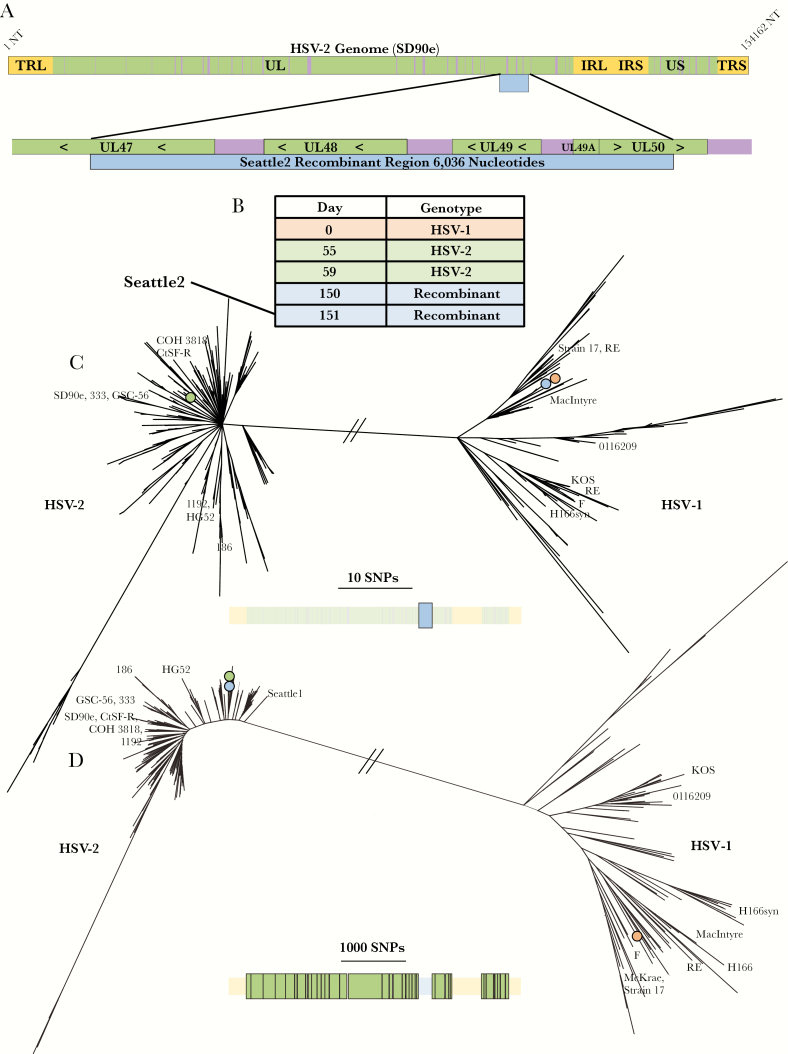
Results: Our findings show that the sizes and locations of interspecies recombination events in HSV-2 are significantly more variable than previously appreciated and that they can impact species-specific T-cell recognition of HSV.
Conclusions: We describe 2 large (>5 kb) recombination events, one of which arose in its current host, demonstrating that interspecies recombination continues to occur today. These results raise concerns about the use of live-attenuated HSV-2 vaccines in high HSV-1 prevalence areas.
Keywords: T-cells; genome; herpes simplex virus; phylogeny; recombination.
© The Author(s) 2019. Published by Oxford University Press for the Infectious Diseases Society of America. All rights reserved. For permissions, e-mail: journals.permissions@oup.com.
Figures
Comment in
-
Mixing It Up: New Insights Into Interspecies Recombination Between Herpes Simplex Virus Type 1 and 2.J Infect Dis. 2020 Mar 28;221(8):1208-1209. doi: 10.1093/infdis/jiz200. J Infect Dis. 2020. PMID: 31107962 Free PMC article.
References
-
- Corey L, Adams HG, Brown ZA, Holmes KK. Genital herpes simplex virus infections: clinical manifestations, course, and complications. Ann Intern Med 1983; 98:958–72. - PubMed
