MicroRNA-200c Attenuates Periodontitis by Modulating Proinflammatory and Osteoclastogenic Mediators
- PMID: 31017046
- PMCID: PMC6661922
- DOI: 10.1089/scd.2019.0027
MicroRNA-200c Attenuates Periodontitis by Modulating Proinflammatory and Osteoclastogenic Mediators
Abstract
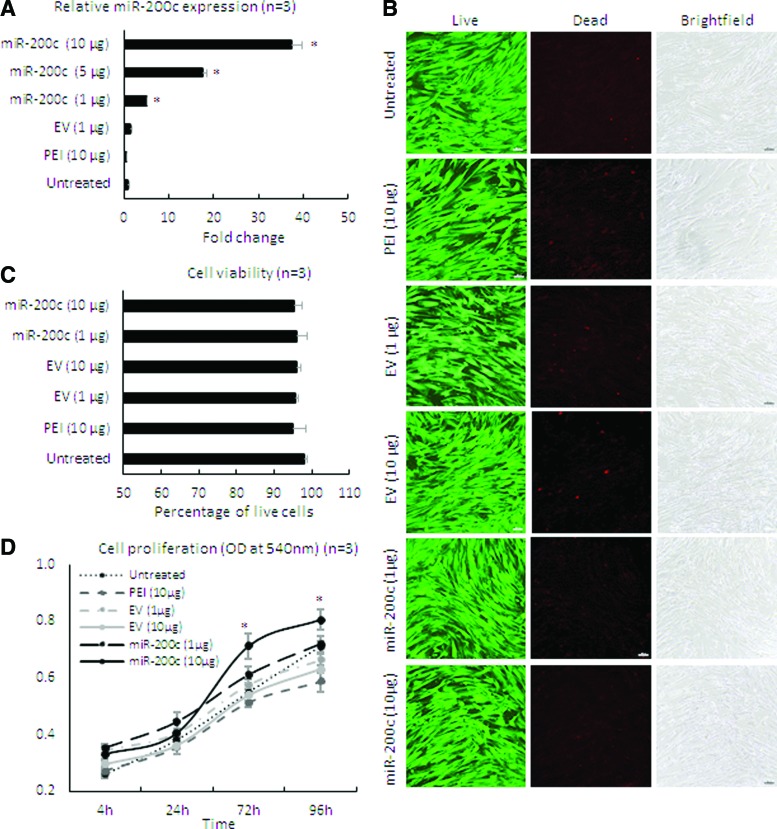
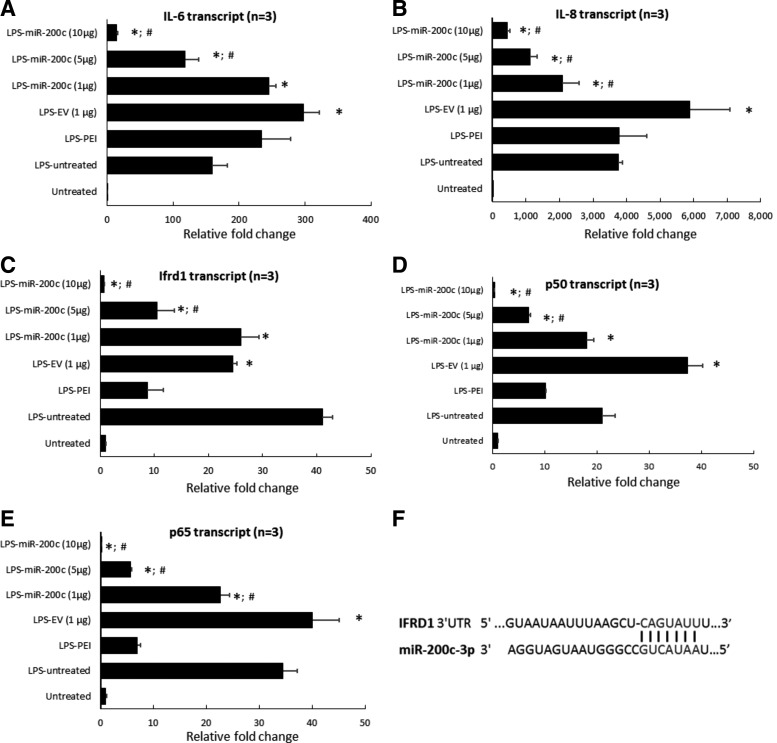
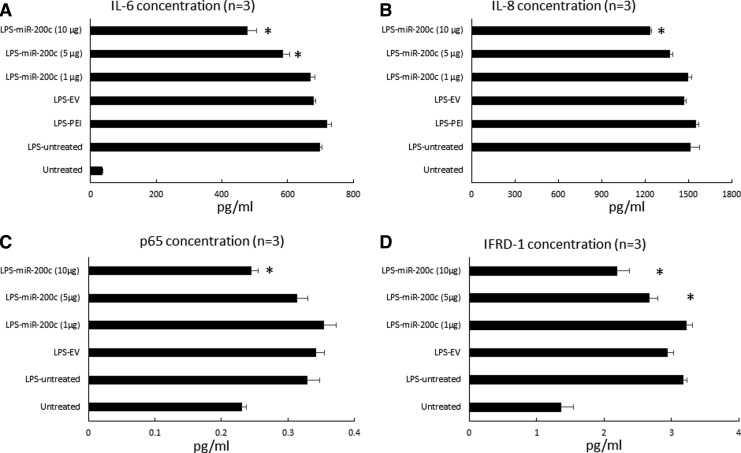
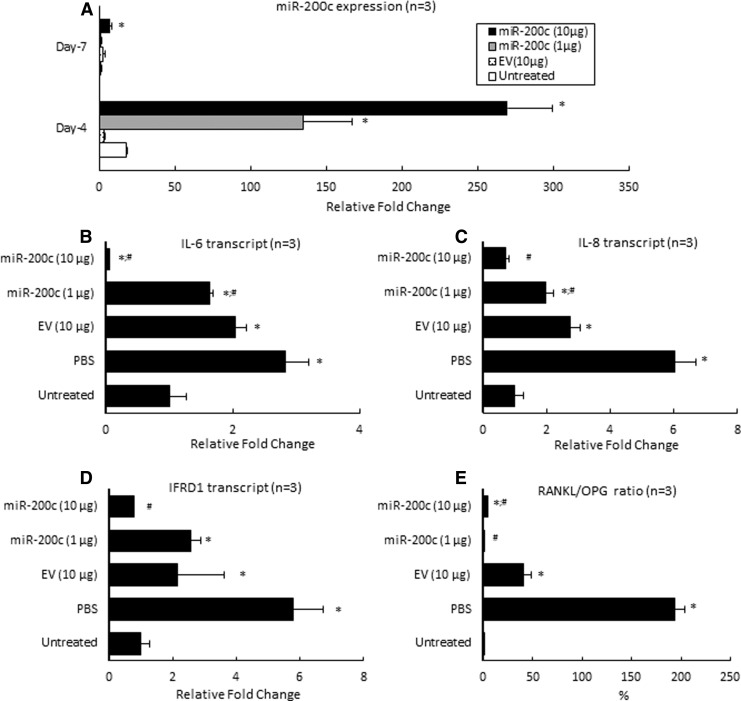
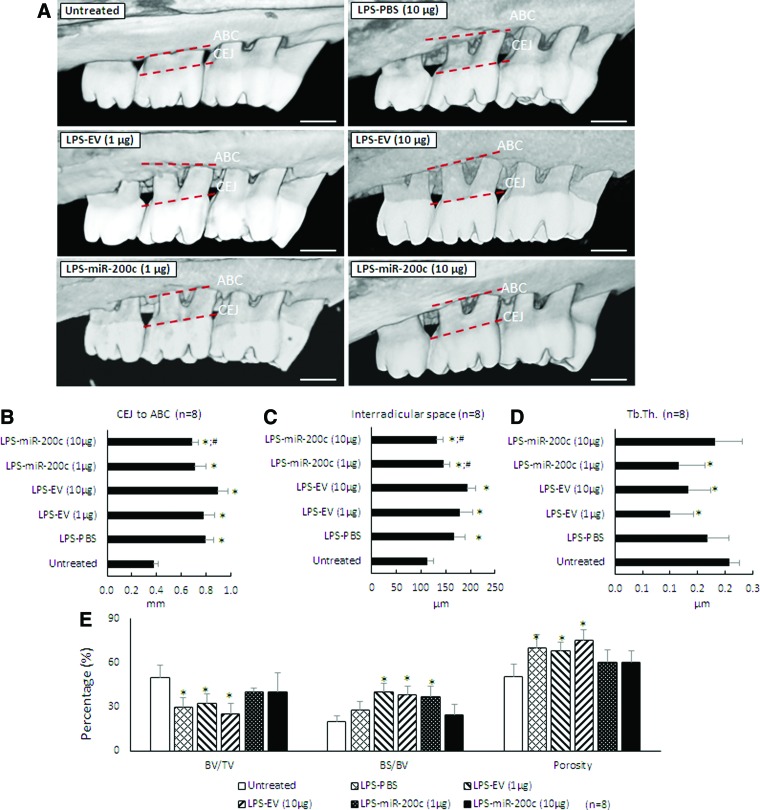
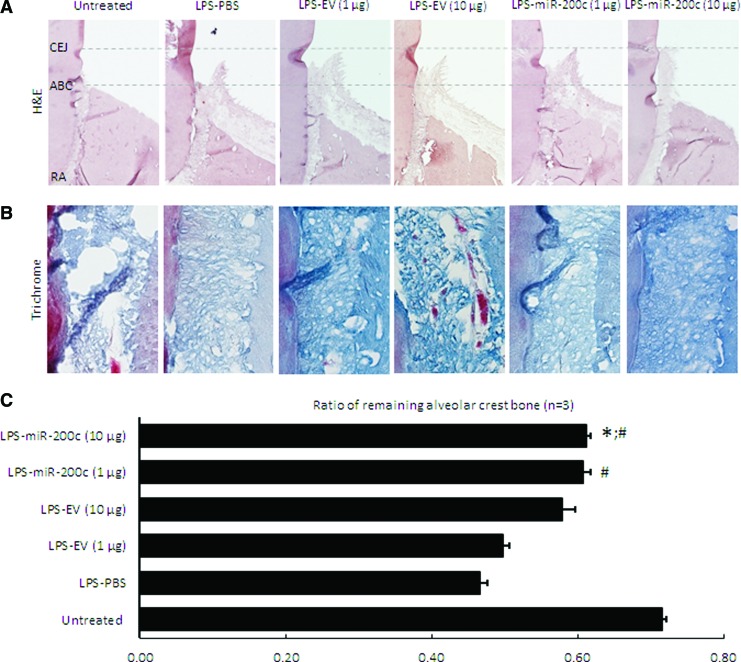
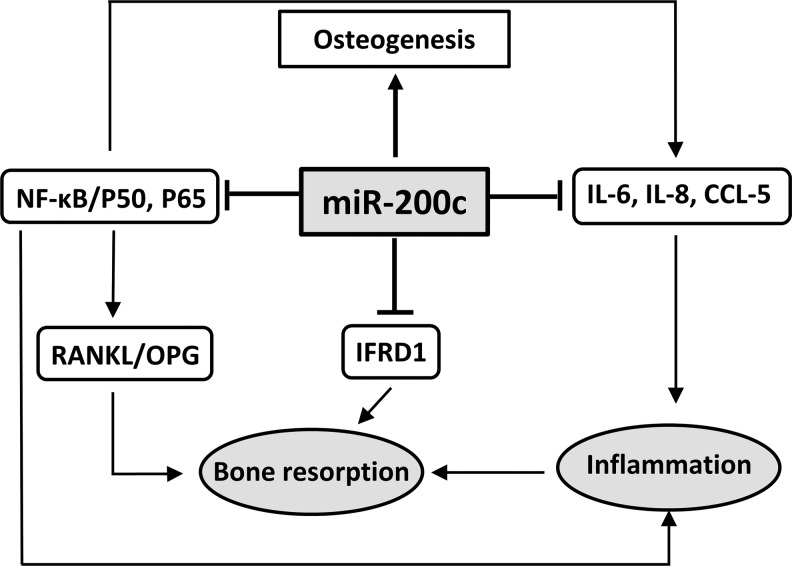
This study tested whether microRNA (miR)-200c can attenuate the inflammation and alveolar bone resorption in periodontitis by using an in vitro and a rat model. Polyethylenimine (PEI) was used to facilitate the transfection of plasmid DNA encoding miR-200c into primary human gingival fibroblasts (HGFs) and gingival tissues of rats. We first analyzed how proinflammatory and osteoclastogenic mediators in HGFs with overexpression of miR-200c responded to Porphyromonas gingivalis lipopolysaccharide (LPS-PG) challenge in vitro. We observed that overexpression of miR-200c significantly reduced interleukin (IL)-6 and 8 and repressed interferon-related developmental regulator-1 (IFRD1) in HGFs. miR-200c also downregulated p65 and p50. In a rat model of periodontitis induced by an LPS injection at the gingival sulcus of the second maxillary molar (M2), we analyzed how the mediators in rat gingiva and alveolar bone resorption responded to miR-200c treatment by a local injection of PEI-plasmid miR-200 nanoplexes. We observed that the local injection of miR-200c significantly upregulated miR-200c expression in gingiva and reduced IL-6, IL-8, IFRD1, and the ratio of receptor activator of nuclear factor kappa-B ligand/osteoprotegerin. Using micro-computed tomography analysis and histomorphometry, we further confirmed that local treatment with miR-200c effectively protected alveolar bone resorption in the rat model of periodontitis by reducing the distance between the cemento-enamel junction and the alveolar bone crest and the inter-radicular space in the upper maxilla at M2. These findings imply that miR-200c may serve as a unique means to prevent periodontitis and associated bone loss.
Keywords: alveolar bone loss; microRNA; periodontitis; polyethylenimine; proinflammatory.
Conflict of interest statement
No competing financial interests exist.
Figures
References
-
- Eke PI, Dye BA, Wei L, Thornton-Evans GO, Genco RJ. and Cdc Periodontal Disease Surveillance workgroup: James Beck GDRP. (2012). Prevalence of periodontitis in adults in the United States: 2009 and 2010. J Dent Res 91:914–920 - PubMed
-
- Muller HP. and Ulbrich M. (2005). Alveolar bone levels in adults as assessed on panoramic radiographs. (I) Prevalence, extent, and severity of even and angular bone loss. Clin Oral Investig 9:98–104 - PubMed
-
- Sanz M, Ceriello A, Buysschaert M, Chapple I, Demmer RT, Graziani F, Herrera D, Jepsen S, Lione L, et al. (2018). Scientific evidence on the links between periodontal diseases and diabetes: consensus report and guidelines of the joint workshop on periodontal diseases and diabetes by the International diabetes Federation and the European Federation of Periodontology. Diabetes Res Clin Pract 137:231–241 - PubMed
-
- Armas J, Culshaw S, Savarrio L. (2013). Treatment of peri-implant diseases: a review of the literature and protocol proposal. Dent Update 40: 472–480 - PubMed
-
- Papapanou PN. and Tonetti MS. (2000). Diagnosis and epidemiology of periodontal osseous lesions. Periodontol 22:8–21 - PubMed
Publication types
MeSH terms
Substances
Grants and funding
LinkOut - more resources
Full Text Sources
Research Materials