Comparison of single- and multi-joint lower body resistance training upon strength increases in recreationally active males and females: a within-participant unilateral training study
- PMID: 31019663
- PMCID: PMC6460214
- DOI: 10.4081/ejtm.2019.8052
Comparison of single- and multi-joint lower body resistance training upon strength increases in recreationally active males and females: a within-participant unilateral training study
Abstract
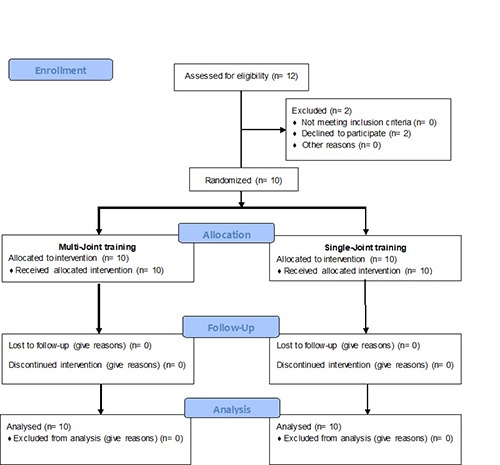
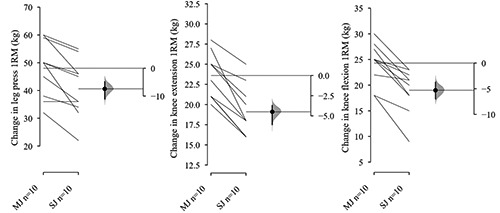
The present study compared strength increases resulting from either single-joint (SJ) or multi-joint (MJ) lower body resistance exercise. A within-participants design was utilised. Ten recreationally active participants (males; n=5, and females; n=5) had their lower limbs randomly allocated to perform both unilateral MJ (leg press; LP) and unilateral SJ (knee extension; KE, and seated knee flexion; KF) exercises. Participants trained 2 d.week-1 for 6 weeks. Pre- and post-intervention maximal strength (1-repetition maximum; 1RM) was measured for leg press, knee extension, and seated knee flexion exercises. Statistically significant strength increases occurred for both SJ and MJ groups, with significantly greater increases in 1RM for the MJ compared to the SJ group (p < 0.001 for all exercises). This study supports the use of MJ exercise for strength increases across lower body MJ and SJ movements, suggesting a time-efficient, and simple approach to resistance training may be efficacious. This might serve to promote greater adherence in the lay population as well as serving useful for rehabilitation professionals and strength and conditioning coaches in managing resistance exercise around skill/sport specific training.
Keywords: compound exercise; exercise selection; isolation exercise.
Conflict of interest statement
Conflict of Interest The authors declare they have no financial, personal, or other conflicts of interest..We confirm that we have read the Journal’s position on issues involved in ethical publication and affirm that this report is consistent with those guidelines.
Figures
References
-
- de la Motte SJ, Gribbin TC, Lisman P, et al. Systematic review of the association between physical fitness and musculoskeletal injury risk: Part 2—Muscular endurance and muscular strength. J Strength Cond Res 2017;31(11):3218-34. - PubMed
-
- Opar DA, Serpell BG. Is there a potential relationship between prior hamstring strain injury and increased risk for future anterior cruciate ligament injury? Arch Phys Med Rehab 2014;95:401-5. - PubMed
LinkOut - more resources
Full Text Sources