


Evaluation of analgesic efficacy of dexmedetomidine as adjuvant with ropivacaine in ultrasound-guided adductor canal block in patients following anterior cruciate ligament reconstruction surgeries
- PMID: 31019690
- PMCID: PMC6463348
- DOI: 10.1177/2049463718796865
Evaluation of analgesic efficacy of dexmedetomidine as adjuvant with ropivacaine in ultrasound-guided adductor canal block in patients following anterior cruciate ligament reconstruction surgeries
Abstract
Introduction: Local anaesthetic (LA) with highly selective alpha-2 agonist dexmedetomidine has not been evaluated in adductor canal block (ACB) for arthroscopic anterior cruciate ligament (ACL) reconstruction surgeries. The study evaluates postoperative analgesic effect of ropivacaine with adjuvant dexmedetomidine following postoperative ultrasound-guided ACB.
Methods: 105 randomized subjects received ultrasound-guided ACB using 15 mL of 0.5% ropivacaine, with 0.5 µg kg-1 of dexmedetomidine administered perineurally (Group II), intravenously (Group III) or none (Group I). Primary outcome included 24 hours' total morphine consumption postoperatively. Secondary outcomes included haemodynamics and adverse effects.
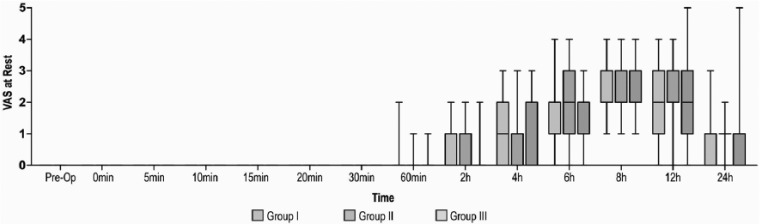
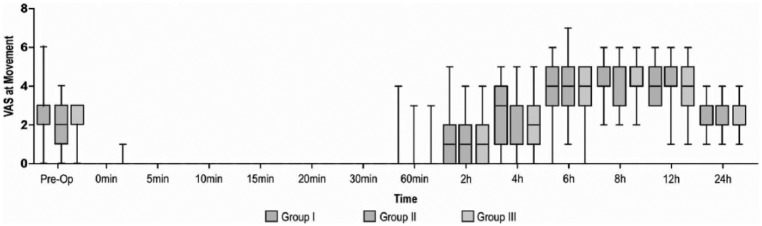
Results: The postoperative total morphine consumption was significantly reduced till 4 hours in II 0.57 mg (0.98 (0-3)) (p = 0.011) and up to 6 hours in Group III 0.77 mg (1.00 (0-4)) (p = 0.004) compared to Group I. The postoperative total morphine consumption was comparable at 24 hours in Group III 3.57 mg (1.73 (0-8)) and Group II 3.34 mg (1.92 (07)) (p = 1.000). The visual analogue scale (VAS) scores were comparable in all the three groups at all the time intervals studied (p > 0.05). There were no adverse effects observed during the study.
Conclusion: Use of perineural dexmedetomidine with LA for ACB in the postoperative period resulted in significant reduction in total morphine consumption in initial 4 hours as compared to 6 hours with intravenous (IV) dexmedetomidine.
Keywords: Anterior cruciate ligament; dexmedetomidine; postoperative analgesia; saphenous nerve block.
Conflict of interest statement
Conflict of interest: The author(s) declared no potential conflicts of interest with respect to the research, authorship and/or publication of this article.
Figures


References
-
- Thapa D, Ahuja V, Verma P, et al. Post-operative analgesia using intermittent vs. continuous adductor canal block technique: a randomized controlled trial. Acta Anaesthesiol Scand 2016; 60: 1379–1385. - PubMed
-
- Parker RD, Streem K, Schmitz L, et al. Efficacy of continuous intra-articular bupivacaine infusion for postoperative analgesia after anterior cruciate ligament reconstruction: a double-blinded, placebo-controlled, prospective, and randomized study. Am J Sports Med 2007; 35: 531–536. - PubMed
-
- Venn RM, Bradshaw CJ, Spencer R, et al. Preliminary UK experience of dexmedetomidine, a novel agent for postoperative sedation in the intensive care unit. Anaesthesia 1999; 54: 1136–1142. - PubMed
-
- Abdallah FW, Brull R. Facilitatory effects of perineural dexmedetomidine on neuraxial and peripheral nerve block: a systematic review and meta-analysis. Br J Anaesth 2013; 110: 915–925. - PubMed
LinkOut - more resources
Full Text Sources