Meta-Analysis
. 2019 Apr;7(3):424-448.
doi: 10.1177/2050640619828185. Epub 2019 Feb 6.

The compliance rate for the second diagnostic evaluation after a positive fecal occult blood test: A systematic review and meta-analysis

Affiliations
Meta-Analysis

The compliance rate for the second diagnostic evaluation after a positive fecal occult blood test: A systematic review and meta-analysis

Rachel Gingold-Belfer et al. United European Gastroenterol J. 2019 Apr.

Abstract

Introduction: Only a minority of patients with a positive fecal occult blood test (FOBT) undergo a follow-up second diagnostic procedure, thus minimizing its contribution for colorectal cancer (CRC) prevention. We aimed to obtain a precise estimation of this problem and also assess the diagnostic yield of CRC and adenomas by colonoscopy in these patients.

Methods: Literature searches were conducted for "compliance" OR "adherence" AND "fecal occult blood test" OR "fecal immunohistochemical test" AND "colonoscopy." Comprehensive meta-analysis software was used.

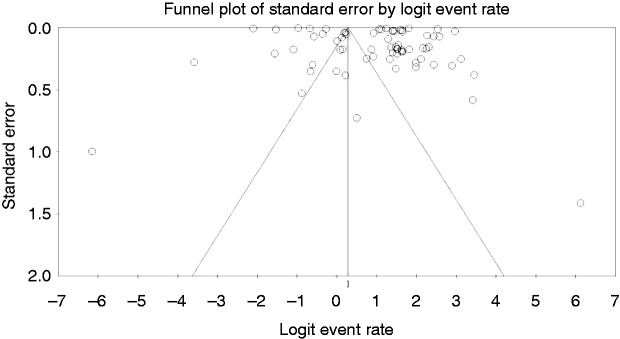
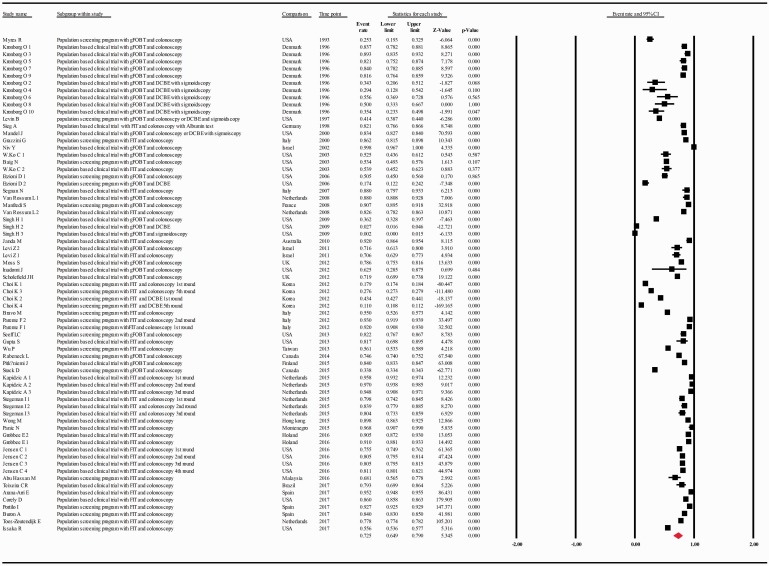
Results: The search resulted in 42 studies (512,496 patients with positive FOBT), published through December 31, 2017. A funnel plot demonstrates a moderate publication bias. Compliance with any second procedure, colonoscopy, or combination of double-contrast barium enema with or without sigmoidoscopy in patients with a positive FOBT was 0.725 with 95% confidence interval (CI) 0.649-0.790 (p = 0.000), 0.804 with 95% CI 0.740-0.856 (p = 0.000) and 0.197 with 95% CI 0.096-0.361 (p = 0.000), respectively. The diagnostic yield for CRC, advanced adenoma and simple adenoma was 0.058 with 95% CI 0.050-0.068 (p = 0.000), 0.242 with 95% CI 0.188-0.306 (p = 0.000) and 0.147 with 95% CI 0.116-0.184 (p < 0.001), respectively.

Discussion: Compliance with diagnostic evaluation after a positive FOBT is still suboptimal. Therefore, measures to increase compliance need to be taken given the increased risk of CRC in these patients.

Keywords: CRC prevention; Compliance rate; diagnostic yield; fecal occult blood test; follow-up colonoscopy.


Figures
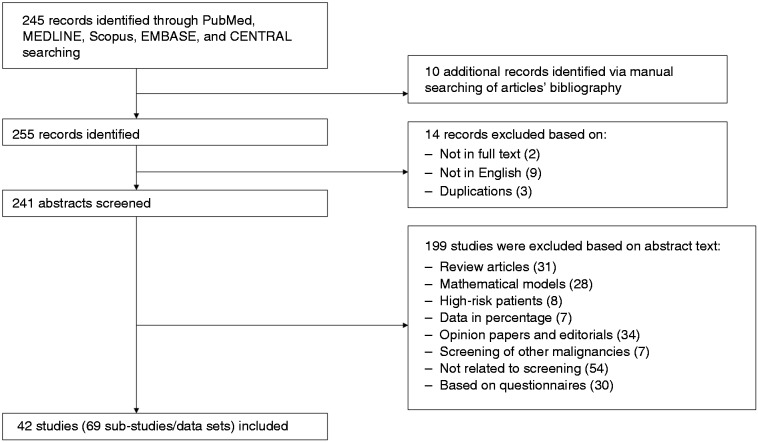
Figure 1.
Figure 1.
Flowchart of articles identified for the meta-analysis.
Figure 2.
Figure 2.
Funnel plot for publication bias.
Figure 3.
Figure 3.
Meta-analysis of descriptive studies looking at the compliance of patients with a positive FOBT for second procedure (all types): 42 studies (69 substudies/data sets); 302,197 procedures performed in 512,496 patients with a positive FOBT. CI: confidence interval; DCBE: double-contrast barium enema; FIT: fecal immunohistochemical test; FOBT: fecal occult blood test; gFOBT: guaiac fecal occult blood test; UK: United Kingdom; USA: United States of America.
Figure 4.
Figure 4.
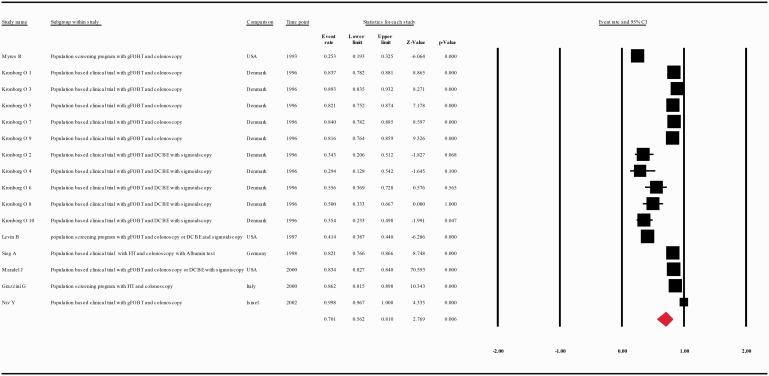
(a) Meta-analysis of descriptive studies published 1993–2002, looking at the compliance of patients with a positive FOBT for second procedure: seven studies (16 substudies/data sets); 13,665 procedures performed in 17,204 patients with a positive FOBT. (b) Meta-analysis of descriptive studies published 2003–2012, looking at the compliance of patients with a positive FOBT for second procedure: 15 studies (25 substudies/data sets); 48,917 procedures performed in 187,509 patients with a positive FOBT. (c) Meta-analysis of descriptive studies published 2013–2017, looking at the compliance of patients with a positive FOBT for second procedure: 20 studies (28 substudies/data sets); 239,615 procedures performed in 307,783 patients with a positive FOBT. CI: confidence interval; DCBE: double-contrast barium enema; FIT: fecal immunohistochemical test; FOBT: fecal occult blood test; gFOBT: guaiac fecal occult blood test; USA: United States of America.
Figure 4.
Figure 4.
(a) Meta-analysis of descriptive studies published 1993–2002, looking at the compliance of patients with a positive FOBT for second procedure: seven studies (16 substudies/data sets); 13,665 procedures performed in 17,204 patients with a positive FOBT. (b) Meta-analysis of descriptive studies published 2003–2012, looking at the compliance of patients with a positive FOBT for second procedure: 15 studies (25 substudies/data sets); 48,917 procedures performed in 187,509 patients with a positive FOBT. (c) Meta-analysis of descriptive studies published 2013–2017, looking at the compliance of patients with a positive FOBT for second procedure: 20 studies (28 substudies/data sets); 239,615 procedures performed in 307,783 patients with a positive FOBT. CI: confidence interval; DCBE: double-contrast barium enema; FIT: fecal immunohistochemical test; FOBT: fecal occult blood test; gFOBT: guaiac fecal occult blood test; USA: United States of America.
Figure 4.
Figure 4.
(a) Meta-analysis of descriptive studies published 1993–2002, looking at the compliance of patients with a positive FOBT for second procedure: seven studies (16 substudies/data sets); 13,665 procedures performed in 17,204 patients with a positive FOBT. (b) Meta-analysis of descriptive studies published 2003–2012, looking at the compliance of patients with a positive FOBT for second procedure: 15 studies (25 substudies/data sets); 48,917 procedures performed in 187,509 patients with a positive FOBT. (c) Meta-analysis of descriptive studies published 2013–2017, looking at the compliance of patients with a positive FOBT for second procedure: 20 studies (28 substudies/data sets); 239,615 procedures performed in 307,783 patients with a positive FOBT. CI: confidence interval; DCBE: double-contrast barium enema; FIT: fecal immunohistochemical test; FOBT: fecal occult blood test; gFOBT: guaiac fecal occult blood test; USA: United States of America.
Figure 5.
Figure 5.
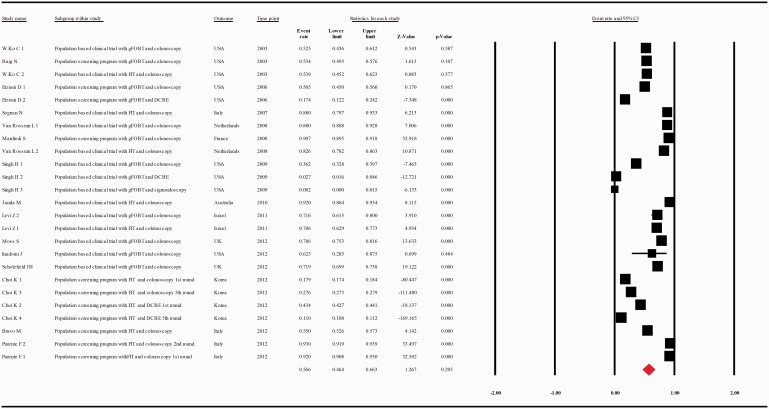
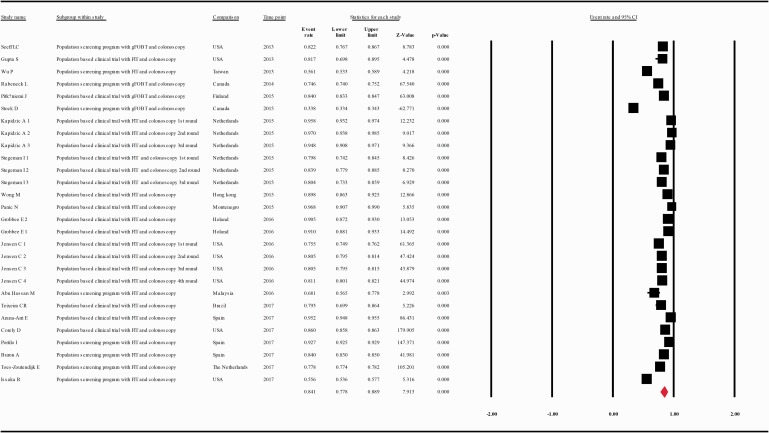
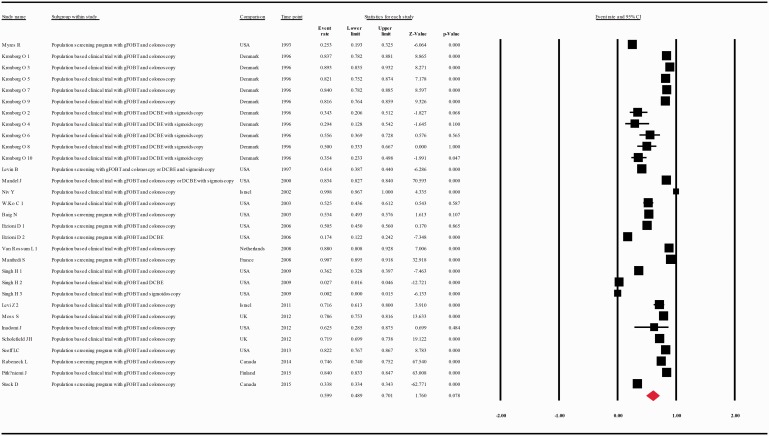
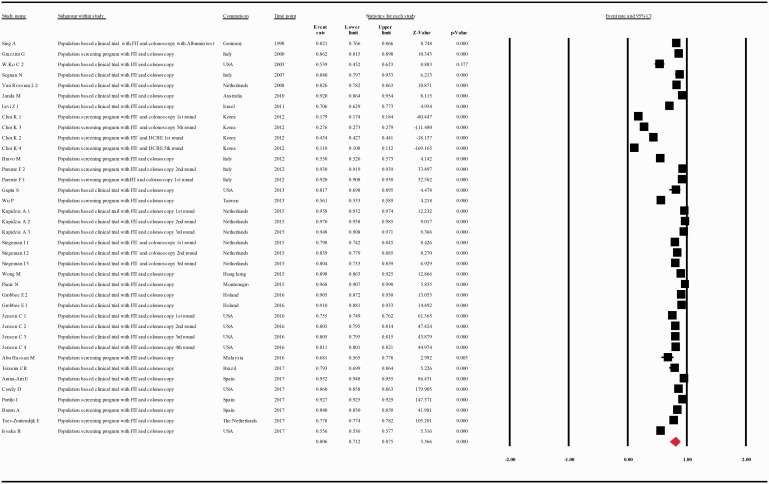
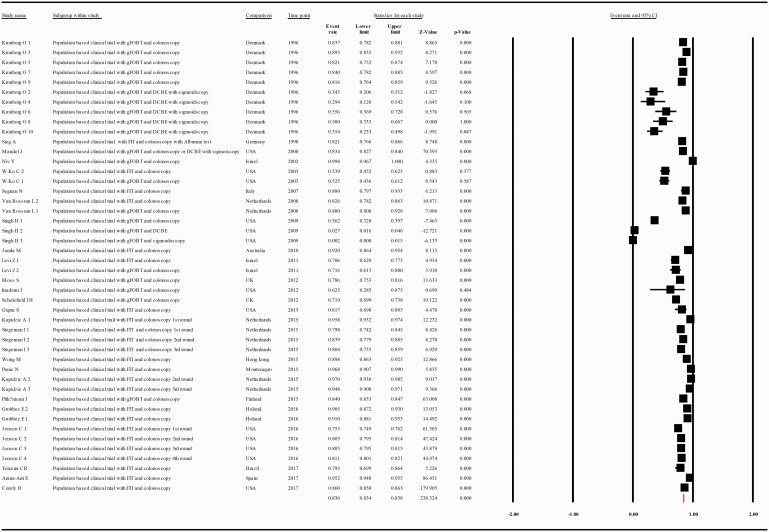
(a) Meta-analysis of descriptive studies, looking at the compliance of patients with a positive gFOBT for second procedure: 19 studies (31 substudies/data sets); 56,393 procedures performed in 95,752 patients with a positive FOBT. (b) Meta-analysis of descriptive studies, looking at the compliance of patients with a positive FIT for second procedure: 26 studies (38 substudies/data sets); 245,804 procedures performed in 416,744 patients with a positive FOBT. (c) Meta-analysis of population-based clinical trials studies, looking at the compliance of patients with a positive FOBT for second procedure: 25 studies (46 substudies/data sets); 142,965 procedures performed in 169,941 patients with a positive FOBT. (d) Meta-analysis of population screening programs studies, looking at the compliance of patients with a positive FOBT for second procedure: 18 studies (23 substudies/data sets); 159,232 procedures performed in 342,555 patients with a positive FOBT. CI: confidence interval; DCBE: double-contrast barium enema; FIT: fecal immunohistochemical test; FOBT: fecal occult blood test; gFOBT: guaiac fecal occult blood test; UK: United Kingdom; USA: United States of America.
Figure 5.
Figure 5.
(a) Meta-analysis of descriptive studies, looking at the compliance of patients with a positive gFOBT for second procedure: 19 studies (31 substudies/data sets); 56,393 procedures performed in 95,752 patients with a positive FOBT. (b) Meta-analysis of descriptive studies, looking at the compliance of patients with a positive FIT for second procedure: 26 studies (38 substudies/data sets); 245,804 procedures performed in 416,744 patients with a positive FOBT. (c) Meta-analysis of population-based clinical trials studies, looking at the compliance of patients with a positive FOBT for second procedure: 25 studies (46 substudies/data sets); 142,965 procedures performed in 169,941 patients with a positive FOBT. (d) Meta-analysis of population screening programs studies, looking at the compliance of patients with a positive FOBT for second procedure: 18 studies (23 substudies/data sets); 159,232 procedures performed in 342,555 patients with a positive FOBT. CI: confidence interval; DCBE: double-contrast barium enema; FIT: fecal immunohistochemical test; FOBT: fecal occult blood test; gFOBT: guaiac fecal occult blood test; UK: United Kingdom; USA: United States of America.
Figure 5.
Figure 5.
(a) Meta-analysis of descriptive studies, looking at the compliance of patients with a positive gFOBT for second procedure: 19 studies (31 substudies/data sets); 56,393 procedures performed in 95,752 patients with a positive FOBT. (b) Meta-analysis of descriptive studies, looking at the compliance of patients with a positive FIT for second procedure: 26 studies (38 substudies/data sets); 245,804 procedures performed in 416,744 patients with a positive FOBT. (c) Meta-analysis of population-based clinical trials studies, looking at the compliance of patients with a positive FOBT for second procedure: 25 studies (46 substudies/data sets); 142,965 procedures performed in 169,941 patients with a positive FOBT. (d) Meta-analysis of population screening programs studies, looking at the compliance of patients with a positive FOBT for second procedure: 18 studies (23 substudies/data sets); 159,232 procedures performed in 342,555 patients with a positive FOBT. CI: confidence interval; DCBE: double-contrast barium enema; FIT: fecal immunohistochemical test; FOBT: fecal occult blood test; gFOBT: guaiac fecal occult blood test; UK: United Kingdom; USA: United States of America.
Figure 5.
Figure 5.
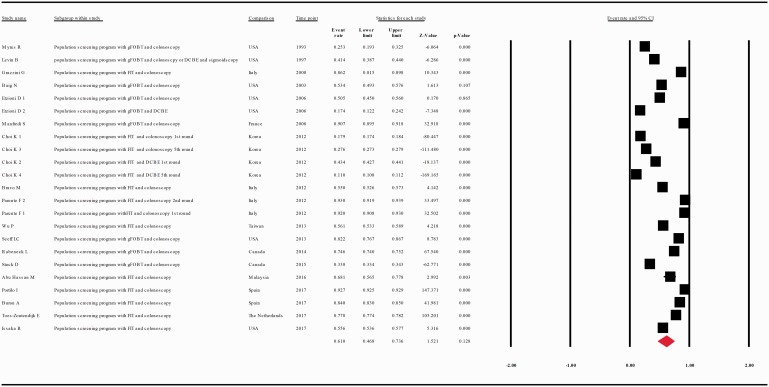
(a) Meta-analysis of descriptive studies, looking at the compliance of patients with a positive gFOBT for second procedure: 19 studies (31 substudies/data sets); 56,393 procedures performed in 95,752 patients with a positive FOBT. (b) Meta-analysis of descriptive studies, looking at the compliance of patients with a positive FIT for second procedure: 26 studies (38 substudies/data sets); 245,804 procedures performed in 416,744 patients with a positive FOBT. (c) Meta-analysis of population-based clinical trials studies, looking at the compliance of patients with a positive FOBT for second procedure: 25 studies (46 substudies/data sets); 142,965 procedures performed in 169,941 patients with a positive FOBT. (d) Meta-analysis of population screening programs studies, looking at the compliance of patients with a positive FOBT for second procedure: 18 studies (23 substudies/data sets); 159,232 procedures performed in 342,555 patients with a positive FOBT. CI: confidence interval; DCBE: double-contrast barium enema; FIT: fecal immunohistochemical test; FOBT: fecal occult blood test; gFOBT: guaiac fecal occult blood test; UK: United Kingdom; USA: United States of America.
Figure 6.
Figure 6.
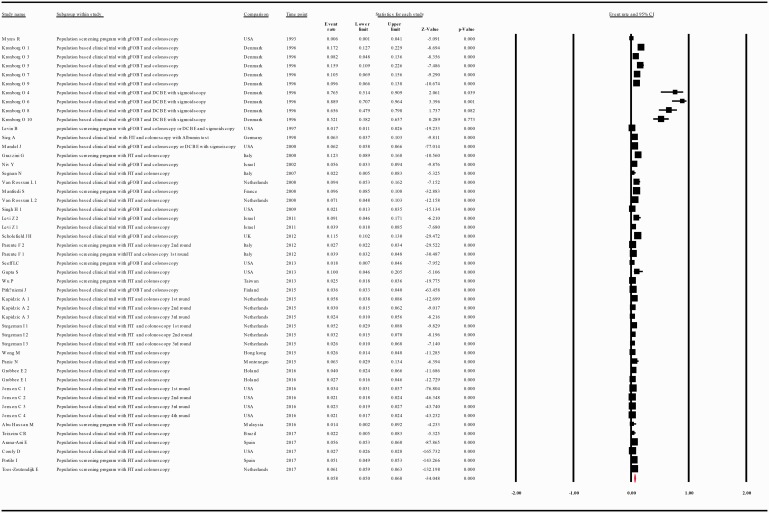
Meta-analysis of descriptive studies looking at the diagnostic yield of CRC: 30 studies (50 substudies/data sets); 11,591 cases in 269,149 patients with a positive FOBT. CI: confidence interval; DCBE: double-contrast barium enema; FIT: fecal immunohistochemical test; FOBT: fecal occult blood test; gFOBT: guaiac fecal occult blood test; USA: United States of America.
Figure 7.
Figure 7.
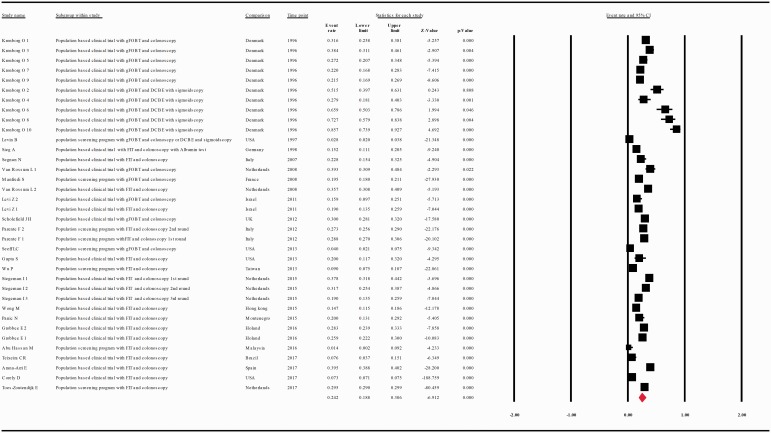
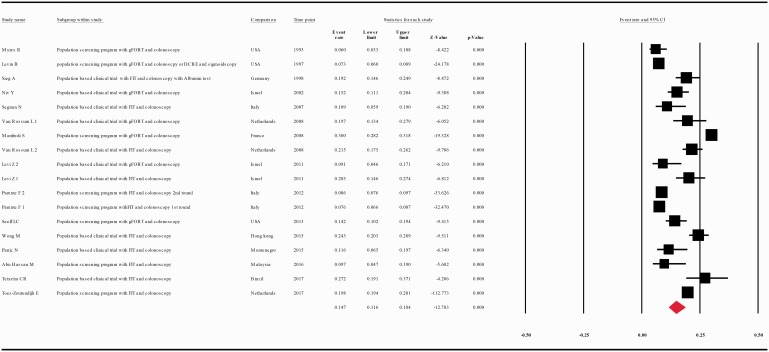
(a) Meta-analysis of descriptive studies looking at the diagnostic yield of advanced adenoma: 21 studies (36 substudies/data sets) 29,140 cases in 157,158 patients with a positive FOBT. (b) Meta-analysis of descriptive studies looking at the diagnostic yield of simple adenoma: 15 studies (18 substudies/data sets); 9716 cases in 51,913 patients with a positive FOBT. CI: confidence interval; DCBE: double-contrast barium enema; FIT: fecal immunohistochemical test; FOBT: fecal occult blood test; gFOBT: guaiac fecal occult blood test; UK: United Kingdom; USA: United States of America.
Figure 7.
Figure 7.
(a) Meta-analysis of descriptive studies looking at the diagnostic yield of advanced adenoma: 21 studies (36 substudies/data sets) 29,140 cases in 157,158 patients with a positive FOBT. (b) Meta-analysis of descriptive studies looking at the diagnostic yield of simple adenoma: 15 studies (18 substudies/data sets); 9716 cases in 51,913 patients with a positive FOBT. CI: confidence interval; DCBE: double-contrast barium enema; FIT: fecal immunohistochemical test; FOBT: fecal occult blood test; gFOBT: guaiac fecal occult blood test; UK: United Kingdom; USA: United States of America.

References

    1. Lieberman D, Ladabaum U, Cruz-Correa M, et al. Screening for colorectal cancer and evolving issues for physicians and patients: A review. JAMA 2016; 316: 2135–2145. - PubMed
    1. Toes-Zoutendijk E, van Leerdam ME, Dekker E, et al. Real-time monitoring of results during first year of Dutch colorectal cancer screening program and optimization by altering fecal immunochemical test cut-off levels. Gastroenterology 2017; 152: 767–775.e2. - PubMed
    1. Hardcastle JD, Chamberlain JO, Robinson MH, et al. Randomised controlled trial of faecal-occult-blood screening for colorectal cancer. Lancet 1996; 348: 1472–1477. - PubMed
    1. Manfredi S, Piette C, Durand G, et al. Colonoscopy results of a French regional FOBT-based colorectal cancer screening program with high compliance. Endoscopy 2008; 40: 422–427. - PubMed
    1. Myers RE, Balshem AM, Wolf TA, et al. Screening for colorectal neoplasia: Physicians’ adherence to complete diagnostic evaluation. Am J Public Health 1993; 83: 1620–1622. - PMC - PubMed