


Prolonged-release melatonin in patients with idiopathic REM sleep behavior disorder
- PMID: 31019996
- PMCID: PMC6469244
- DOI: 10.1002/acn3.753
Prolonged-release melatonin in patients with idiopathic REM sleep behavior disorder
Erratum in
-
Prolonged-release melatonin in patients with idiopathic REM sleep behavior disorder.Ann Clin Transl Neurol. 2019 Sep;6(9):1933. doi: 10.1002/acn3.50906. Ann Clin Transl Neurol. 2019. PMID: 31560845 Free PMC article. No abstract available.
-
Corrigendum 2 for acn3.753.Ann Clin Transl Neurol. 2021 Apr;8(4):1005. doi: 10.1002/acn3.51341. Epub 2021 Mar 30. Ann Clin Transl Neurol. 2021. PMID: 33852200 Free PMC article. No abstract available.
Abstract
Objective: We investigated the effects of prolonged-release melatonin (PRM) on idiopathic rapid eye movement (REM) sleep behavior disorder (iRBD).
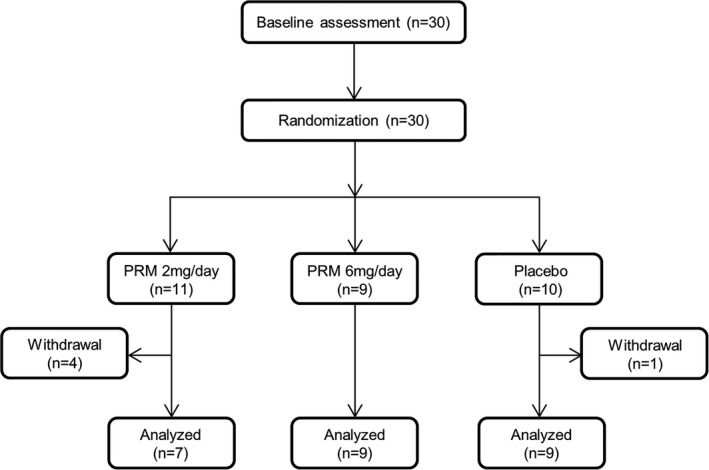
Methods: In this 4-week, randomized, double-blind, placebo-controlled pilot study, 30 participants with polysomnography-confirmed iRBD were assigned to receive PRM 2 mg per day, PRM 6 mg per day, or placebo. Medication was administered orally 30 min before bedtime. Primary outcomes included scores from the Clinical Global Impression-Improvement (CGI-I) and the Korean version of the RBD questionnaire-Hong Kong (RBDQ-KR). The secondary outcomes included RBDQ-KR factor 1 and factor 2 subscores, the Pittsburgh Sleep Quality Index score, the Epworth Sleepiness Scale score, the Short Form Health Survey version 2 score, and the frequency of dream-enacting behaviors assessed using a sleep diary.
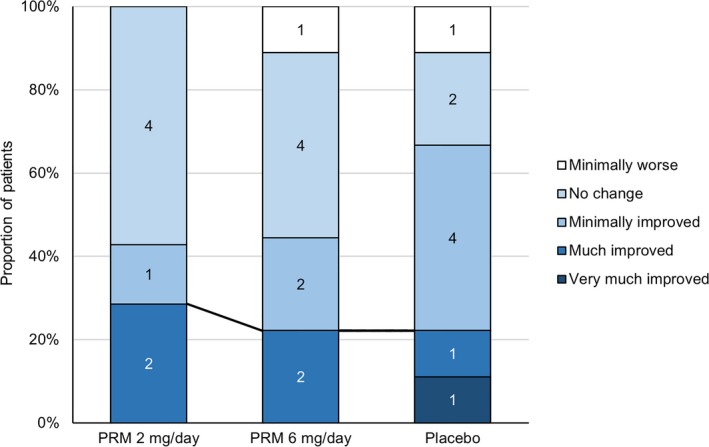
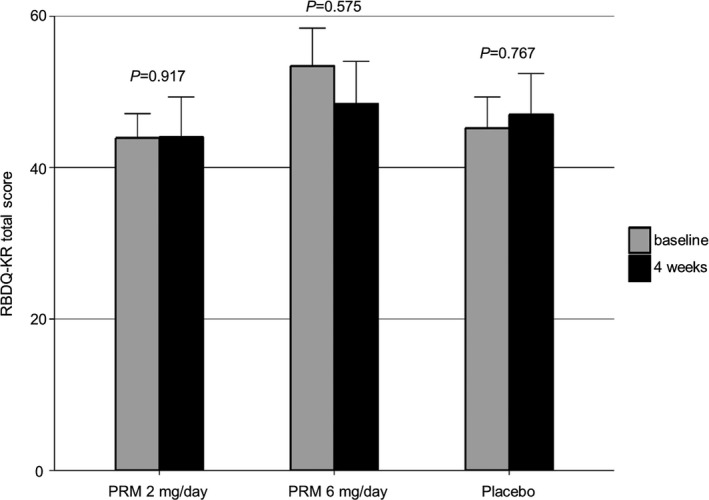
Results: After 4 weeks, there were no differences in the proportions of patients with a CGI-I score of much improved or very much improved among the study groups. In addition, RBDQ-KR scores and secondary outcomes were not improved in all groups at 4 weeks, and there were no differences between the groups.
Conclusion: Our findings suggest that PRM may not be effective in treating RBD-related symptoms within the dose range used in this study. Further studies using doses higher than 6 mg per day are warranted.
Conflict of interest statement
No conflicting relationship exists for the authors.
Figures
References
-
- Schenck CH, Bundlie SR, Mahowald MW. Chronic behavioral disorders of human REM sleep: a new category of parasomnia. Sleep 1986;9:293–308. - PubMed
-
- Högl B, Stefani A, Videnovic A. Idiopathic REM sleep behaviour disorder and neurodegeneration ‐ an update. Nat Rev Neurol 2018;14:40–55. - PubMed
-
- Schenck CH, Boeve BF, Mahowald MW. Delayed emergence of a parkinsonian disorder or dementia in 81% of older men initially diagnosed with idiopathic rapid eye movement sleep behavior disorder: a 16‐year update on a previously reported series. Sleep Med 2013;14:744–748. - PubMed
-
- Iranzo A, Tolosa E, Gelpi E, et al. Neurodegenerative disease status and post‐mortem pathology in idiopathic rapid‐eye‐movement sleep behaviour disorder: an observational cohort study. Lancet Neurol 2013;12:443–453. - PubMed
-
- Schenck CH, Hurwitz TD, Mahowald MW. Symposium: normal and abnormal REM sleep regulation: REM sleep behaviour disorder: an update on a series of 96 patients and a review of the world literature. J Sleep Res 1993;2:224–231. - PubMed
MeSH terms
Substances
LinkOut - more resources
Full Text Sources
Other Literature Sources