


Small Cell Carcinoma of the Esophagus: A Nationwide Analysis of Treatment and Outcome at Patient Level in Locoregional Disease
- PMID: 31021827
- PMCID: PMC6554014
- DOI: 10.1097/COC.0000000000000546
Small Cell Carcinoma of the Esophagus: A Nationwide Analysis of Treatment and Outcome at Patient Level in Locoregional Disease
Abstract
Background and purpose: Small cell carcinoma of the esophagus (SCEC) is a rare subtype of esophageal cancer for which optimal treatment is unknown. We analyzed the impact of treatment factors on outcome in patients with nonmetastasized SCEC.
Methods: Patients with a histologically confirmed SCEC without distant metastases were analyzed in a nationwide multicenter retrospective cohort. All patients received radiotherapy as part of curative treatment between January 2000 and December 2014. Details on treatment and outcome were retrieved from individual charts. Cox regression analysis was used to determine prognostic factors for survival.
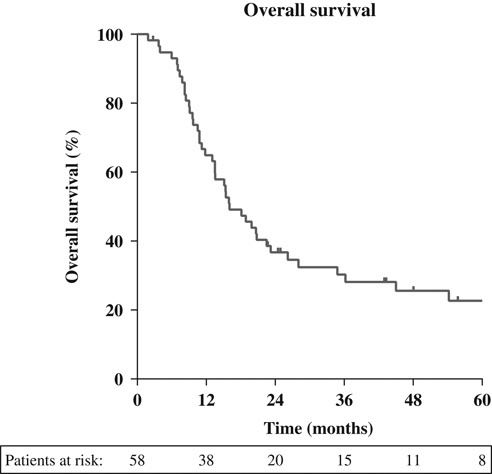
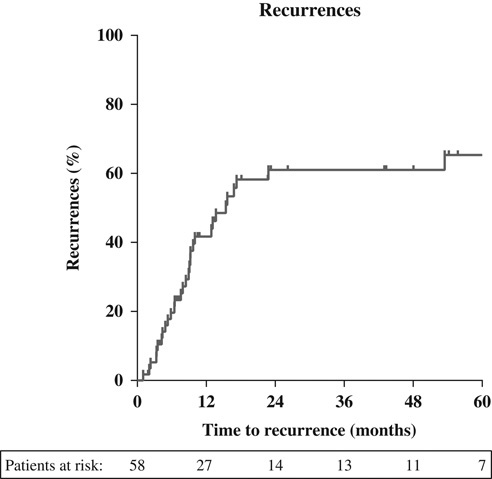
Results: Fifty-eight patients were analyzed. Median survival was 16 months (95% confidence interval, 11-21 mo). Infield recurrences occurred in 25%, distant metastases in 45%, and brain metastases in 12%. In total, 63% of patients developed a recurrence. Most recurrences (67%) occurred within 1 year. In univariable analyses an increased number of chemotherapy cycles (>3) and lower radiotherapy doses (<45 Gy) were associated with improved survival. T-stage, N-stage, treatment period, type of chemotherapy, prophylactic cranial irradiation, and age were not associated with survival. In multivariable analyses, only the number of chemotherapy cycles was associated with better survival (hazard ratio, 0.78; P=0.006).
Conclusions: SCEC recurs frequently at distant sites after definitive chemoradiotherapy and usually within 1 year after curative treatment. With a dose of 45 to 50 Gy, infield recurrence rate was low. We found a relationship between number of received chemotherapy cycles and survival with best results obtained after at least 4 cycles of chemotherapy.
Conflict of interest statement
The authors declare no conflicts of interest.
Figures
References
-
- Beyer KL, Marshall JB, Diaz-Arias AA, et al. Primary small-cell carcinoma of the esophagus. Report of 11 cases and review of the literature. J Clin Gastroenterol. 1991;13:135–141. - PubMed
-
- Brenner B, Tang LH, Klimstra DS, et al. Small-cell carcinomas of the gastrointestinal tract: a review. J Clin Oncol. 2004;22:2730–2739. - PubMed
-
- Kukar M, Groman A, Malhotra U, et al. Small cell carcinoma of the esophagus: a SEER database analysis. Ann Surg Oncol. 2013;20:4239–4244. - PubMed
-
- Wong AT, Shao M, Rineer J, et al. Treatment and survival outcomes of small cell carcinoma of the esophagus: an analysis of the National Cancer Data Base. Dis Esophagus. 2017;30:1–5. - PubMed
MeSH terms
LinkOut - more resources
Full Text Sources
Medical
