


Physiological and pathological impact of AQP1 knockout in mice
- PMID: 31023968
- PMCID: PMC6522737
- DOI: 10.1042/BSR20182303
Physiological and pathological impact of AQP1 knockout in mice
Abstract
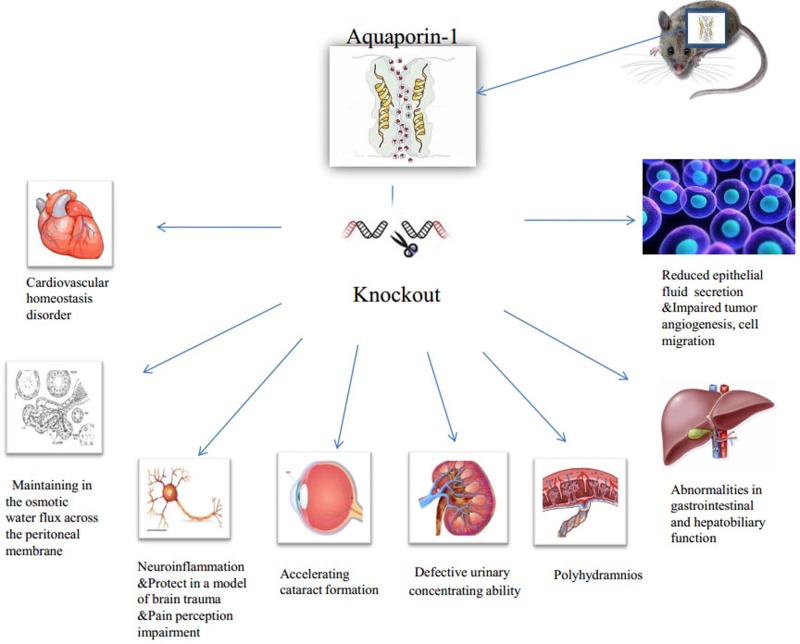
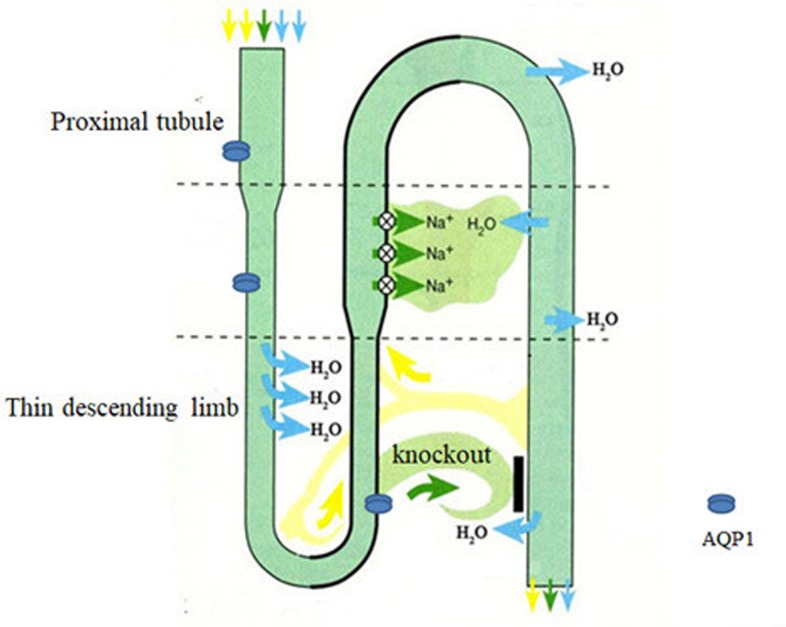
Aquaporin 1 (AQP1) is a glycoprotein responsible for water passive transport quickly across biological membrane. Here, we reviewed the structural and functional impacts of AQP1 knockout (AQP1-KO) in animal or cell culture models. AQP1 gene deletion can cause a large number of abnormalities including the disturbance in epithelial fluid secretion, polyhydramnios, deficiency of urinary concentrating function, and impairment of pain perception. AQP1-KO mice also displayed aberrations of cardiovascular, gastrointestinal and hepatobiliary, and kidney functions as well as placenta and embryo development. Moreover, AQP1-KO perturbed tumor angiogenesis and led to reduced brain injury upon trauma. On the cellular level, AQP1-KO caused neuroinflammation, aberrant cell proliferation and migration, and macrophages infiltration. Mechanistic studies confirmed that AQP1 gene products regulate the secretory function and participated in balancing the osmotic water flux across the peritoneal membrane. The available data indicated that AQP1 might serve as a potential target for developing novel therapeutic approaches against diverse human diseases.
Keywords: Aquaporin 1; Knockout; Pathological Change; Physiological Change.
© 2019 The Author(s).
Conflict of interest statement
The authors declare that there are no competing interests associated with the manuscript.
Figures
References
-
- Denker B.M., Smith B.L., Kuhajda F.P. and Agre P. (1988) Identification, purification,and partial characterization of novel Mr 28,000integral membrane protein from erythrocytes and renal tubules. J. Biol. Chem. 263, 15634–1563442 - PubMed
-
- Mathai J.C., Mori S., Smith B.L., Preston G.M., Mohandas N., Collins M.. et al. (1996) Functional analysis of aquaporin-1 deficient red cells. The Colton-null phenotype. J. Biol. Chem. 271, 1309–1313 - PubMed
Publication types
MeSH terms
Substances
LinkOut - more resources
Full Text Sources
Research Materials
