


Establishing a conceptual framework of the impact of placental malaria on infant neurodevelopment
- PMID: 31028878
- PMCID: PMC8239421
- DOI: 10.1016/j.ijid.2019.04.019
Establishing a conceptual framework of the impact of placental malaria on infant neurodevelopment
Abstract
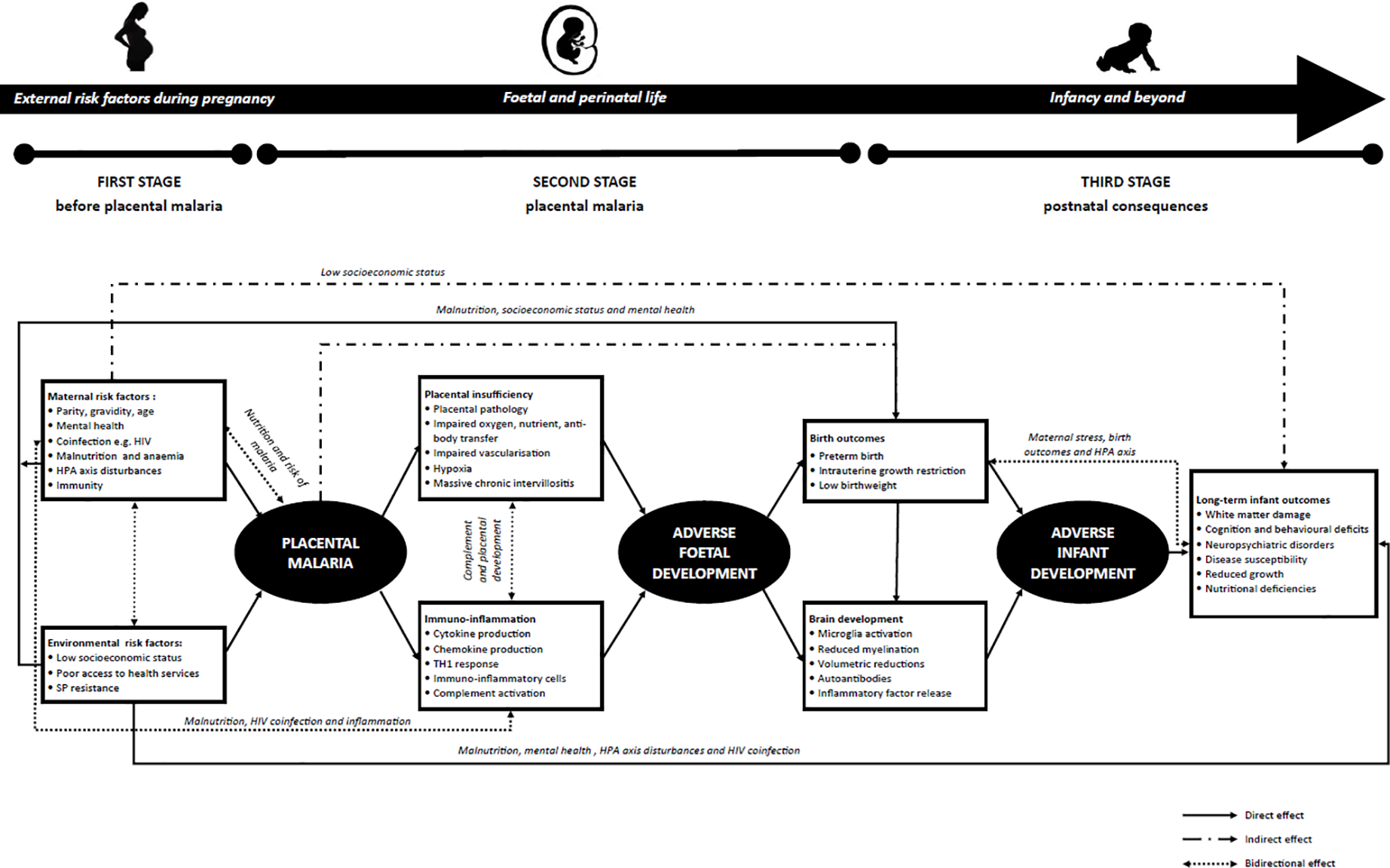
A novel conceptual framework to describe the relationship between placental malaria and adverse infant neurodevelopmental outcomes is proposed. This conceptual framework includes three distinct stages: (1) maternal and environmental risk factors for the development of placental malaria; (2) placental pathology and inflammation associated with placental malaria infection; and (3) postnatal impacts of placental malaria. The direct, indirect, and bidirectional effects of these risk factors on infant neurodevelopment across the three stages were critically examined. These factors ultimately culminate in an infant phenotype that not only leads to adverse birth outcomes, but also to increased risks of neurological, cognitive, and behavioural deficits that may impact the quality of life in this high-risk population. Multiple risk factors were identified in this conceptual framework; nonetheless, based on current evidence, a key knowledge gap is the uncertainty regarding which are the most important and how exactly they interact.
Keywords: Malaria; Malaria in pregnancy; Neurodevelopment; Placental malaria.
Copyright © 2019 The Authors. Published by Elsevier Ltd.. All rights reserved.
Conflict of interest statement
Figures
References
-
- Agostoni C, Buonocore G, Carnielli VP, De Curtis M, Darmaun D, Decsi T, et al. Enteral nutrient supply for preterm infants: commentary from the European Society of Paediatric Gastroenterology, Hepatology and Nutrition Committee on Nutrition. J Pediatr Gastroenterol Nutr 2010;50(1):85–91. - PubMed
Publication types
MeSH terms
Grants and funding
LinkOut - more resources
Full Text Sources
Medical
Miscellaneous
