


Association between dental health and obstructive coronary artery disease: an observational study
- PMID: 31029089
- PMCID: PMC6487007
- DOI: 10.1186/s12872-019-1080-9
Association between dental health and obstructive coronary artery disease: an observational study
Abstract
Background: The association between dental health and coronary artery disease (CAD) remains a topic of debate. This study aimed to investigate the association between dental health and obstructive CAD using multiple dental indices.
Methods: Eighty-eight patients (mean age: 65 years, 86% male) were prospectively enrolled before undergoing coronary CT angiography (n = 52) or invasive coronary angiography (n = 36). Obstructive CAD was defined as luminal stenosis of ≥50% for the left main coronary artery or ≥ 70% for the other epicardial coronary arteries. All patients underwent thorough dental examinations to evaluate 7 dental health indices, including the sum of decayed and filled teeth, the ratio of no restoration, the community periodontal index of treatment needs, clinical attachment loss, the total dental index, the panoramic topography index, and number of lost teeth.
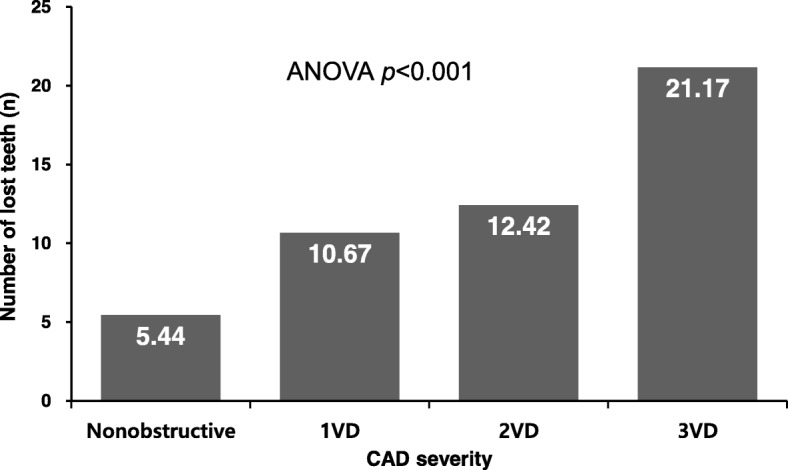
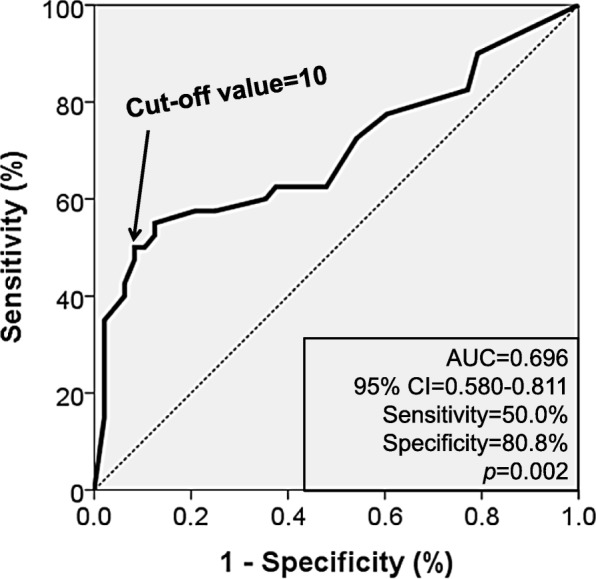
Results: Forty patients (45.4%) had obstructive CAD. Among the 7 dental health indices, only the number of lost teeth was significantly associated with obstructive CAD, with patients who had obstructive CAD having significantly more lost teeth than patients without obstructive CAD (13.08 ± 10.4 vs. 5.44 ± 5.74, p < 0.001). The number of lost teeth was correlated with the number of obstructed coronary arteries (p < 0.001). Multiple binary logistic regression analysis revealed that having ≥10 lost teeth was independently associated with the presence of obstructive CAD (odds ratio: 8.02, 95% confidence interval: 1.80-35.64; p = 0.006).
Conclusions: Tooth loss was associated with the presence of obstructive CAD in patients undergoing coronary evaluation. Larger longitudinal studies are needed to determine whether there is a causal relationship between tooth loss and CAD.
Keywords: Coronary artery disease; Dental health; Inflammation; Tooth loss.
Conflict of interest statement
Ethics approval and consent to participate
The study’s protocol was approved by the institutional review board of Boramae Medical Center (# 16–2013-34) and complied with the tenets of the 1964 Declaration of Helsinki and its later amendments. Written informed consent was obtained from all participants.
Consent for publication
Not applicable.
Competing interests
The authors declare that they have no competing interests.
Publisher’s Note
Springer Nature remains neutral with regard to jurisdictional claims in published maps and institutional affiliations.
Figures
References
Publication types
MeSH terms
LinkOut - more resources
Full Text Sources
Medical
Miscellaneous
