The Carcinogenic Role of the Notch Signaling Pathway in the Development of Hepatocellular Carcinoma
- PMID: 31031867
- PMCID: PMC6485212
- DOI: 10.7150/jca.26847
The Carcinogenic Role of the Notch Signaling Pathway in the Development of Hepatocellular Carcinoma
Abstract
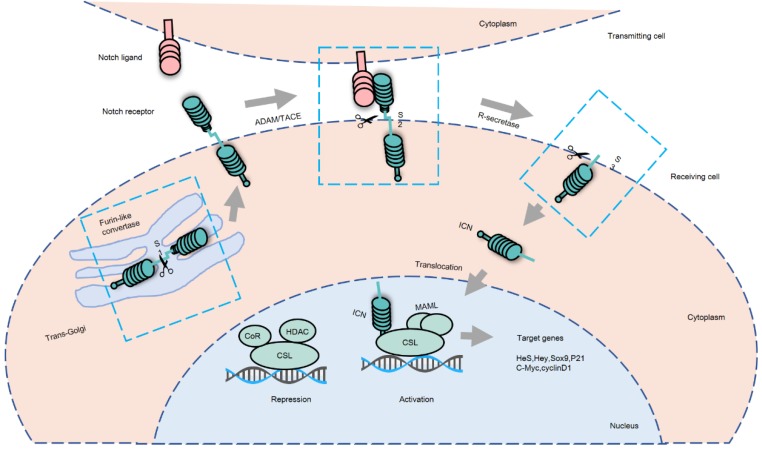
The Notch signaling pathway, known to be a highly conserved signaling pathway in embryonic development and adult tissue homeostasis, participates in cell fate decisions that include cellular differentiation, cell survival and cell death. However, other studies have shown that aberrant in Notch signaling is pro-tumorigenic, particularly in hepatocellular carcinoma (HCC). HCC is one of the most common malignant tumors in the world and has a high mortality rate. Growing evidence supports that Notch signaling plays a critical role in the development of HCC by regulating the tumor microenvironment, tumorigenesis, progression, angiogenesis, invasion and metastasis. Accordingly, overexpression of Notch is closely associated with poor prognosis in HCC. In this review, we focus on the pro-tumorigenic role of Notch signaling in HCC, summarize the current knowledge of Notch signaling and its role in HCC development, and outline the therapeutic potential of targeting Notch signaling in HCC.
Keywords: Notch signaling pathway; carcinogenesis; hepatocellular carcinoma; therapeutics.
Conflict of interest statement
Competing Interests: The authors have declared that no competing interest exists.
Figures
References
Publication types
LinkOut - more resources
Full Text Sources