


Human Immunoglobulin G (IgG) Neutralizes Adverse Effects of Gulf War Illness (GWI) Serum in Neural Cultures: Paving the Way to Immunotherapy for GWI
- PMID: 31032477
- PMCID: PMC6486180
- DOI: 10.29245/2572.942X/2018/5.1219
Human Immunoglobulin G (IgG) Neutralizes Adverse Effects of Gulf War Illness (GWI) Serum in Neural Cultures: Paving the Way to Immunotherapy for GWI
Abstract
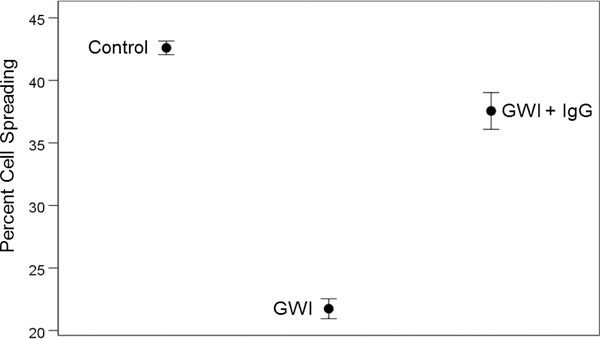
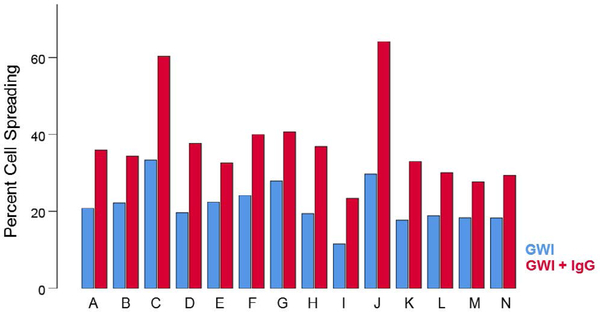
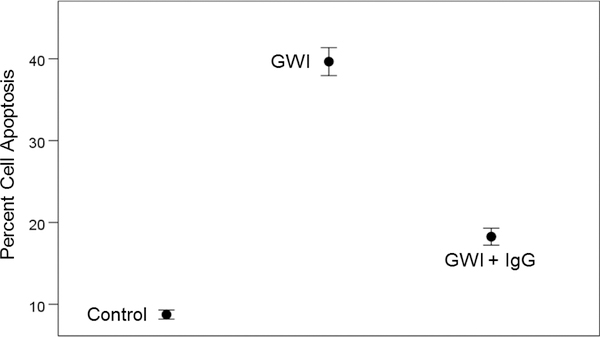
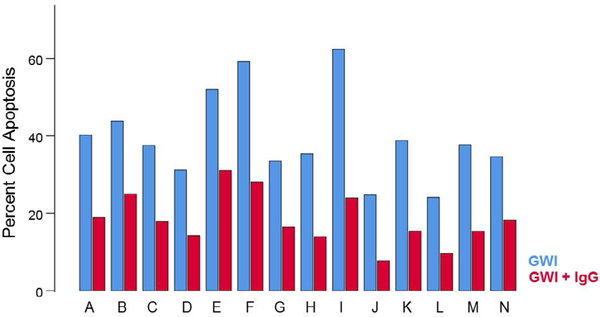
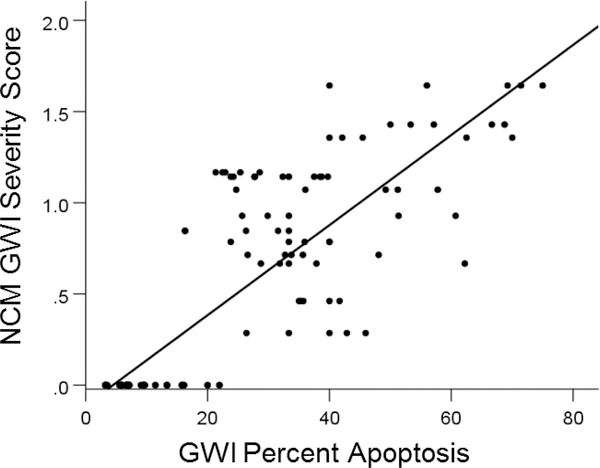
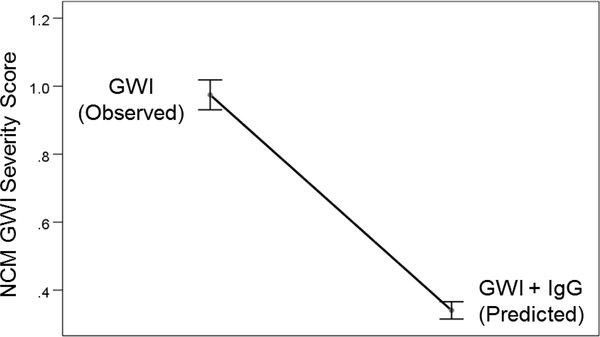
Gulf War Illness (GWI) is a chronic debilitating disease of unknown etiology that affects the brain and has afflicted many veterans of the 1990-91 Gulf War (GW). We showed recently1 that blood serum from patients suffering from GWI exerts detrimental effects on neural cultures, including reduced growth, increased apoptosis, and disruption of neural network function. Remarkably, these adverse effects were prevented by the concomitant addition to the culture of serum from healthy Gulf War (GW) era veterans. We interpreted those findings1 in the context of our hypothesis that GWI is, at least partly, due to circulating pathogenic persistent antigens2, probably coming from vaccines administered to GW veterans who lacked crucial Human Leukocyte Antigen (HLA) class 2 alleles3 and, therefore, could not make antibodies against those antigens; by contrast, healthy GW veterans who received the same vaccines and possessed HLA protection3 made antibodies that neutralized the various antigens. Thus, we hypothesized that the beneficial effect of the healthy serum on preventing the adverse GWI serum effects was due to the presence of antibodies against the persistent antigens. Here we tested this hypothesis by assessing the effect of pooled human immunoglobulin G (IgG) on ameliorating the GWI adverse effects on neural growth and apoptosis in neuroblastoma N2A cultures. We tested this effect in 14 GWI patients and found that IgG exerted a potent ameliorating effect by inhibiting the reduction in growth and increased apoptosis of GWI serum. These results lend support to our persistent antigen hypothesis1,2 and suggest an immunotherapy approach for treating GWI. This approach is further strengthened by our finding that the severity of GWI neurocognitive/mood (NCM) symptoms was positively correlated with the degree of apoptosis caused by GWI serum on the neural culture, thus validating the relevance of the apoptotic effect to NCM symptomatology. Finally, we used this relation to predict NCM scores based on the reduced apoptosis effected by IgG addition and found a predicted reduction in NCM symptom severity by ~60%. Altogether, these findings point to the possible beneficial use of IgG in treating GWI.
Keywords: Apoptosis; Blood serum; Gulf War Illness; IgG; Neural cultures; Neural growth.
Figures
References
-
- Fukuda K, Nisenbaum R, Stewart G, et al. Chronic multisymptom illness affecting Air Force veterans of the Gulf War. JAMA. 1998; 280: 981–8. - PubMed
-
- Kang HK, Li B, Mahan CM, et al. Health of US veterans of 1991 Gulf War: a follow-up survey in 10 years. J Occup Environ Med. 2009; 51: 401–10. - PubMed
Grants and funding
LinkOut - more resources
Full Text Sources
Research Materials