


Cardiovascular Risks Associated with Gender and Aging
- PMID: 31035613
- PMCID: PMC6616540
- DOI: 10.3390/jcdd6020019
Cardiovascular Risks Associated with Gender and Aging
Abstract
The aging and elderly population are particularly susceptible to cardiovascular disease. Age is an independent risk factor for cardiovascular disease (CVD) in adults, but these risks are compounded by additional factors, including frailty, obesity, and diabetes. These factors are known to complicate and enhance cardiac risk factors that are associated with the onset of advanced age. Sex is another potential risk factor in aging adults, given that older females are reported to be at a greater risk for CVD than age-matched men. However, in both men and women, the risks associated with CVD increase with age, and these correspond to an overall decline in sex hormones, primarily of estrogen and testosterone. Despite this, hormone replacement therapies are largely shown to not improve outcomes in older patients and may also increase the risks of cardiac events in older adults. This review discusses current findings regarding the impacts of age and gender on heart disease.
Keywords: aging; cardiovascular disease; estrogen; gender; testosterone.
Conflict of interest statement
The authors declare no conflict of interest.
Figures
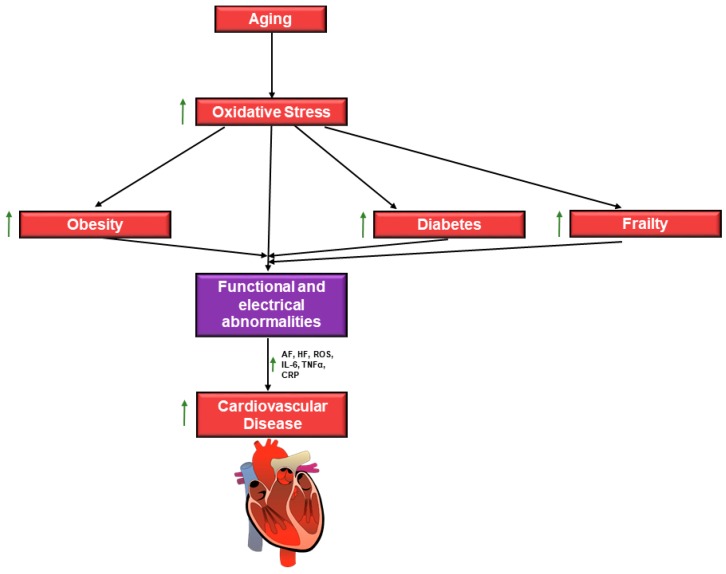
 indicates upregulation. Tumor necrosis factor-α (TNFα), C-reactive protein (CRP), and interleukin-6 (IL-6).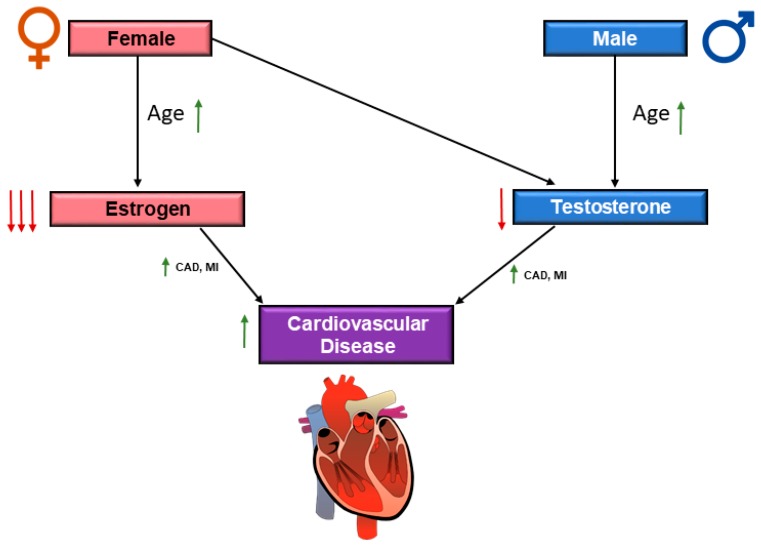
 indicates upregulation and
  indicates downregulation. Coronary artery disease (CAD) and myocardial infarction (MI).
References
-
- Keto J., Ventola H., Jokelainen J., Linden K., Keinanen-Kiukaanniemi S., Timonen M., Ylisaukko-Oja T., Auvinen J. Cardiovascular disease risk factors in relation to smoking behaviour and history: A population-based cohort study. Open Heart. 2016;3:e000358. doi: 10.1136/openhrt-2015-000358. - DOI - PMC - PubMed
Publication types
LinkOut - more resources
Full Text Sources
