


High levels of circulating interferons type I, type II and type III associate with distinct clinical features of active systemic lupus erythematosus
- PMID: 31036046
- PMCID: PMC6489203
- DOI: 10.1186/s13075-019-1878-y
High levels of circulating interferons type I, type II and type III associate with distinct clinical features of active systemic lupus erythematosus
Abstract
Background and aim: Interferons (IFNs) are considered to be key molecules in the pathogenesis of systemic lupus erythematosus (SLE). We measured levels of type I, II and III IFNs in a large cohort of patients with systemic lupus erythematosus (SLE) and controls and explored associations among high levels of different IFN types and distinct SLE features.
Methods: Four hundred ninety-seven well-characterized SLE patients and 322 population controls were included. Disease activity was assessed by SLE Disease Activity Index (SLEDAI) and Systemic Lupus Activity Measure (SLAM). Functional type I IFN activity was estimated by a WISH reporter cell assay. Levels of IFN-γ were estimated by MSD 30-plex assay. IFN-α and IFN-λ1 were measured by ELISA. Values above the third quartile of patients' measurements were defined as high. Associations among high IFN results and SLE features were investigated by nominal regression analysis.
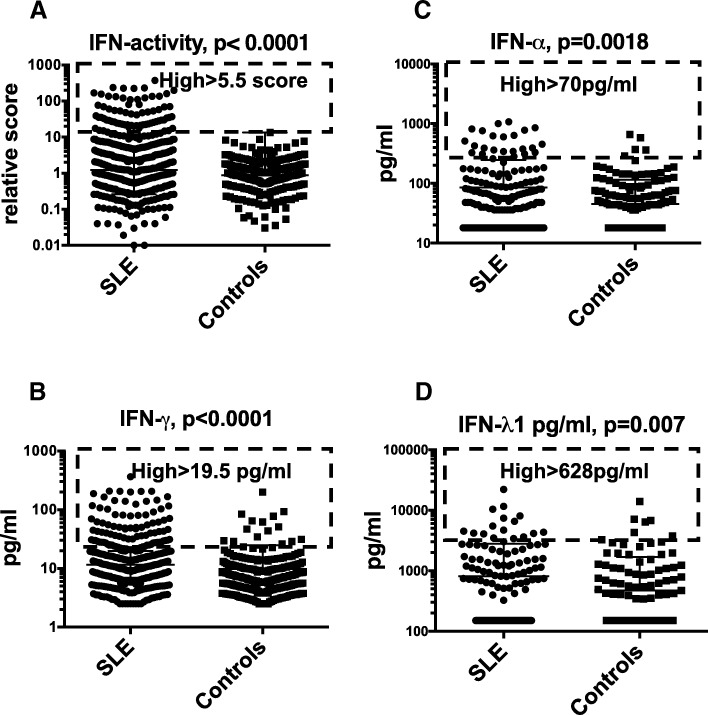
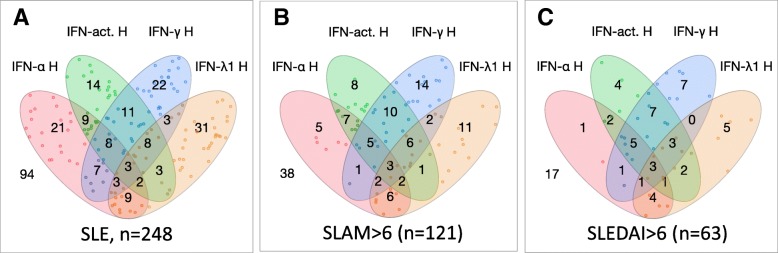
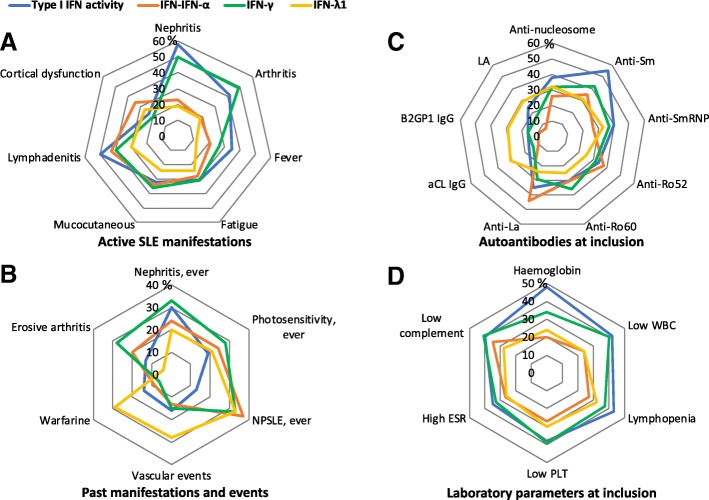
Results: All IFN measurements were higher in SLE patients than in controls. High type I IFN activity correlated with levels of IFN-γ and IFN-α and associated with active SLE in most domains: weight loss, fatigue, fever, rash, lymphadenopathy, arthritis, nephritis and haematological manifestations. Specific SLE subsets were linked to the upregulation of different subtypes of circulating IFNs: high IFN-γ to arthritis, nephritis and anti-Ro60 antibodies and high IFN-α to mucocutaneous engagement and anti-Ro52 and anti-La antibodies. Isolated high IFN-λ1 was coupled to anti-nucleosome antibodies and less severe SLE.
Conclusions: High functional type I IFN activity captures active SLE in most domains, but more distinct patterns of organ involvement are associated with profiles of circulating IFNs. High IFN-γ as well as high functional type I IFN activity is a characteristic of severe SLE with nephritis and arthritis, while elevated levels of IFN-α associate with active mucocutaneous inflammation and a more benign cardiovascular profile. IFN-λ1 in isolation is associated with milder disease. Our findings suggest that IFNs contribute to the heterogeneity of clinical manifestations in SLE, and measuring circulating IFNs could assist in designing clinical trials with therapies targeting IFN pathways.
Keywords: Autoantibodies; Disease activity; Interferons; SLE.
Conflict of interest statement
Ethics approval and consent to participate
The study was approved by Regional Ethical Review Board, Stockholm, Sweden. All participants gave informed written consent. The study was performed in accordance with Declaration of Helsinki.
Consent for publication
Not applicable
Competing interests
SE is an employee at Astra Zeneca. The other authors declare that they have no competing interests.
Publisher’s Note
Springer Nature remains neutral with regard to jurisdictional claims in published maps and institutional affiliations.
Figures
References
-
- Machold KP, Smolen JS. Interferon-gamma induced exacerbation of systemic lupus erythematosus. J Rheumatol. 1990;17:831–832. - PubMed
Publication types
MeSH terms
Substances
Grants and funding
LinkOut - more resources
Full Text Sources
Other Literature Sources
Medical
