


CRISPR directed evolution of the spliceosome for resistance to splicing inhibitors
- PMID: 31036069
- PMCID: PMC6489355
- DOI: 10.1186/s13059-019-1680-9
CRISPR directed evolution of the spliceosome for resistance to splicing inhibitors
Abstract
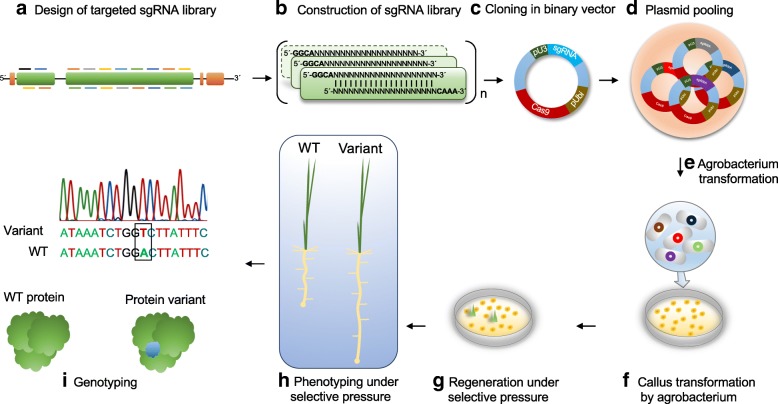
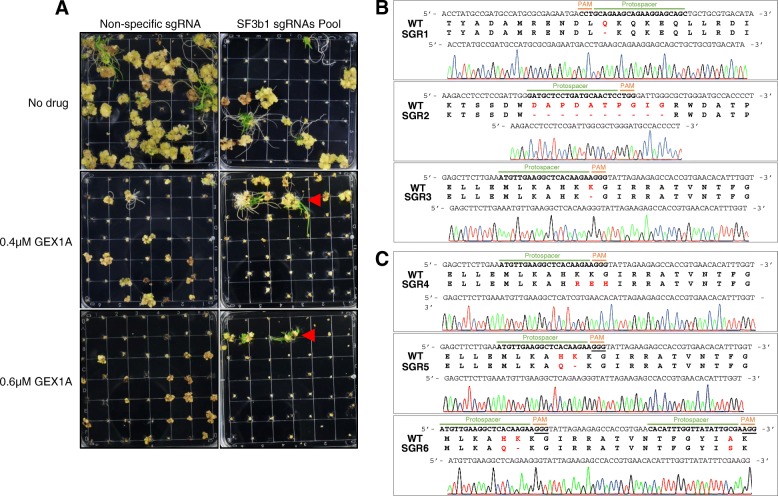
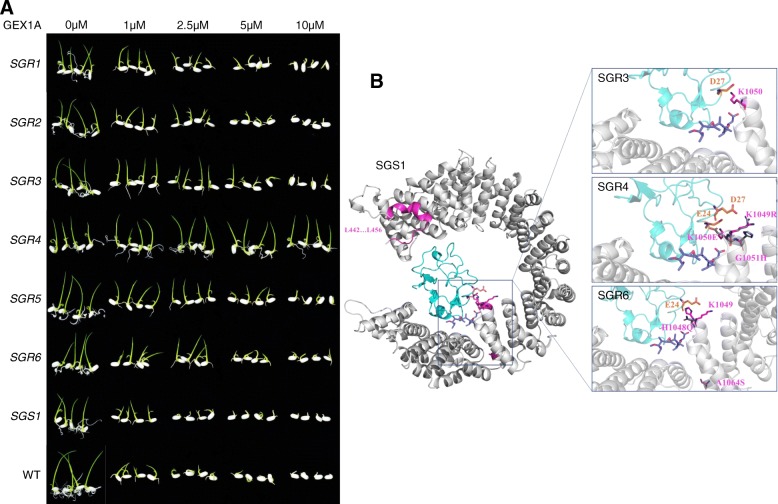
Increasing genetic diversity via directed evolution holds great promise to accelerate trait development and crop improvement. We developed a CRISPR/Cas-based directed evolution platform in plants to evolve the rice (Oryza sativa) SF3B1 spliceosomal protein for resistance to splicing inhibitors. SF3B1 mutant variants, termed SF3B1-GEX1A-Resistant (SGR), confer variable levels of resistance to splicing inhibitors. Studies of the structural basis of the splicing inhibitor binding to SGRs corroborate the resistance phenotype. This directed evolution platform can be used to interrogate and evolve the molecular functions of key biomolecules and to engineer crop traits for improved performance and adaptation under climate change conditions.
Keywords: CRISPR/Cas9; Directed evolution; Genome engineering; Herbicide resistance; Herboxidiene; Pladienolide B; SF3B complex; SF3B1; Spliceosome; Spliceostatin A; Splicing modulators.
Conflict of interest statement
Ethics approval and consent to participate
Not applicable.
Consent for publication
Not applicable.
Competing interests
The authors declare that they have no competing interests.
Publisher’s Note
Springer Nature remains neutral with regard to jurisdictional claims in published maps and institutional affiliations.
Figures
Comment in
-
CRISPR enables directed evolution in plants.Genome Biol. 2019 Apr 30;20(1):83. doi: 10.1186/s13059-019-1693-4. Genome Biol. 2019. PMID: 31036063 Free PMC article.
References
Publication types
MeSH terms
Substances
LinkOut - more resources
Full Text Sources
Other Literature Sources
