


A Class I Haemophilus ducreyi Strain Containing a Class II hgbA Allele Is Partially Attenuated in Humans: Implications for HgbA Vaccine Efficacy Trials
- PMID: 31036601
- PMCID: PMC6589051
- DOI: 10.1128/IAI.00112-19
A Class I Haemophilus ducreyi Strain Containing a Class II hgbA Allele Is Partially Attenuated in Humans: Implications for HgbA Vaccine Efficacy Trials
Abstract
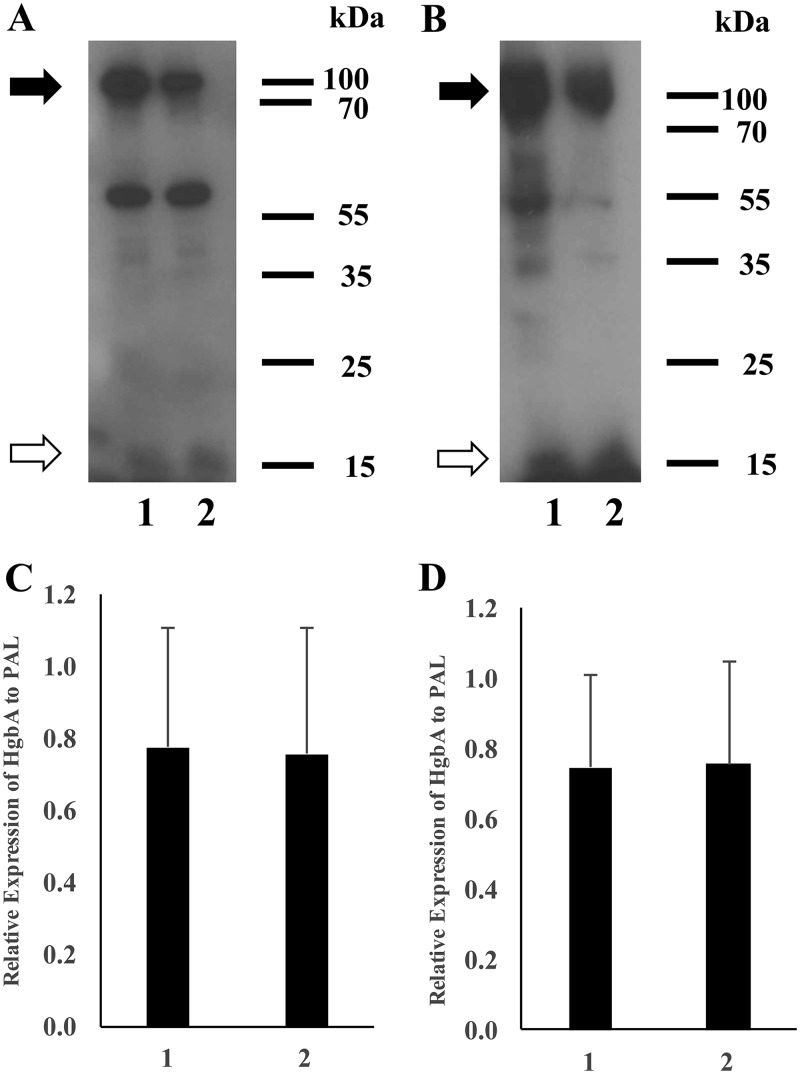
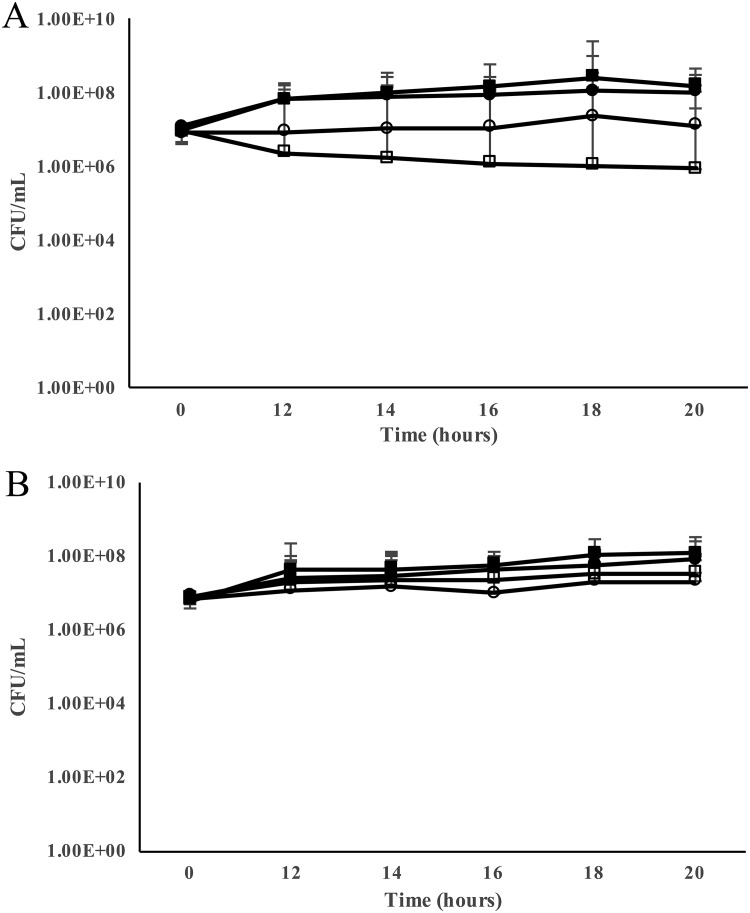
Haemophilus ducreyi causes chancroid and is a major cause of cutaneous ulcers in children. Due to environmental reservoirs, both class I and class II H. ducreyi strains persist in cutaneous ulcer regions of endemicity following mass drug administration of azithromycin, suggesting the need for a vaccine. The hemoglobin receptor (HgbA) is a leading vaccine candidate, but its efficacy in animal models is class specific. Controlled human infection models can be used to evaluate vaccines, but only a class I strain (35000HP) has been characterized in this model. As a prelude to evaluating HgbA vaccines in the human model, we tested here whether a derivative of 35000HP containing a class II hgbA allele (FX548) is as virulent as 35000HP in humans. In eight volunteers infected at three sites with each strain, the papule formation rate was 95.8% for 35000HP versus 62.5% for FX548 (P = 0.021). Excluding doses of FX548 that were ≥2-fold higher than those of 35000HP, the pustule formation rate was 25% for 35000HP versus 11.7% for FX548 (P = 0.0053). By Western blot analysis, FX548 and 35000HP expressed equivalent amounts of HgbA in whole-cell lysates and outer membranes. The growth of FX548 and 35000HP was similar in media containing hemoglobin or hemin. By whole-genome sequencing and single-nucleotide polymorphism analysis, FX548 contained no mutations in open reading frames other than hgbA We conclude that by an unknown mechanism, FX548 is partially attenuated in humans and is not a suitable strain for HgbA vaccine efficacy trials in the model.
Keywords: Haemophilus ducreyi; hemoglobin; vaccines.
Copyright © 2019 American Society for Microbiology.
Figures
References
-
- Spinola SM. 2008. Chancroid and Haemophilus ducreyi, p 689–699. In Holmes KK, Sparling PF, Stamm WE, Piot P, Wasserheit JN, Corey L, Cohen MS, Watts DH (ed), Sexually transmitted diseases, 4th ed McGraw-Hill, New York, NY.
-
- Plummer FA, Nsanze H, Karasira P, D’Costa LJ, Dylewski J, Ronald AR. 1983. Epidemiology of chancroid and Haemophilus ducreyi in Nairobi, Kenya. Lancet ii:1293–1295. - PubMed
Publication types
MeSH terms
Substances
Grants and funding
LinkOut - more resources
Full Text Sources
Research Materials
