Review
. 2019 Aug;19(8):477-489.
doi: 10.1038/s41577-019-0165-0.

The NLRP3 inflammasome: molecular activation and regulation to therapeutics

Affiliations
Review

The NLRP3 inflammasome: molecular activation and regulation to therapeutics

Karen V Swanson et al. Nat Rev Immunol. 2019 Aug.

Abstract

NLRP3 (NOD-, LRR- and pyrin domain-containing protein 3) is an intracellular sensor that detects a broad range of microbial motifs, endogenous danger signals and environmental irritants, resulting in the formation and activation of the NLRP3 inflammasome. Assembly of the NLRP3 inflammasome leads to caspase 1-dependent release of the pro-inflammatory cytokines IL-1β and IL-18, as well as to gasdermin D-mediated pyroptotic cell death. Recent studies have revealed new regulators of the NLRP3 inflammasome, including new interacting or regulatory proteins, metabolic pathways and a regulatory mitochondrial hub. In this Review, we present the molecular, cell biological and biochemical bases of NLRP3 activation and regulation and describe how this mechanistic understanding is leading to potential therapeutics that target the NLRP3 inflammasome.


Conflict of interest statement

Competing interests

The authors declare no competing interests.

Figures
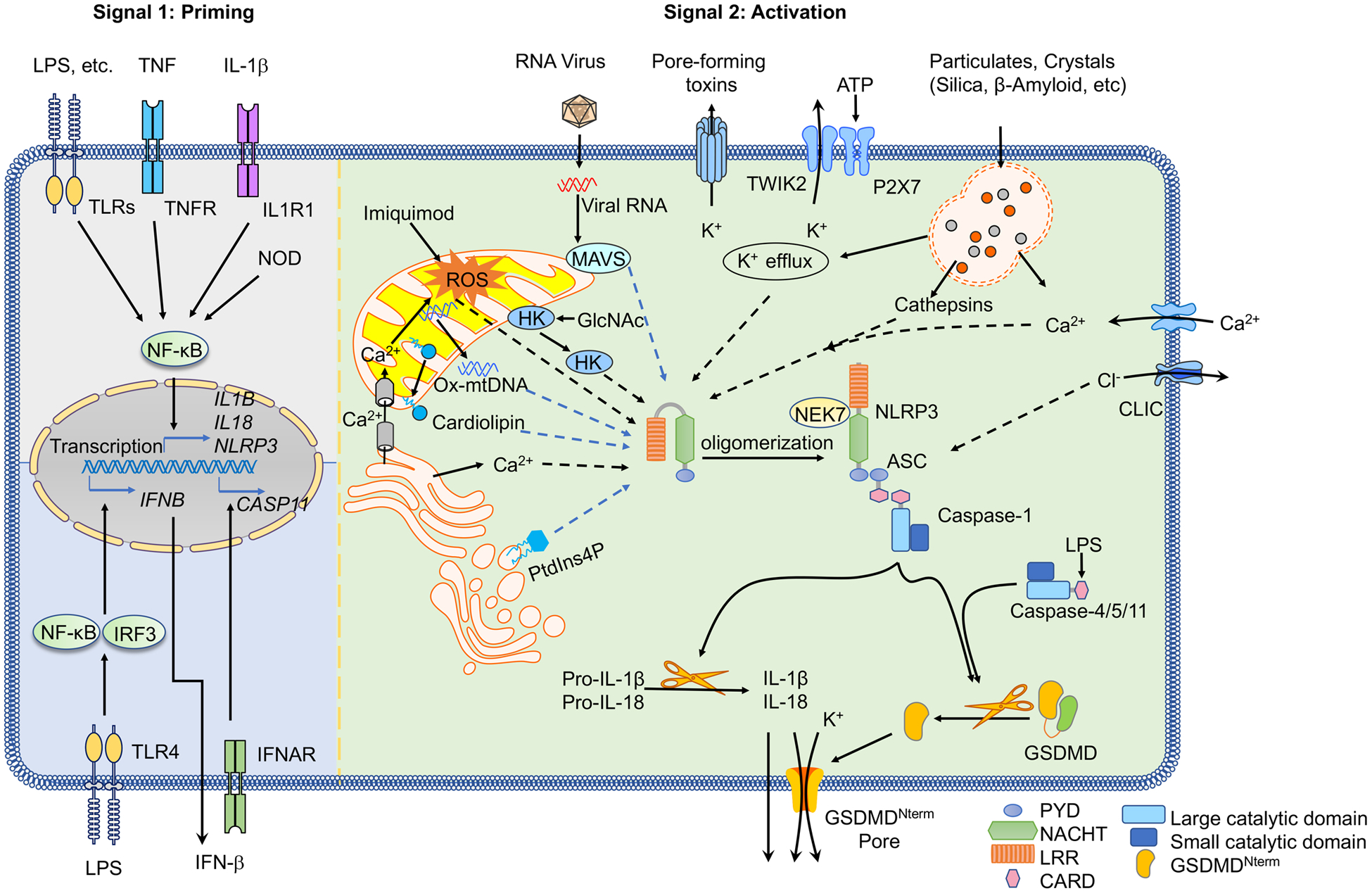
Figure 1 |
Figure 1 |. NLRP3 inflammasome priming and activation.
The signal 1 (priming, left) is provided by activation of cytokines or pathogen-associated molecular patterns (PAMPs), leading to the transcriptional upregulation of canonical and non-canonical NLRP3 inflammasome components. Signal 2 (activation; right) is provided by any of numerous PAMPs or damage-associated molecular patterns (DAMPs), such as particulates, crystals and ATP, that activate multiple upstream signaling events. These include K+ efflux, Ca+ flux, lysosomal disruption, mitochondrial reactive oxygen species (mtROS) production, the relocalization of cardiolipin to the outer mitochondrial membrane and the release of oxidized mtDNA (Ox-mtDNA), followed by Cl− efflux. RNA viruses activate NLRP3 (NOD-, LRR- and pyrin domain-containing protein 3) through mitochondrial antiviral signaling protein (MAVS) on the mitochondrial outer membrane. Formation of the inflammasome activates caspase 1, which in turn cleaves pro-IL-1β and pro-IL-18. Gasdermin D (GSDMD) is also cleaved and inserts into the membrane, forming pores and inducing pyroptosis. Upon detection of cytosolic lipopolysaccharide (LPS), caspases 4, 5 and 11 are activated and cleave GSDMD, triggering pyroptosis. CARD, caspase recruitment domain; CLIC, chloride intracellular channel protein; GlcNAc, N-acetylglucosamine; GSDMDNterm, GSDMD amino-terminal cell death domain; HK , hexokinase; IFNAR , IFNα/β receptor ; IL-1R1, IL-1 receptor type 1; LRR , leucine-rich repeat; MDP, muramyl dipeptide; NEK7 , NIMA-related kinase 7; NF-κB, nuclear factor-κB; P2X7 , P2X purinoceptor 7; PtdIns4P, phosphatidylinositol-4-phosphate; PYD, pyrin domain; ROS, reactive oxygen species; TLR , Toll-like receptor ; TNF, tumor necrosis factor ; TNFR , tumor necrosis factor receptor ; TWIK2, two-pore domain weak inwardly rectifying K+ channel 2.
Figure 2 |
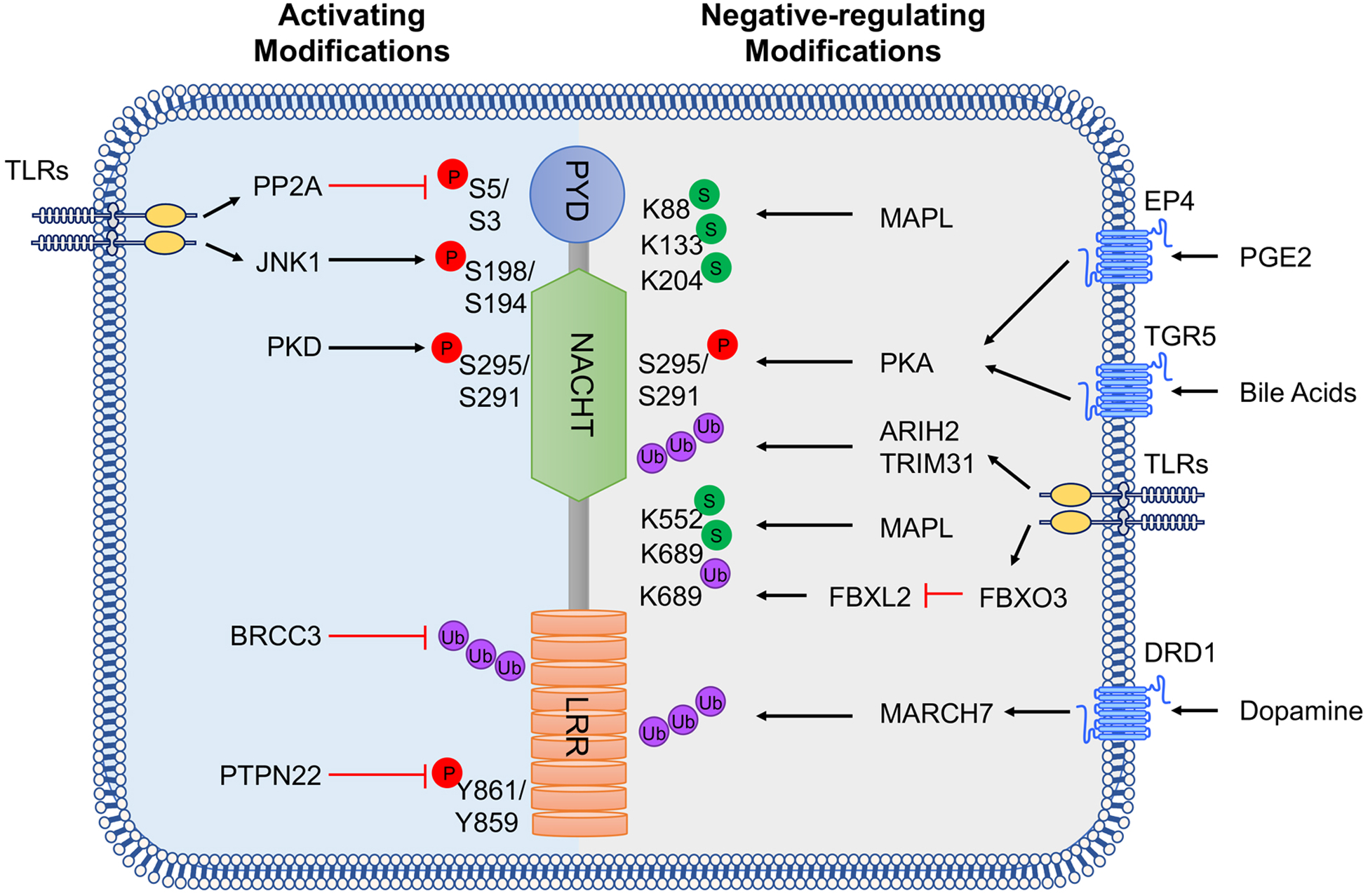
Figure 2 |. Post-transcriptional modifications of NLRP3.
NLRP3 is regulated by phosphorylation (P), ubiquitylation (Ub) and sumoylation (S). Activating regulatory modifications are listed on the left and those that inhibit NLRP3 activation are on the right. Amino acid residues in both human and mouse NLRP3 are listed for phosphorylation, whereas ubiquitylation and sumoylation refer only to the murine protein residues. PP2A, protein phosphatase 2A; JNK1, JUN N-terminal kinase 1; PKD, protein kinase D; BRCC3, BRCA1/BRCA2-containing complex subunit 3; PTPN22, tyrosine-protein phosphatase non-receptor type 22; MUL1, E3 SUMO-protein ligase MUL1; PKA, protein kinase A; ARIH2, E3 ubiquitin-protein ligase ARIH2; TRIM31, tripartite motif-containing protein 31; FBXL2, F-box/LRR-repeat protein 2; MARCH7, membrane-associated RING finger protein 7; PYD, pyrin domain; NACHT, NAIP, CIITA, HET-E and TP1 shared domain; LRR, leucine-rich repeat domain.

References

    1. Hoffman HM, Mueller JL, Broide DH, Wanderer AA & Kolodner RD Mutation of a new gene encoding a putative pyrin-like protein causes familial cold autoinflammatory syndrome and Muckle-Wells syndrome. Nat Genet 29, 301–305 (2001). - PMC - PubMed
    1. Aganna E et al. Association of mutations in the NALP3/CIAS1/PYPAF1 gene with a broad phenotype including recurrent fever, cold sensitivity, sensorineural deafness, and AA amyloidosis. Arthritis Rheum 46, 2445–2452 (2002). - PubMed
    1. Aksentijevich I et al. De novo CIAS1 mutations, cytokine activation, and evidence for genetic heterogeneity in patients with neonatal-onset multisystem inflammatory disease (NOMID): a new member of the expanding family of pyrin-associated autoinflammatory diseases. Arthritis Rheum 46, 3340–3348 (2002). - PMC - PubMed
    2. References , and report that NLRP3 gain-of-function mutations promote human autoinflammatory diseases.

    1. Mangan MS et al. Targeting the NLRP3 inflammasome in inflammatory diseases. Nat Rev Drug Discov 17, 588 (2018). - PubMed
    1. Guo H, Callaway JB & Ting JP Inflammasomes: mechanism of action, role in disease, and therapeutics. Nat Med 21, 677–687 (2015). - PMC - PubMed

Publication types