


Orbital Trauma
- PMID: 31037047
- PMCID: PMC6486387
- DOI: 10.1055/s-0039-1685477
Orbital Trauma
Abstract
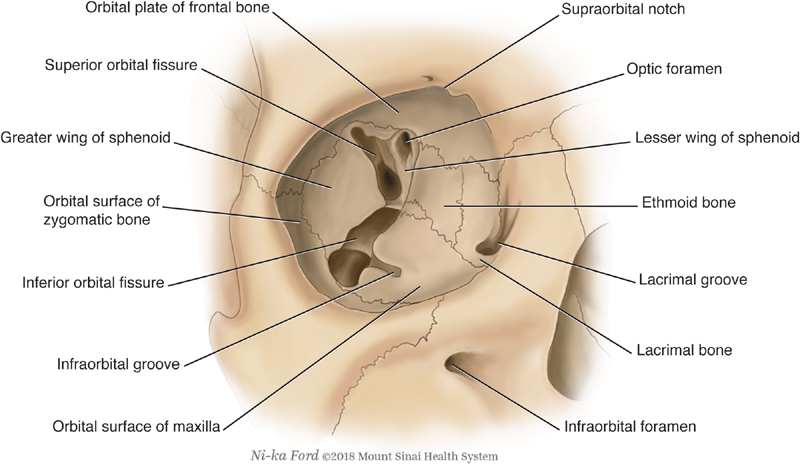
The orbit is contained within a complex bony architecture with overlying soft tissue that involves many important anatomical structures. Orbital trauma is a frequent cause of damage to these structures. The authors review the literature on reconstructive techniques focusing on fractures of the orbital rim, orbital roof, orbital floor, medial orbital wall, and naso-orbito-ethmoid complex. A thorough literature review was conducted using PubMed analyzing articles relevant to the subject matter. Various search terms were used to identify articles regarding orbital trauma presentation, diagnosis, management, as well as postoperative complications. Articles were examined by all authors and pertinent information was gleaned for the purpose of generating this review. Orbital trauma can result in a wide variety of complications in form and function. Not all orbital fractures require operative repair. However, bony disruption can cause enophthalmos, hypophthalmos, telecanthus, epiphora, cerebrospinal fluid leaks, orbital hematoma, and even blindness to name a few. Timing of operative repair as well as reconstructive method is dictated by the patient's individual presentation. Successful fracture management requires a detailed understanding of the anatomy and pathophysiology to ensure restoration of the patients' preoperative state. Orbital trauma encompasses a wide variety of mechanisms of injury and resulting fracture patterns. A variety of surgical approaches to the orbit exist as has been discussed allowing the surgeon access to all area of interest. Regardless of the fracture complexity, the principles of atraumatic technique, anatomic reduction, and stable fixation apply in all cases.
Keywords: fixation; fracture; orbital trauma; reduction.
Conflict of interest statement
Figures
References
-
- Marinho R O, Freire-Maia B. Management of fractures of the zygomaticomaxillary complex. Oral Maxillofac Surg Clin North Am. 2013;25(04):617–636. - PubMed
-
- Ellis E, III, Perez D. An algorithm for the treatment of isolated zygomatico-orbital fractures. J Oral Maxillofac Surg. 2014;72(10):1975–1983. - PubMed
-
- Somasundaram A, Laxton A W, Perrin R G. The clinical features of periorbital ecchymosis in a series of trauma patients. Injury. 2014;45(01):203–205. - PubMed
-
- Lee H J, Kim Y J, Seo D W et al. Incidence of intracranial injury in orbital wall fracture patients not classified as traumatic brain injury. Injury. 2018;49(05):963–968. - PubMed
